

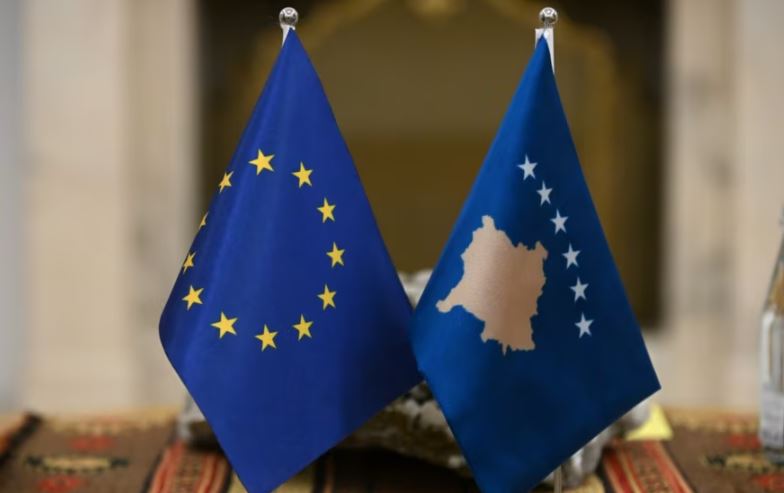
Kosovo should immediately ratify the agreement with the European Union on the Growth Plan—once the new Assembly is formed—in order to begin receiving millions of euros from this financial package for Western Balkan countries, a spokesperson for the European Commission (EC) told Radio Free Europe on Monday.
Kosovo was among the first to approve the reform agenda in 2024, but it has been unable to benefit from the funds due to the lack of a functional Assembly to ratify the formal agreement with the bloc.
“It is in Kosovo’s interest for the ratification to take place as soon as possible, so that all the opportunities offered by the Growth Plan can be fully utilized, for the benefit of its population,” the spokesperson said.
Kosovo is expected to form a new Assembly in the coming weeks, following the snap parliamentary elections of December 28, which were convincingly won by the ruling Self-Determination Movement (Vetëvendosje), led by caretaker Prime Minister Albin Kurti.
Kurti’s party won 57 seats and is expected to lead another four-year term. To ratify the agreement with the EU, 80 votes are required in the 120-seat Assembly, meaning that opposition support will also be necessary.
Without ratification of the agreement, Kosovo cannot submit a payment request. The Growth Plan is an EU financial package for six Western Balkan countries—Kosovo, Albania, North Macedonia, Montenegro, Serbia, and Bosnia and Herzegovina—aimed at aligning their economies with European standards.
Of the total package, €2 billion consists of non-repayable grants, while the remaining €4 billion is provided in the form of favorable loans. Kosovo’s share amounts to approximately €900 million, making it the largest beneficiary per capita.
In addition to ratifying the agreement, Kosovo must also meet specific steps within set deadlines in order to receive the funds. It has prepared its reform agenda based on preliminary recommendations from EU bodies, while reforms in the areas of public order and the rule of law are essential to benefit from the Growth Plan.
If any step is not completed within the set deadline, beneficiaries are given the opportunity to fulfill it within a so-called “grace period,” according to the EU spokesperson. This period is two years for steps that were due in December 2024, and one year for all steps due in June 2025 and thereafter.
“If a step is not completed by the end of the grace period, the beneficiary partner loses the funds allocated for that step,” he emphasized. / RFE




