

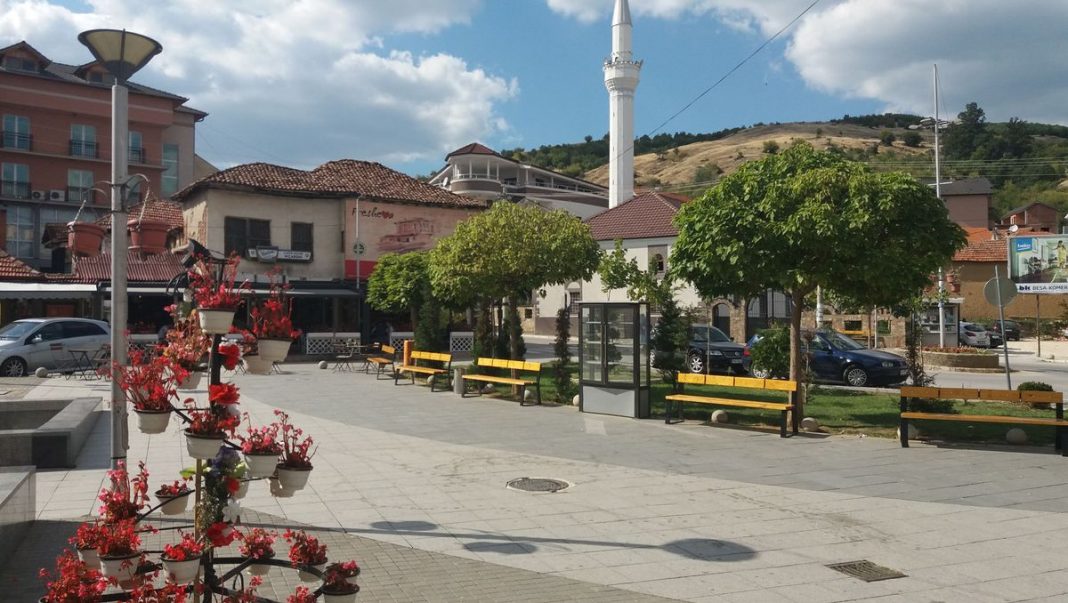
Instead of being viewed by the public in Bujanovac, a municipality in southern Serbia, two films in the Albanian language will initially be viewed by the competent authorities of Serbia, who must determine whether the films contain illegal content.
This decision was made by the Public Prosecutor’s Office in Vranje, after this institution held an informative discussion on June 9th with the director of the Cultural Center in Bujanovac, Jetmir Ismaili, and Gani Veseli, the author of the films “Silence Kills” (“Heshtja Vret) and “The Unfaithful” (“I pabesi”), whose screenings have been postponed until further notice.
The ban came after the police received a report stating that the films incite hatred and discrimination, which the authors deny.
The competent prosecutor’s office in Vranje stated that they have requested an evaluation of the films from the Serbian Ministry of Culture, while the ministry claims that they have not been informed about this matter.
Bujanovac is a municipality in Serbia where a large number of citizens of Albanian nationality live, just like in Preševo and Medveđa, and all three municipalities are also known as the Preševo Valley.
Why weren’t the films screened?
It was planned that on June 10th, at the Cultural Center in Bujanovac, two short films in the Albanian language, “Silence Kills” and “The Unfaithful” would be screened.
Gani Veseli, an actor and film producer, told Radio Free Europe (RFE) that the screening was stopped because, as he expressed, the Serbian prosecutor suspects that these films “incite ethnic and religious hatred”.
“The prosecutor has taken it upon himself to immediately interrupt [the screening of the films], and they have confiscated the USB drive so that the prosecutor can directly deal with this issue. They emphasized that it should be analyzed by a commission,” Veseli said.
What are the films about?
He says that, however, the films do not promote any hatred but are based on popular narratives.
The theme of the first film is the moment when some young people, during a robbery, kill their uncle, and the murder is discovered 20 years later. The second film, according to Veseli, is about a character passionate about weapons and his close friend who reports him to the police.
“These films were simply made in North Macedonia. Actors from Kosovo, the Preševo Valley, and North Macedonia participated in them,” Veseli said.
The films were shot as part of a project worth some 40,000 euros, supported by the National Council of Albanians in Serbia and financed by the Government of Kosovo.
Informative discussion
Veseli and the director of the Bujanovac Cultural Center, Jetmir Ismaili, both from the Preševo Valley, were invited to an informative interview at the Bujanovac police station on Friday, June 9th, around 9:00 PM, due to these films.
According to the film producers, the authorities insisted that the state commission and the prosecutor should watch the films to understand what was happening.
“The insistence is that the films should be reviewed and not screened until another decision by the prosecutor is made. It is painful and terrifying for the [Albanian] actors who will be afraid in the future to produce artistic values,” Veseli said.
The films will not be screened at the Cultural Center in Bujanovac until a final decision is made by the institutions of Serbia, said Jetmir Ismaili, the director of this cultural institution, in an interview to Radio Free Europe.
He emphasized that the Cultural Center in Bujanovac presents various performances and films in both the Albanian and Serbian languages, and the screening of these films would not present any problems or violation of the law.
“In the police, they only asked me about the content of the films. This has never happened before. We will continue to screen films and organize other events within our capabilities,” says Ismaili.
What do the authorities say?
The Public Prosecutor’s Office in Vranje stated to Radio Free Europe that they have reacted after an anonymous person reported to the police in Bujanovac that the Cultural Center was planning “public screenings of short films… which are suspected of promoting and inciting discrimination, hatred based on race, religion, or a specific ethnic group”.
According to the written response, the Prosecutor’s Office verified these claims on June 9th by “collecting information from citizens and, above all, from the director of the institution where the public screening was scheduled”.
“Thus, director Jetmir Ismaili was invited solely as a citizen, and an official note was made regarding the notification received. Likewise, Gani Veseli, the film producer, provided the necessary information in the same capacity,” stated the Public Prosecutor’s Office in Vranje.
The institution further added that Ismaili and Veseli left the police station in Bujanovac on the same day without any measures being taken against them.
They emphasized that the Law on Cinematography (of Serbia) prohibits the sale and public screening of cinematographic works that promote discrimination, spread national, racial, and religious hatred, and propagate content that may harm the moral, physical, and mental development of minors.
“To verify whether the films in question can be screened without causing harm to certain categories of individuals, we have requested an inspection from the Ministry of Culture of the Republic of Serbia,” stated the Public Prosecutor’s Office in Vranje.
The Ministry of Culture of Serbia briefly stated to Radio Free Europe that they have no knowledge of this matter “and such a thing does not exist in the Ministry of Culture”.
The Minister of Culture, Youth, and Sports of Kosovo Hajrulla Çeku accused the state of Serbia of exhibiting “national intolerance” and stated that the actions of the Serbian authorities to prevent the screening are “unprecedented and unacceptable”.
Kamberi: A bad message
Shaip Kamberi, the only representative of the Albanian community in the Serbian Parliament, told Radio Free Europe that the state of Serbia is sending a bad message to citizens of Albanian nationality.
“It cannot be a good message when someone is prohibited from expressing elements of their identity. In my opinion, this is a direct attack on the culture and identity of Albanians in this region,” says Kamberi.
He believes that a problem for the state institutions of Serbia is the fact that the films are financed by the budget of the Government of Kosovo.
According to the results of the population census in 2022, there are over 61,000 members of the Albanian national minority living in Serbia. Among them, the largest number of Albanians live in the municipalities of Preševo and Bujanovac, over 56,000. Then is the municipality of Medveđa, where around 1,000 Albanians live.
By Shkëlqim Hysenaj (Radio Free Europe journalist in Pristina)