
Inflation in Albania showed a slight decline in July this year, dropping to 4.2%, the lowest level since March 2022 when it began surging due to the fallout from Russia’s attacks on Ukraine. The inflation rate peaked at 8.3% in October 2022 and has gradually decreased since, largely influenced by a decrease in fuel prices.
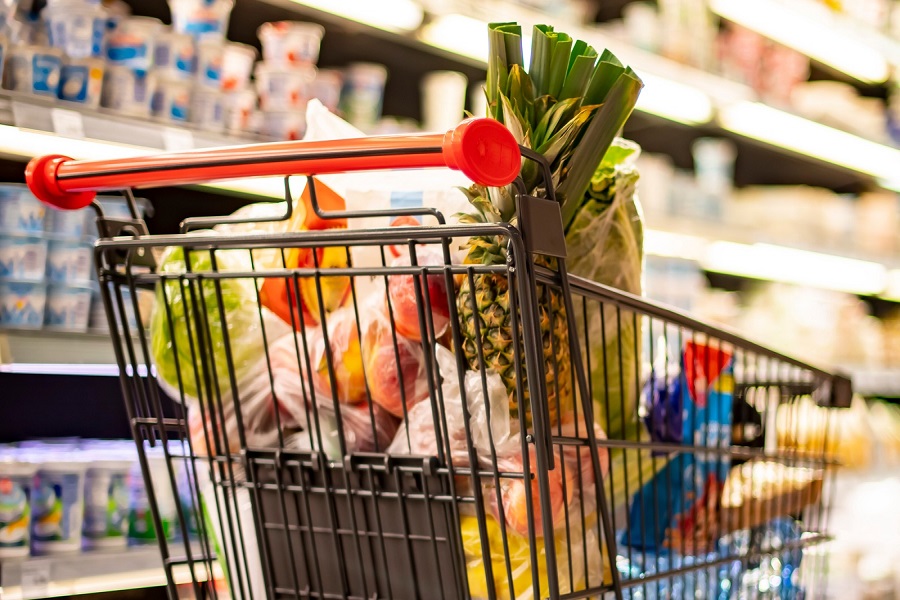
However, despite the overall slowdown, the cost of food, which constitutes a significant portion of Albanian families’ budgets, continues to rise, contributing significantly to inflation. Food prices have increased by 9% compared to last July, with vegetables and potatoes leading the surge at a staggering 21.6% increase, followed by milk and eggs at 13.6%. Additionally, entertainment costs have risen by 9.5%, potentially influenced by the influx of tourists.
The National Institute of Statistics (INSTAT) reported that the annual change in the consumer price index in July 2023 is 4.2%, a notable drop from 7.5% recorded a year ago. Moreover, the monthly change in the consumer price index in July 2023, compared to June 2023, is -0.1%.
The increase in prices in July was predominantly driven by the “Food and non-alcoholic beverages” group, contributing +3.20 percentage points, followed by the “Furniture, household appliances, and household maintenance” group with +0.44 percentage points. The “Rent, water, fuel, and energy” group saw an increase of +0.26 percentage points, and the “Hotels, cafes, and restaurants” group experienced a +0.23 percentage point rise. The “Recreation and culture” group recorded an increase of +0.22 percentage points, while the “Miscellaneous goods and services” group witnessed a +0.21 percentage point increase. The “Alcoholic beverages and tobacco” group also saw a +0.19 percentage point rise. Furthermore, the “Clothing and footwear” group experienced an increase of +0.16 percentage points, while the “Education services” group recorded a +0.06 percentage point rise. Lastly, the “Health” group saw a +0.05 percentage point increase, and the “Communication” group contributed +0.04 percentage points. In contrast, the “Transport” group experienced a decrease of -0.84 percentage points.
Comparing prices to July 2022, the most significant price increase is in the “Recreation and culture” group, rising by 9.5%, followed by the “Food and non-alcoholic beverages” group at 9.0%. The “Furniture, household appliances, and household maintenance” group recorded a 6.0% increase, while the “Hotels, cafes, and restaurants” group saw a rise of 5.0%. The “Clothing and footwear” group experienced a 4.3% increase, and the “Alcoholic beverages and tobacco” group saw prices rise by 3.8%. The “Miscellaneous goods and services” group witnessed a 3.7% increase, and “Education services” recorded a 2.0% rise. The “Rent, water, fuel, and energy” group experienced a 1.3% increase, while the “Communication” group saw a rise of 1.2%, and the “Health” group experienced a 1.1% increase. In contrast, the “Transport” group had a significant decrease of 12.4%.
Within the food group, prices for the subgroup “vegetables, including potatoes”, increased by 21.6%, followed by “milk, cheese, and eggs” at 13.8%, and “meat” at 11.2%. Other notable increases include “fruits” at 7.0%, “fish” at 6.1%, “sugar, jam, honey, chocolate, and confectionery” at 3.6%, and “bread and cereals” at 2.9%.