

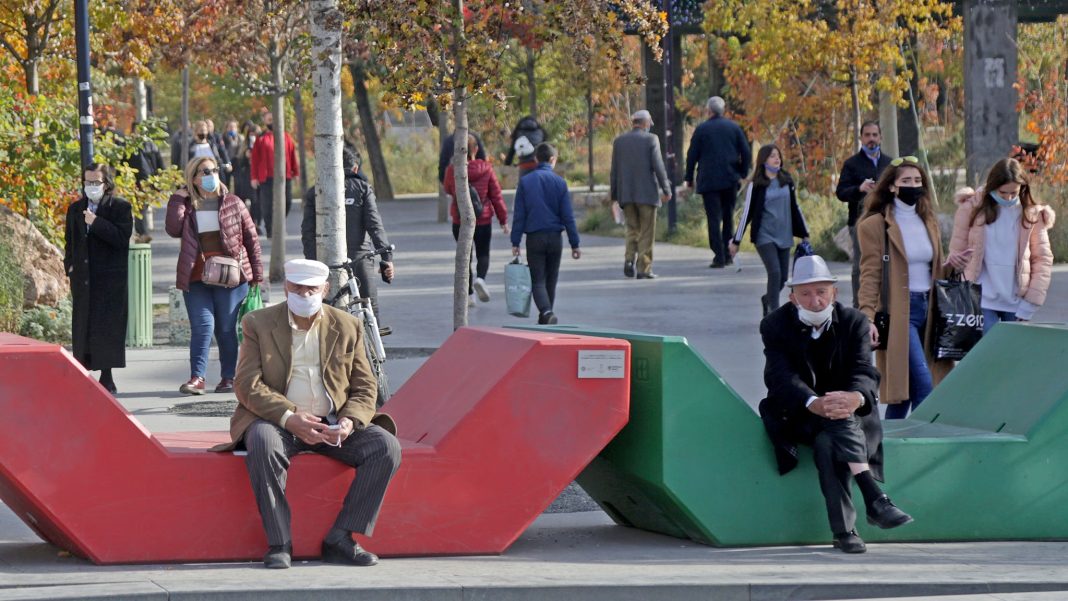
A recent assessment from Eurostat seems to indicate that Albania’s population is still young, but the aging process is advancing at a pace much faster than the EU’s average.
In Albania, the old-age dependency ratio, i.e. the ratio of the population older than 65 with the population aged 15-64, in 2000 was 11.9%, while in 2021 it reached 22.3%.
The 20-year index in Albania expanded by 10.4 percentage points, compared to EUI’s 8.9.
In addition, the old-age dependency ratio in the EU has increased significantly in the past 20 years.
The highest old-age dependency ratios were recorded in Eastern Germany, Greece, Spain, France, Italy, Portugal, and Finland, and mainly in rural, mountainous, or remote areas, where the younger generation is most likely to leave the hometown to study in urban areas.
Experts say that over the next three decades, old-age dependency ratios are projected to increase in all 1,169 EU regions.
Meanwhile, internal projections show that in 2031 Albania will have 35 elderly per 100 people.
The county with the highest old-age dependency ratio will be Gjirokastra, with 45 elderlies for 100 people, while the lowest Tirana (30%), due to the movement of the working-age population (15-64) towards the economic and educational centers of Albania.
YOU MIGHT ALSO LIKE