

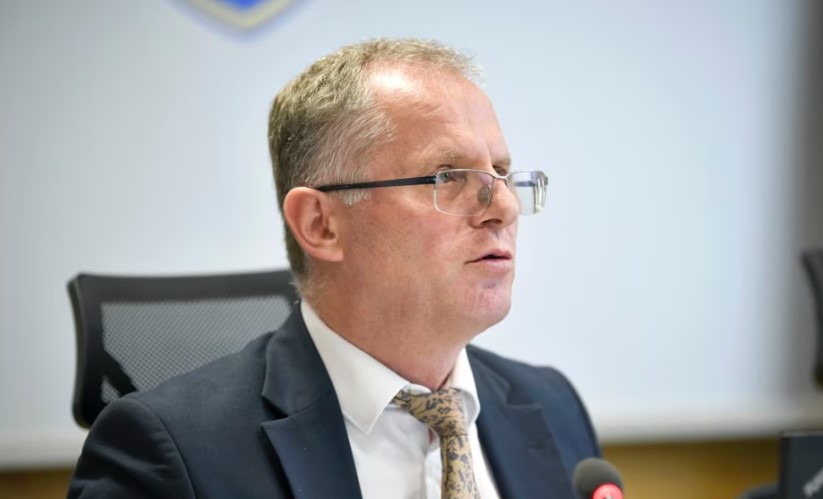
The deputy prime minister of Kosovo, Besnik Bislimi, said that from the member states of the European Union there were requests for additional concessions, which went beyond the punitive measures that the bloc imposed on Kosovo last year.
“But, of course, Kosovo has not accepted to be blackmailed in this direction”, Bislimi said during a report before the parliamentary committee for European integration.
According to him, such requests, which, as he said, were continuously made by the member states, but not directly by Brussels, show that Kosovo was at least to blame for the implementation of these measures.
Bislim’s statement comes after the head of EU diplomacy, Josep Borrell, has submitted a report to EU member states.
During the reporting before the Parliamentary Commission for European Integration, Bislimi said that the member states of the European bloc were clear that the imposition of punitive measures against Kosovo was “unfair”.
According to him, within the EU there are states that think that the way these punitive measures were imposed was a violation of legal procedures within the EU, “and there are those who have initiated requests within the European Commission to verify the legality”.
“For example, an Albanian expert in Germany who is exchanging messages and letters with the EC to see if the legal basis on which these decisions were made is sound,” said Bislimi.
Bislimi, who is also Kosovo’s chief negotiator in the dialogue with Serbia, which is mediated by the EU, said that the measures were decided because of the unrest in May in the north of Kosovo, inhabited by a majority of Serbs.
“The reason why measures have been imposed on Kosovo is related to May 26 and 29, for which it has been said many times that the origin of these disturbances is known. The origin of these riots is in Belgrade, but since they happened within the territory of Kosovo, the measures have been decided for Kosovo. The measures are disproportionate. Something is demanded from Kosovo which does not contribute anything to de-escalation, for example at a time when they are protesting in Zveçan, the request of the EU was to move the Mayor of the Municipality to Leposaviq. There was no correlation between the request and the de-escalation on the ground. What is more important, the measures have been temporary and reversible after de-escalation”, he said.
Bislimi added that even though Kosovo, together with the EU Rule of Law Mission in Kosovo, EULEX, have determined that the situation in the north is calm, the EU “has been reluctant to lift the measures”.
“There have even been ideas for them to be implemented gradually, or to be withdrawn gradually with the idea that maybe the measures will be used to extract other compromises from Kosovo, outside of what the measures were decided on. But, the biggest problem and the reaction of the member countries has been at the moment when there is an inequality of the EU’s approach when Serbia is not faced with measures for much bigger violations, while Kosovo only because it has implemented the law and has sent the mayors to the offices where they won the elections, he was faced with measures”, he said.




