

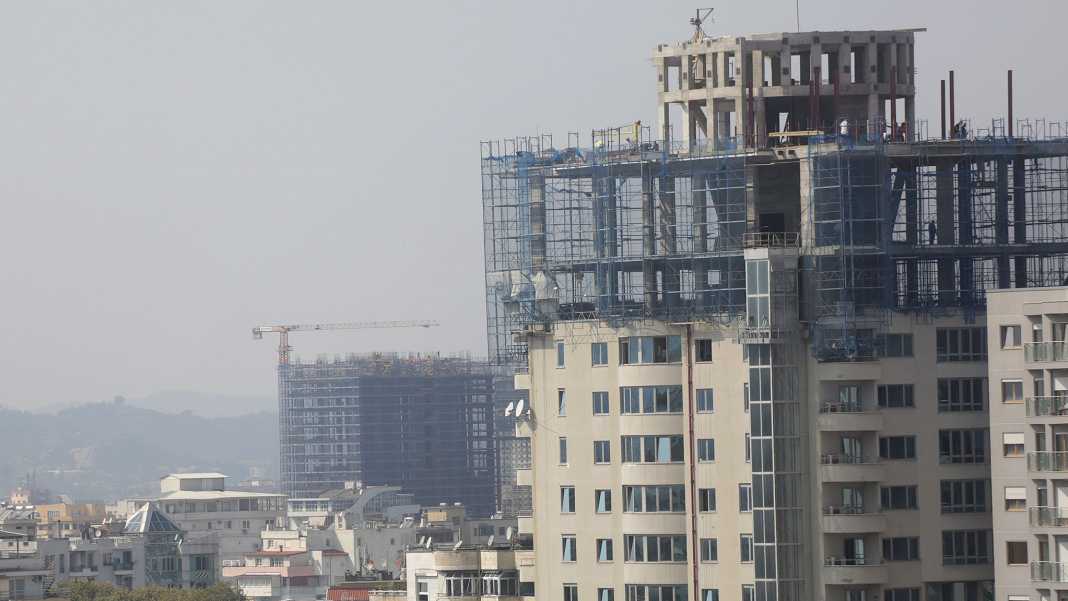
The Association of Builders in Albania has sent a letter to Prime Minister Edi Rama, urging a reevaluation of several construction-related laws due to increased tax burdens within the sector.
Among the primary concerns raised by the Association of Builders is the heightened tax burden resulting from the decision to raise fiscal rates, which took effect on July 28, 2023.
In addition to the consequences of the property tax increase, the Builders’ Association argues that this decision will also amplify the tax liability for income generated from property transactions, even for individuals who have recently undergone property revaluations.
Moreover, the reference prices stipulated in this decision are used to determine the reference price for property transfer tax application, as specified in the “Income Tax” Law. Consequently, this decision will exert an immediate influence on individuals involved in transactions related to immovable properties, including those who have recently undergone reassessment procedures in accordance with Law no. 90/2019, “On the Reassessment of Immovable Property”, the letter explains.
The Builders’ Association underscores that the modification in reference prices, as per this decision, will also have an immediate effect on the construction sector. These prices play a pivotal role in determining the value of the infrastructure tax and serve as substitute monetary values for the 3% tax on social housing contributions. This, in turn, will impact Profit Tax.
The Builders’ Association proposes a gradual implementation of the decision to increase tax rates or its application only to projects initiated and completed after the decision’s enactment.
Additionally, the Builders express serious concerns regarding the private sector’s contribution (limited to the construction sector) to social housing, which amounts to 3% of functional construction areas owned by investors/developers. As this legislation contradicts the Constitution, the Builders’ Association suggests its revocation.
The Builders’ Association also calls for a reassessment of the infrastructure impact tax, particularly in Tirana, where they identify a range of 2-6% as a more suitable rate. They recommend that the calculation methodology be aligned with cost considerations.
Regarding the draft property tax law published for consultation by the Ministry of Finance, the Builders’ Association suggests a sectoral review, as the proposed tax, in its current form, raises various ambiguities regarding calculation, implementation, and collection.
Concerning the legal framework governing public procurement, concessions, and PPPs (Public-Private Partnerships), the Builders believe that legal provisions should be adapted to recognize price variations in both international and national markets. This aligns with provisions outlined in the “FIDIC” yellow and red books for all public works contracts, whether funded through the budget, organizations, or foreign sources.