

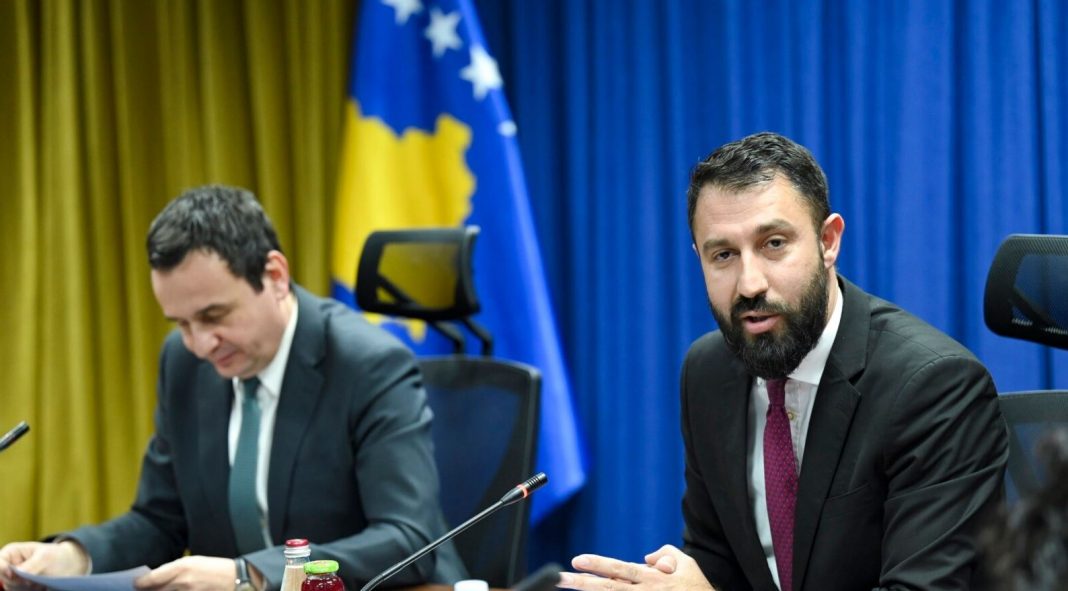
Kosovo’s Minister of Local Government Administration Elbert Krasniqi responded on September 13 to the suggestion that Albanian mayors in four Serbian-majority municipalities in northern Kosovo should resign as a way to facilitate early elections in the region. He stated that this demand for resignations is solely coming from Belgrade. Krasniqi’s comments came shortly after U.S. envoy Gabriel Escobar made this proposal during an interview with the Voice of America.
During a press conference in Pristina, Krasniqi emphasized that their “focus is not on addressing Belgrade’s demands and insisted that mayors could only vacate their positions through a new administrative directive”.
He pointed out, “In the past, mayors in the northern part of the country were aligned with the Serb List and criminal groups, never truly serving the citizens. Administrative guidance is a democratic process… and anything else is not the demand of the citizens there or the mayors of the municipalities; these demands are originating from Belgrade.”
This situation arose following the election of Albanian mayors in four Serbian-majority municipalities in northern Kosovo: Mitrovica North, Zvecan, Zubin Potok, and Leposavic. These elections were boycotted and met with strong opposition from local Serbs, leading to heightened tensions.
In response, the European Union imposed punitive measures against Kosovo due to its inability to meet certain requirements, and the United States announced that Pristina would not participate in NATO’s Defender Europe 23 military exercises.
Kosovo has committed to reorganizing these elections but intends to do so through an administrative directive, allowing citizens to initiate the removal of their respective municipal mayors through a petition.
Krasniqi reiterated that “punitive measures are unjust for Kosovo, and we have made it clear several times. As Kosovo, we are committed to fulfilling our obligations, such as the agreements in Bratislava; we are fulfilling them. Almost everything has been fulfilled, such as the withdrawal of the police twice by 20 percent and the administrative directive. The rest is part of democracy, and we leave it in the hands of the citizens.”
In July, Kosovo and the European Union reached an agreement outlining steps to deescalate the situation, including reducing the police presence in the northern municipalities and conducting new elections.
Kosovo has already reduced the number of police officers by 25 percent in municipal buildings in the north on two occasions.




