

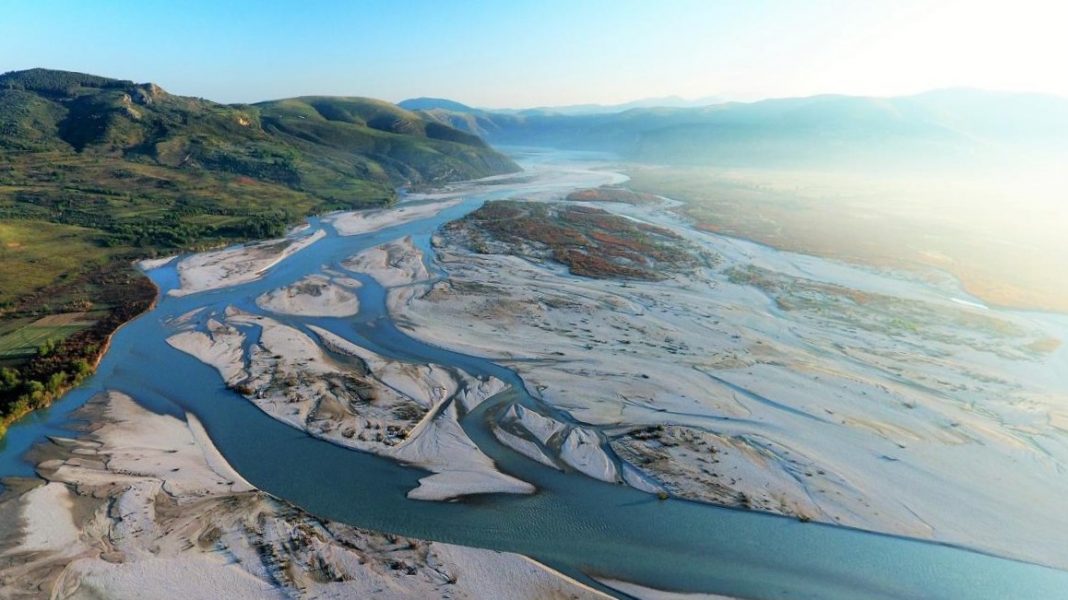
Albanian and international experts have commenced discussions with local communities to formulate a comprehensive management plan for Vjosa National Park.
In cities like Vlora, Gjirokastra, and Tepelena, residents from 13 municipalities have shown significant interest not only in the tourism sector but also in agricultural opportunities.
Following the suspension of hydroelectric dam construction, local residents are now keen on establishing small enterprises to revitalize the economies of areas that have long struggled with poverty and have been adversely affected by emigration.
In March of this year, the Albanian Government designated Vjosa as a National Park, granting it substantial protection, particularly from potential hydroelectric dam construction along Europe’s last untamed river.
The Albanian Government, in collaboration with the American company “Patagonia”, initiated meetings between experts and local communities to craft a comprehensive management plan for Vjosa National Park earlier this year.
These discussions encompass four primary aspects: the Management Plan, activities, land usage, interpretation, and tourism, as detailed by Rei Koçi from the Relations Center.
The main interests of the residents vary across sectors, with a strong focus on tourism, business development, and, of course, tourism, which presents a golden opportunity to attract high-quality visitors to the National Park and Albania, according to Mrs. Koçi.
Community engagement is of paramount importance in this endeavor, with outreach efforts spanning major urban centers as well as smaller towns and villages.
Several international experts from diverse fields are actively contributing to the development of the Vjosa management plan.
Tourism expert Jack Delf emphasizes the critical role of this plan, aiming to underscore that Vjosa offers an extraordinary destination rich in cultural, natural, and sports-related assets with breathtaking landscapes.
Delf advocates for residents and the tourism sector to recognize that these invaluable assets are better suited for high-quality tourism, capable of generating greater revenue while preserving the environment. He stresses the importance of all stakeholders’ involvement, including government entities, the business community, and local residents, to create a world-class brand based on the unique qualities of the Vjosa Valley.
The regions traversed by the Vjosa River have long grappled with emigration and a lack of investments. Albert Malaj, the new mayor of Memaliaj, underscores the deep connection between residents and the Vjosa River, especially as it supplies drinking water to certain areas. The revitalization of the Vjosa River area presents an opportunity for significant investments, particularly in agrotourism.
The process of managing Vjosa is expected to be gradual, with the goal of establishing a sustainable destination within the initial five years, ultimately transforming it into a world-class attraction.
The Vjosa River stands as one of Albania’s largest rivers, renowned for its abundant water flow. Stretching across 272 kilometers, it meanders from Greece’s Pindus Mountains through Albanian territory until it meets the Adriatic Sea.
The relentless efforts of local and international environmental organizations have successfully safeguarded the Vjosa and its tributaries from the construction of 31 planned hydroelectric power plants, preserving the “last wild river in Europe” with its free-flowing, unobstructed waters.




