

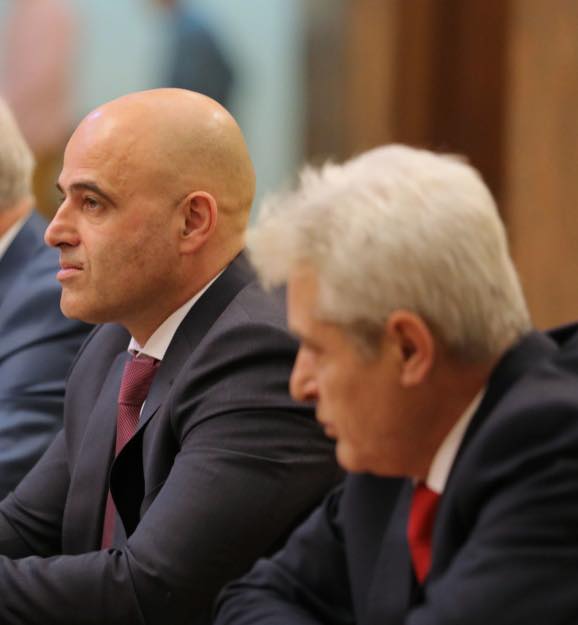
In a recent development that has thrown North Macedonia’s political landscape into disarray, Ali Ahmeti, the leader of the Democratic Union for Integration (DUI), announced on Sunday that the ministers and officials of his party have tendered their resignations from the country’s Government.
In a statement posted on Facebook, Ahmeti attributed this decision to the opposition party, VMRO DPMNE, conditioning its support for constitutional amendments on DUI’s departure from the ruling coalition.
However, Ahmeti clarified that the resignations of his party’s officials will only take effect once the constitutional changes are voted upon.
Stating his commitment to Euro-Atlantic integration, Ahmeti emphasized the importance of NATO membership and close alliances with the European Union and the United States for the welfare of all citizens, irrespective of their national or religious affiliations.
In response to the announcement, VMRO DPMNE released a media statement welcoming DUI’s decision to move to the opposition but insisted that the resignations must be irrevocable. They also called for immediate early parliamentary elections, asserting that any delay would be detrimental to the citizens and the nation.
The ruling party, the Social Democratic Union led by Prime Minister Dimitar Kovačevski, saw DUI’s move as a responsible choice in the interest of the country’s European aspirations. They called upon Hristijan Mickoski, leader of VMRO DPMNE, to support the constitutional changes, which are crucial for the nation’s progress towards EU membership.
Mickoski, on his part, expressed willingness to back the constitutional amendments if a new government excluding DUI is formed and if these changes come into effect only after the conclusion of EU membership negotiations.
However, the European Union has rejected this proposition, insisting that the constitutional changes must be enacted before the accession negotiations commence. These changes aim to recognize the Bulgarian minority as a constituent people in North Macedonia’s constitution, based on the “French proposal” to resolve disputes with Bulgaria.
Failure to implement these changes grants Bulgaria the right to veto or block EU accession talks, as it did in the past.
The opposition in North Macedonia remains opposed to the constitutional amendments, citing concerns that the Bulgarian demands may persist even after the amendments are approved.
The parliamentary debate on the constitutional changes began on July 25, with a plenary session scheduled for August 18.