

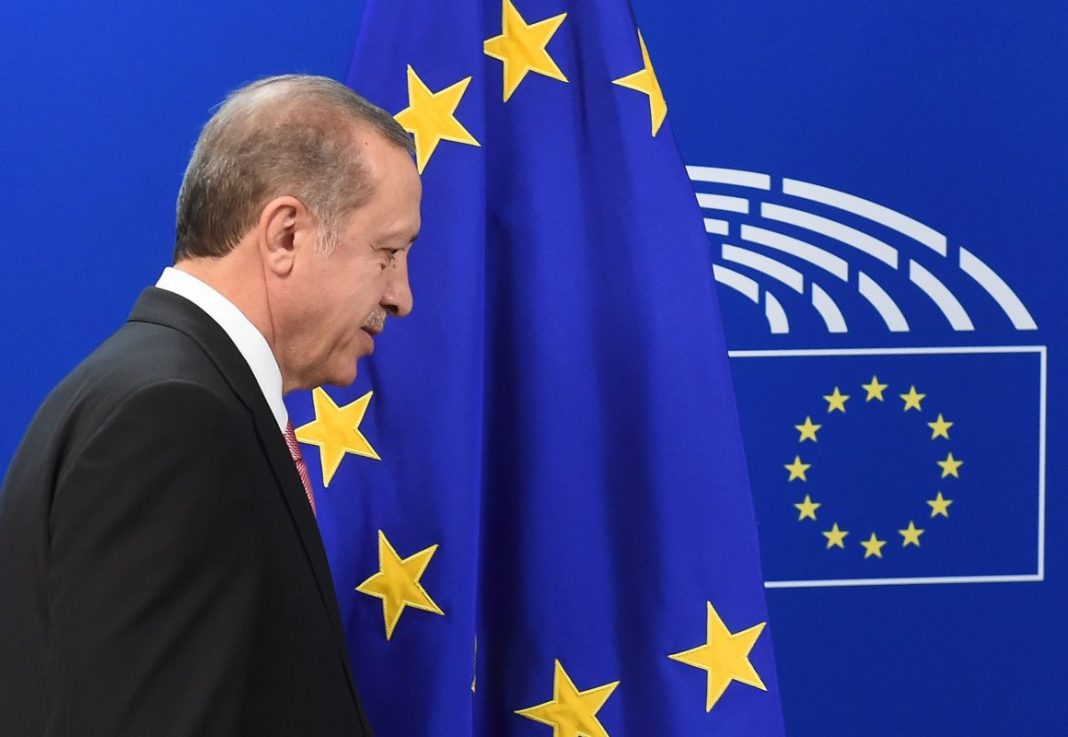
On October 1, President Recep Tayyip Erdoğan of Turkey declared that his nation “no longer anticipates anything from the European Union, which has kept us waiting at its doorstep for 40 years”.
Erdoğan’s statement came prior to the commencement of a new parliamentary session in Ankara, where he emphasized that Turkey had upheld all its commitments to the EU while asserting that the EU had fulfilled almost none of its own obligations.
Furthermore, Erdoğan conveyed that he had no intention of accepting new demands or conditions in Turkey’s EU accession process.
Erdogan’s discontent also stemmed from a recent decision by the European Court of Human Rights. The court criticized Turkey for the conviction of an educator related to the 2016 coup attempt, asserting that he had uninstalled an encrypted messaging application associated with suspected coup plotters.
This ruling by the court, which found that Yuksel Yalcınkaya’s rights were violated, could establish a potent precedent. It is particularly noteworthy as the Strasbourg-based court has a multitude of similar cases pending.
Turkey assigns blame for the failed coup, aimed at toppling Erdogan from power, to a group led by the Turkish cleric Fetullah Gülen, who resides in the United States. The government alleges that the messaging application known as ByLock was employed to coordinate the coup plot.
Erdoğan stated on October 1 that the Strasbourg court’s decision represented the “final blow”. He unequivocally affirmed that Turkey would not waver in its resolve to combat this perceived treacherous group.




