

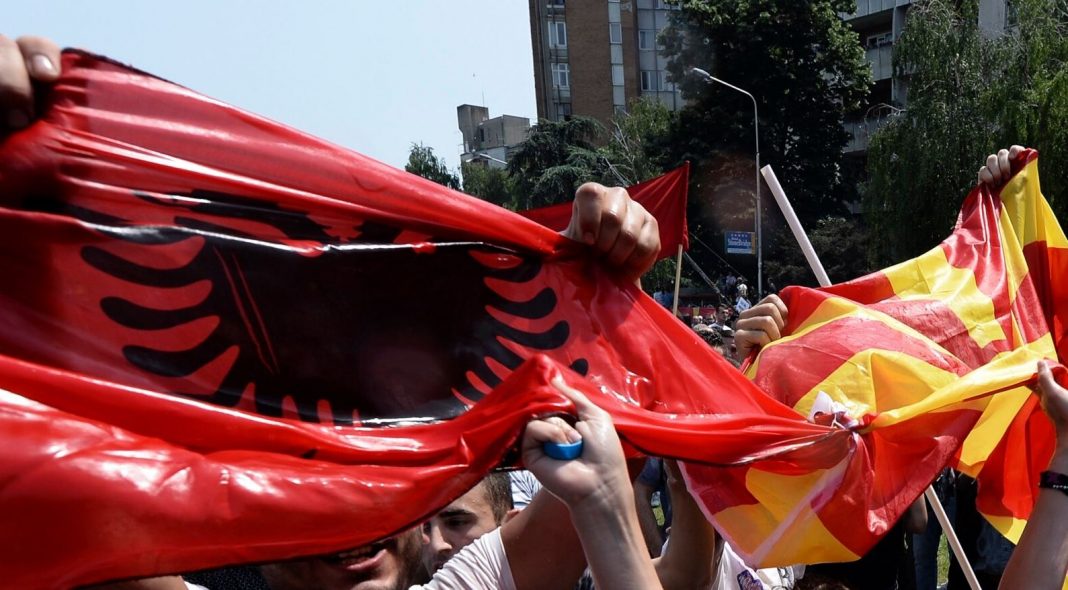
“Albanian Prime Minister of North Macedonia”, “Teaching will begin with the Macedonian anthem”, “With BDI in the Albanian government, Albanians will not lack a single hair”, “Give us 61 votes, so we are not conditioned by the Albanians”.
These are just a few of the messages being conveyed by political parties during rallies with the electorate or other public appearances in North Macedonia.
Although the election date has not been set yet, potential dates for parliamentary and presidential elections are seen as May 5 and May 8, 2024, with parties reintroducing ethnic rhetoric aimed at gaining votes.
However, political analysts Arsim Sinani and Aleksandar Cvetkovski do not believe that the parties will manage to “ignite the political scene with ethnic issues”.
Ethnic rhetoric from political parties is occurring at a time when North Macedonia is facing numerous challenges in the European integration process, a lack of consensus for the approval of constitutional changes, and criticism for the politicization of the judiciary, lack of results in the fight against corruption, widespread abuses of power, tender rigging, and other issues highlighted in the European Commission’s Progress Report.
Analyst Arsim Sinani told Radio Free Europe that in the absence of results in these areas, parties are returning to ethnic issues to divert attention from the real problems citizens face.
“This is an outdated issue, and I don’t believe the electorate is excited about these topics. Politicians use them for internal consumption interests. I don’t think they will succeed because citizens are tired, as they have other goals related to their well-being, improving their lives. They simply do not see the ethnic rhetoric of parties as something that can solve their problems,” Sinani believes.
He says that the use of “banal nationalistic rhetoric” by political parties does not appeal to anyone because, in his view, a large part of the citizens has already left the country in search of a better perspective. This rhetoric, as Sinani expresses it, “remains in function of satisfying the ego of certain political structures”.
“The narrative of a pathetic nationalism does not resonate with the people because they are not the same as they were 100 years ago. They understand the language that political parties use, which has to do with gaining votes to keep them in power, and then they forget everything they said,” he says.
Aleksandar Cvetkovski, the head of a non-governmental organization for tolerance and civil cooperation, told Radio Free Europe that it is regrettable when he sees parties still talking “nonsense”, thinking that they can gain support in elections with ethnic issues.
“It is already laughable to discuss such topics, but political kitchens are using them because otherwise, they would have to talk about governance monitoring or how they stole a lot of money, how there is no accountability and transparency, how it is normal for them to adopt laws that make theft intolerable. So, if we talk about these issues, then the question arises which political party will remain in power,” says Cvetkovski.
He says that even the Albanian electorate already understands that everything political parties they voted for is just “folklore”.
“Albanians themselves laugh and understand that it is folklore. How will parties manage to create big states? The publication of maps with ethnic states is laughable. So, let them do what they want, let them deal with folklore, while we are interested in who is stealing. Let’s focus on strengthening the judiciary and not allow power to be concentrated in the hands of a few individuals,” emphasizes Cvetkovski.