

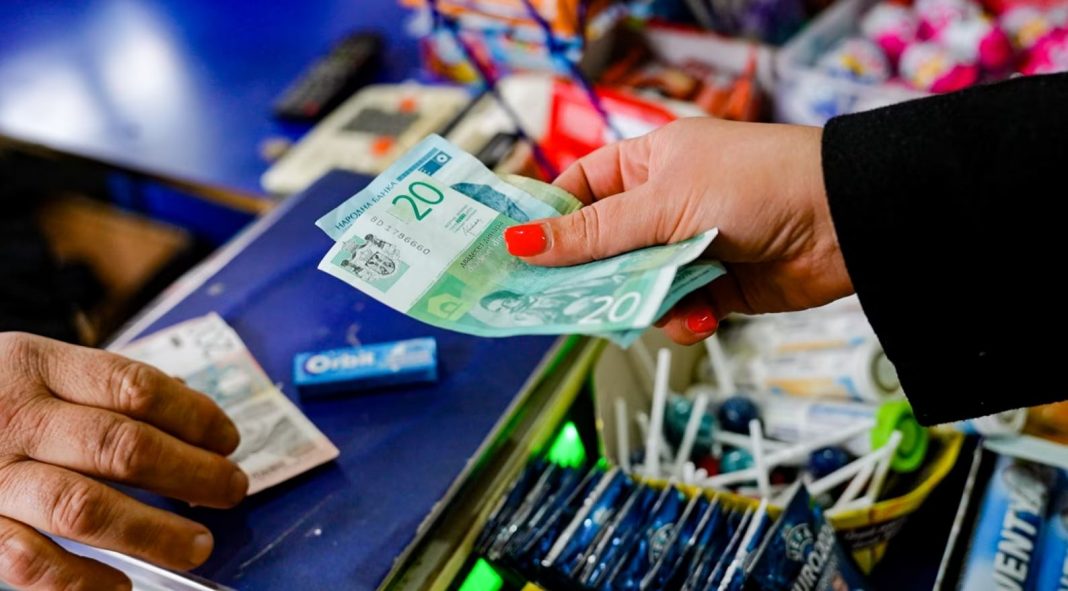
The European Union has called on Kosovo to offer a long transition period for phasing out the use of the Serbian dinar, as a regulation came into force that mandates only the use of the euro currency for payments in Kosovo starting from February 1.
The Government of Kosovo stated that the implementation of the Central Bank of Kosovo regulation regarding cash withdrawals will be done through a facilitated transition, without specifying a timeframe for this transition.
“The short transition period for implementing the regulation, along with the lack of information and practical solutions for all affected communities, seriously risks complicating their lives,” the EU said in a statement released on February 1.
The European bloc also called on Kosovo to “find a negotiated solution to this issue within the framework of mediated dialogue” from Brussels.
Brussels expressed concern about the decision of the Central Bank to accept payments only in euros, as according to the bloc, this decision, which prevents the use of Serbian dinars, could have consequences on the daily lives of Serbs in Kosovo.
According to the EU, for this decision, which came into force on February 1, there have been no prior consultations “especially regarding its potential impact on hospitals and schools, considering the lack of alternatives at this time”.
“The EU emphasizes that this regulation will also affect the financial support received by Serbs in Kosovo from Serbia,” said the statement released by the EU.
Previously, the international community, including the EU, had urged Kosovo to postpone the implementation of the Central Bank regulation.
The Government of Kosovo has stated that the Central Bank of Kosovo regulation does not imply that money transfers from Serbia will stop and also does not imply financial penalties for the possession of currencies of other states.
However, from February 1, the import of money will not be allowed if the institutions making the import are not licensed by the Centra Bank of Kosovo.
On January 31, Kosovo’s Deputy Prime Minister, Besnik Bislimi, announced that a campaign would be launched to inform citizens about this regulation, adding that he hopes there will be discussions between the central banks of Kosovo and Serbia to find a mechanism for transparent money transfers.
The enforcement of the Central Bank regulation has raised concerns among the Serbian population in Kosovo, which has used the Serbian dinar to make payments. With this currency, employees in Serbian institutions in Kosovo have also received their wages, as well as pensions, according to the Serbian system, as well as child allowances and social benefits.
Additionally, in areas where Serbs reside, dinars have been used in commercial establishments, while in the four northern municipalities with a Serbian majority, prices are in dinars.
The Serb List, the main party of Serbs in Kosovo, had previously stated that the decision of the Central Bank of Kosovo jeopardizes the survival of Serbs in Kosovo.




