

The European Union has expressed disapproval of Serbia’s decision to declare a day of mourning for the individuals killed in a violent incident that occurred in north Kosovo on September 24.
Peter Stano, the Spokesperson for the European Union, emphasized that “the victims of terrorism cannot be equated with terrorists” during a press briefing.
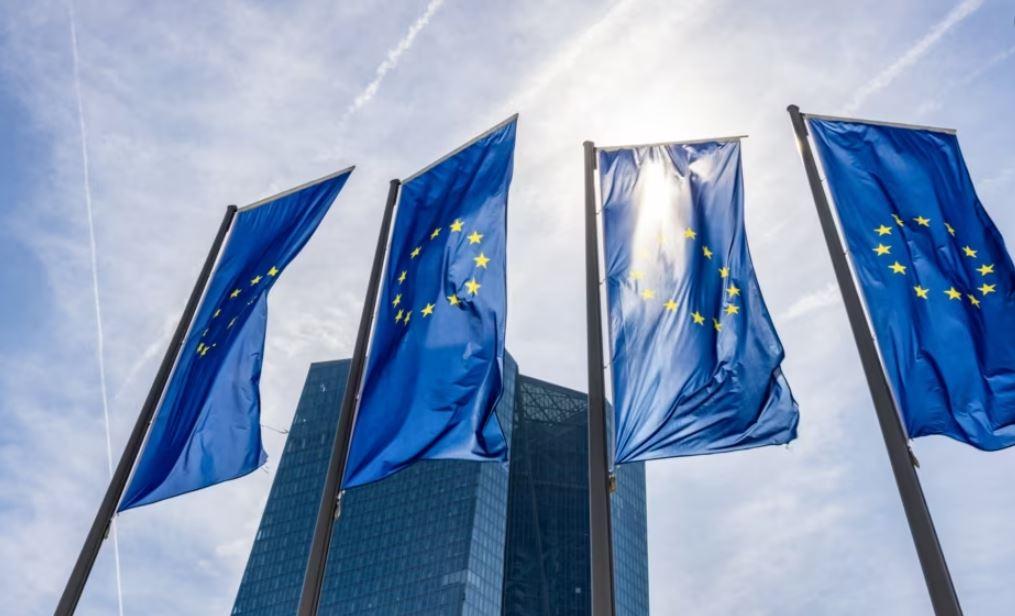
He noted that in the EU offices in Pristina, Kosovo’s capital, the flag was lowered to half-mast on Monday, in line with Kosovo’s day of mourning, to honor the slain Kosovo Police officer Afrim Bunjaku and the injured officers who were victims of a grave terrorist attack on Sunday. However, Serbia did not follow suit when announcing its own day of mourning.
Stano underlined the EU’s stance, which was articulated by the High Representative Josep Borrell on September 24, emphasizing that those responsible for the attack in Kosovo should be treated as terrorists and subjected to a thorough investigation.
“We observed that Serbia declared a day of mourning yesterday. On Monday, the EU office in Pristina lowered the flag to half-mast to pay tribute to the police officer who lost his life and the injured police officers, victims of the terrorist attack. Our position is unequivocal and was conveyed by the High Representative [Josep Borrell] on September 24. Furthermore, perpetrators can never be equated with victims. Hence, the EU delegation in Serbia did not lower the flag to half-mast. In general, the EU firmly opposes any glorification of criminals and terrorists or the declaration of mourning for them,” Stano stated.
Serbian President Aleksandar Vučić has publicly stated that he could not consider the individuals involved in the incident in Banjska as terrorists. In response to questions regarding this statement, Stano reiterated the EU’s position that the attack on the Kosovo Police on September 24 was unequivocally classified as a terrorist act that warrants investigation and accountability for those responsible.
Stano further clarified that while the EU refrains from commenting on every statement or interpretation, it underscores the importance of gaining clarity about the events that transpired on that Sunday.
Earlier, the EU stated that it awaits the conclusion of investigations to determine whether any measures will be taken, while some EU member states have called for Serbia to be held accountable for the incident in Banjska.
Regarding the events on September 24 in northern Kosovo, it was a day marred by violence when Kosovo Police faced an armed and masked group while attempting to remove road barricades in the village of Banjska, situated in the municipality of Zvecan, one of the four northern municipalities with a Serbian majority population.
Following this confrontation, the armed group sought refuge in Banjska Monastery, resulting in a prolonged standoff with the police.
Kosovo’s Minister of Internal Affairs Xhelal Sveçla and the Police have asserted that Milan Radojičić, the deputy leader of the Serb List, a prominent political party representing Serbs in Kosovo with official backing from Belgrade, organized and participated in the attack.
Radojičić is under US sanctions and is wanted in Kosovo for alleged witness intimidation related to the well-known “Brezovica” trial.
In response to these allegations, Sveçla released a drone-recorded video showing Milan Radojičić’s presence in Banjska.
The situation has resulted in the arrest of four individuals connected to the events in Banjska, with the Police revealing weapons and other items they claim to have confiscated in the village.
Kosovo has held Serbia responsible for the attack, while Serbia has pointed to Kosovo Serbs as the key actors.
Both the United States and the European Union have strongly condemned the attack, demanding that those responsible be brought to justice.




