
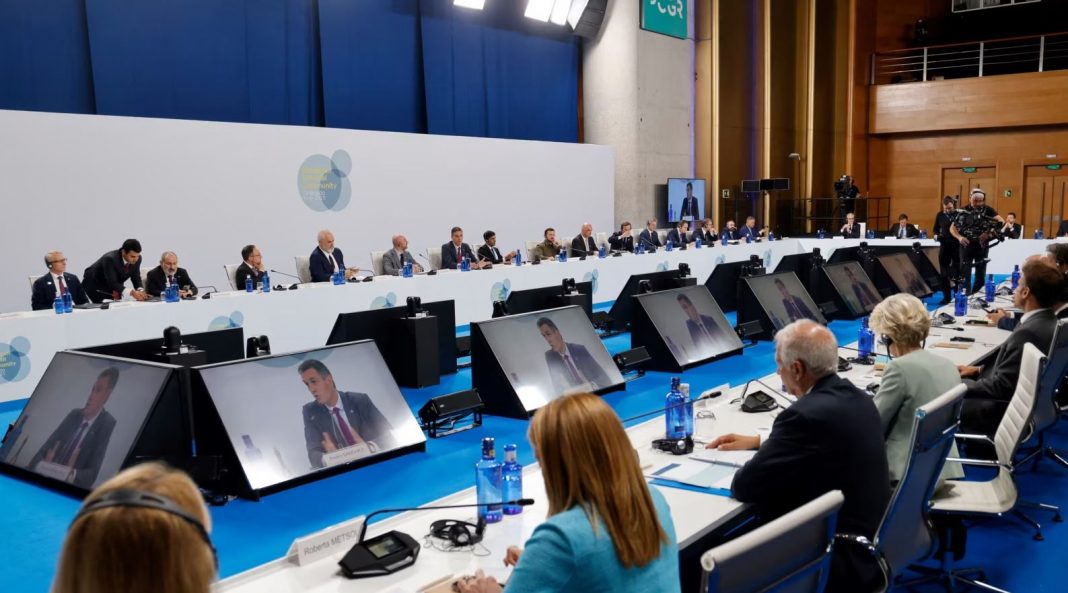
European Union leaders are set to convene in Granada, Spain, this Friday to deliberate on some of the most pressing issues facing the bloc, including migration, enlargement, and geopolitics.
Over recent months, there has been a noticeable uptick in the number of migrants arriving in the European Union.
Nevertheless, despite some headway in reform negotiations, the topic of migration continues to be a contentious issue within the European bloc.
Italian Prime Minister Giorgia Meloni is anticipated to engage in discussions with German Chancellor Olaf Scholz on the fringes of the meeting. Meloni has expressed surprise at the financial support provided by Germany to civil organizations involved in rescuing migrants in the Mediterranean region.
The possibility of EU leaders reaching a consensus on a unified statement regarding migration remains uncertain, especially following a failed attempt in June.
Enlargement is another key item on the agenda, with various ideas for potential reforms that would ensure the bloc remains functional should more countries seek to join the EU.
Following Russia’s involvement in the conflict in Ukraine, Moldova and Georgia have applied for EU membership, increasing the number of countries aspiring to join the European bloc to 10.
Many EU leaders, including European Commission President Ursula von der Leyen, have stressed the importance of both the EU and candidate countries doing their part in this process.
While some leaders have mentioned the year 2030, as suggested by European Council President Charles Michel, as a politically opportune timeframe for enlargement, opinions on this matter vary.
Regarding specific decisions on enlargement, EU leaders have indicated that these will depend on progress reports to be published by the European Commission at the beginning of November.
The draft of the Declaration that EU leaders are expected to approve in Granada emphasizes the need for both current and prospective member states to prepare for a more extensive community like the EU. Aspiring countries are encouraged to accelerate their efforts in implementing reforms, particularly in the area of the rule of law, aligning with the enlargement approach based on individual merits and with EU assistance. Simultaneously, the EU must lay the groundwork for expansion by presenting its long-term ambitions and strategies for achieving them.
EU leaders are also expected to deliberate on the bloc’s strategic priorities for the future, encompassing defense capabilities, energy security, collective responses to the climate crisis, and the economic independence of the 27 member states.
Additionally, discussions pertaining to Kosovo are on the agenda.
Diplomatic sources within the EU have indicated that the situation in Kosovo and the tensions in relations between Kosovo and Serbia will be addressed during the October 6 summit.
Several member countries are reportedly exerting pressure for measures to be taken against Serbia in response to recent developments. These tensions escalated following attacks on Kosovo Police in Zvecan’s Banjska village on September 24.
The attacks resulted in the tragic death of police officer Afrim Bunjaku, with three Serbian assailants also losing their lives in the exchange of fire.
Kosovo has placed blame on Serbia for the attack, but Serbia has vehemently denied these allegations.
Numerous leaders have called for a de-escalation of tensions and emphasized that the normalization of relations between Kosovo and Serbia is a prerequisite for progress towards integration into the EU. This sentiment was echoed by European Council President Charles Michel in his statements to the press.
A day before the EU summit in Granada, several meetings were held on the sidelines of a European Political Community summit involving the President of Kosovo, Vjosa Osmani, and the President of Serbia, Aleksandar Vučić. However, efforts to arrange a direct meeting between the two leaders were unsuccessful.