

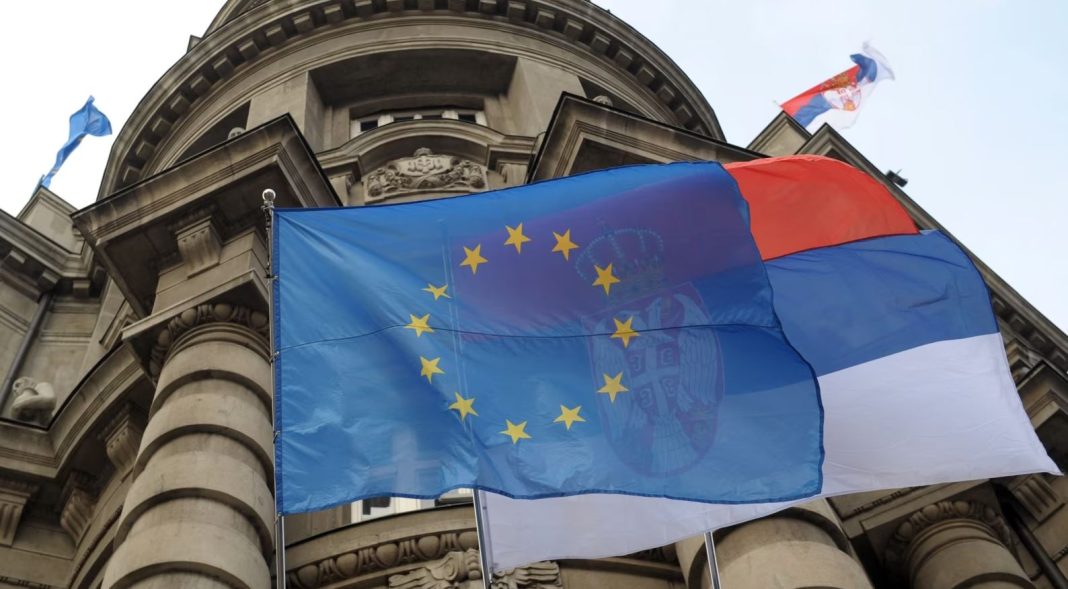
The European Union said that there would be consequences for Serbia due to its non-alignment with the bloc’s foreign policy positions, which, according to the bloc, is an integral part of European integration.
This reaction came from the Chief Spokesperson of the European Commission, Eric Mamer, after Serbia did not support the statement of the 27 EU member states regarding the death of Russian opposition politician, Alexei Navalny. Through this statement, the EU blamed Russian President Vladimir Putin for the death of the Kremlin critic.
Mamer stated that Serbia, a candidate country for EU membership, would face consequences for not aligning with the EU’s foreign and security policy positions.
“Alignment is part of the accession process. There are clear consequences for non-alignment with the EU positions as this is a basic requirement for a country to align with these positions to become an EU member. Serbia has expressed that EU membership is its strategic goal,” he said.
Meanwhile, the EU Spokesperson for Foreign Affairs and Security Policy, Peter Stano, reiterated the call for all states to align with its policies and demonstrate their commitment to European values.
“The European Union wants to count on all candidate countries as reliable European partners for common principles, values, security, and prosperity. The statement on Navalny was precisely about values and principles, as it concerned the sudden death of a political prisoner as a result of actions by the authorities against him,” Stano said.
“The EU and the member states reiterated in December in the conclusions of the General Affairs Council meeting their strong expectations for Serbia to increase efforts to align comprehensively with the EU’s common positions in the field of foreign and security policy and with restrictive measures, including those against Russia and Belarus,” he added.
The EU’s stance on non-alignment with the Navalny declaration became public while the burial of the Kremlin critic was taking place in Moscow, who died at the age of 47 in a prison in the Arctic, where he was serving a long sentence on charges of extremism.
After the news that Serbia did not support the EU’s declaration, Serbian President Aleksandar Vučić said he was unaware of such a fact and would be surprised if the opposite happened. He said he did not see the non-support of this statement as a “major tragedy”.
In the past, Serbia has also faced continuous calls to support the bloc’s sanctions against Russia, as Moscow began its unprovoked push against Ukraine in February 2022.




