
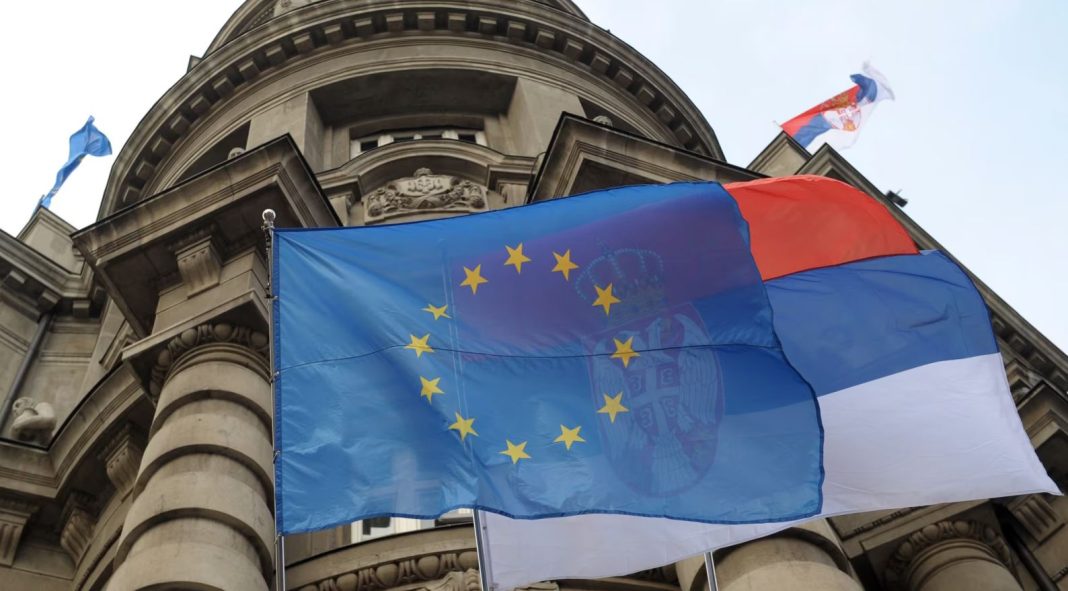
Although it has been over two months since the European Commission and the European External Action Service (EEAS) submitted their proposal to amend the conditions of Chapter 35 of the negotiating framework in the accession negotiations process with Serbia, the necessary consensus for the approval of these changes has not yet been reached in the EU Council.
Radio Free Europe (RFE) reports that there are still differences in positions among the member states, and the Belgian Presidency of the European Union is making efforts to overcome them. According to the same sources cited by RFE, the initial proposal of the European Commission for these changes was not accepted by some states. Subsequently, some member states had made their own proposals, which were discussed in the working groups of the Council dealing with the Western Balkans region and the enlargement process.
Diplomatic sources in the EU state that this issue will be discussed by EU ambassadors in COREPER during the month of April, which is the Committee of the Permanent Representatives of the Member States to the EU.
The aim of changing this framework is to include the implementation of the Agreement on the normalization of relations with Kosovo, reached in February 2023, in Chapter 35 of the accession negotiations, as a specific condition for Serbia.
Also, the normalization of relations with Kosovo for Serbia is included in this chapter, but progress in the normalization process is required. It is now aimed to mention the implementation of the agreement as a condition.
At the last meeting in December 2023, the member states had requested the European Commission to submit the proposal to amend the negotiating framework for Serbia by the end of January this year at the latest.
Two days after this deadline had expired, in early February, the European Commission and the EEAS had submitted their proposal.
Delays in the Commission’s proposal had come, according to diplomatic sources in the EU, due to efforts by the Commissioner for Neighborhood and Enlargement, Oliver Várhelyi, to prevent this proposal. Hungary, the country from which this commissioner comes, according to diplomatic sources, continues to be among the member states obstructing the approval of these changes in the EU Council.
Chapter 35 of the accession negotiations, which is called “other issues”, does not concern EU legislation, but sets specific things that the EU or any member state requires. In the case of Serbia, it also includes the normalization of relations with Kosovo.
This chapter was opened among the first in December 2015, to convey through it the progress towards normalization of relations. Until last autumn, the European Commission usually assessed Serbia’s behavior in the dialogue as “constructive” and concluded that in this way, it meets the criteria to advance in the accession negotiations process. But, in the Progress Report from the autumn of 2023, it was noted that Serbia, in some areas, has regressed in fulfilling obligations from the dialogue for the normalization of relations with Kosovo.
For lack of progress in the implementation of obligations, the EU has also criticized Kosovo, even imposing restrictive measures against it. These measures are still in force.
Diplomats from some EU member states have warned that the EU must ensure the approval of changes to the negotiating framework for Serbia as soon as possible because otherwise there will be serious doubts about the implementation of the Agreement, which it had mediated and had called a great success.
The Agreement on the normalization of relations between Kosovo and Serbia, as well as the Annex for its implementation reached in Ohrid in March 2023, were not signed by the parties because such thing was refused by the Serbian side.
However, the EU continues to insist that, although not signed, this Agreement has been accepted by the parties and it represents a legal obligation for them. Its implementation, according to EU officials, is a condition for advancement in the integration process into the EU.
This agreement, consisting of 11 points, also provides for a level of self-government for the Serbian community in Kosovo and mutual recognition of state symbols, while requiring Pristina and Belgrade to implement all previous agreements reached during the dialogue.
Precisely because more than a year has passed since the conclusion of this agreement, and from the warning of the EU that its implementation will be a formal part of the negotiating framework for Serbia, the approval of these changes in the Council by the member states is considered necessary and aimed to be achieved as soon as possible.
The EU negotiating framework is a basic document on which the accession negotiations process with a candidate country is conducted. The negotiating framework for Serbia was approved by the Council in December 2013, while Serbia started accession negotiations with the EU in January 2014. So far, Serbia has opened negotiations on 22 out of a total of 35 chapters. Due to non-support for EU sanctions against Russia, Serbia has not opened any chapters since 2021.