

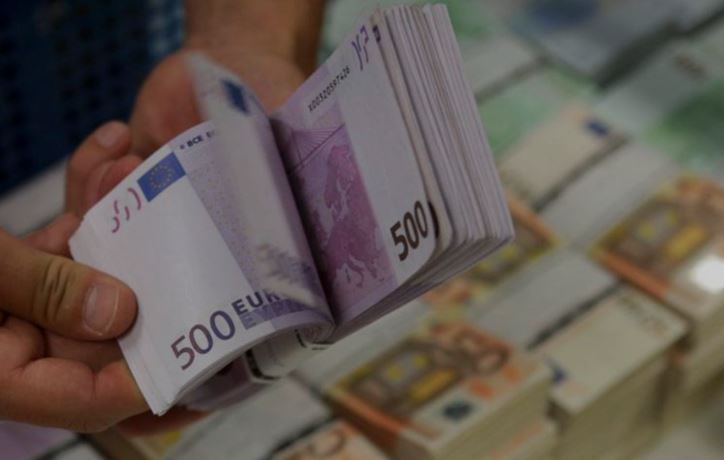
The euro has experienced a slight decline in the exchange rate during the early days of this week, enough to register a new historical minimum against the Albanian lek.
According to the official exchange rate from the Bank of Albania, the European currency was exchanged on Tuesday at 100.23 lek, down from the previous record of 100.24 lek, set on June 25.
Exchange rate fluctuations this summer have been minimal and largely statistical, as since May, the rate has been effectively fixed by the Bank of Albania, just above the 100 lek level.
However, the summer season has significantly narrowed the annual overvaluation gap of the euro. The annual decline in the exchange rate has dropped to 2.6%, from 9.1% at the end of 2023.
With increased foreign currency inflows during the summer season, the Bank of Albania periodically intervenes in the foreign exchange market by making direct purchases of currency, with the aim of preventing the euro from falling below the 100 lek threshold. This intervention is justified by the legal objective of inflation. In the first half of this year, inflation fell below the Bank of Albania’s 3% target. According to the Institute of Statistics (INSTAT), in June, the annual inflation rate was 2.1%, the lowest in the last three years. The appreciation of the lek against the euro has also had a significant impact on reducing inflation, by lowering imported inflation.
According to the Bank of Albania, the value of currency purchased in the market will only be disclosed in the report on market interventions, which is typically published with a three-month delay.
The Bank of Albania has not set specific deadlines or parameters for its intervention in the exchange rate. It is believed that the goal of the Bank of Albania’s intervention is to prevent the euro from falling below the 100 lek threshold, set as a kind of psychological barrier. It is expected that the overvaluation pressures on the national currency will decrease after the summer season; however, this is difficult to say with certainty, as in recent years, even the end of the holiday season has not led to a significant devaluation of the lek.
A strong lek has helped reduce inflation on imported goods, but on the other hand, it has had negative effects on the export sectors of the Albanian economy. The consequences have been particularly serious in the textile sector, but meanwhile, businesses related to tourism partly attribute the rise in prices to the devaluation of the euro.




