

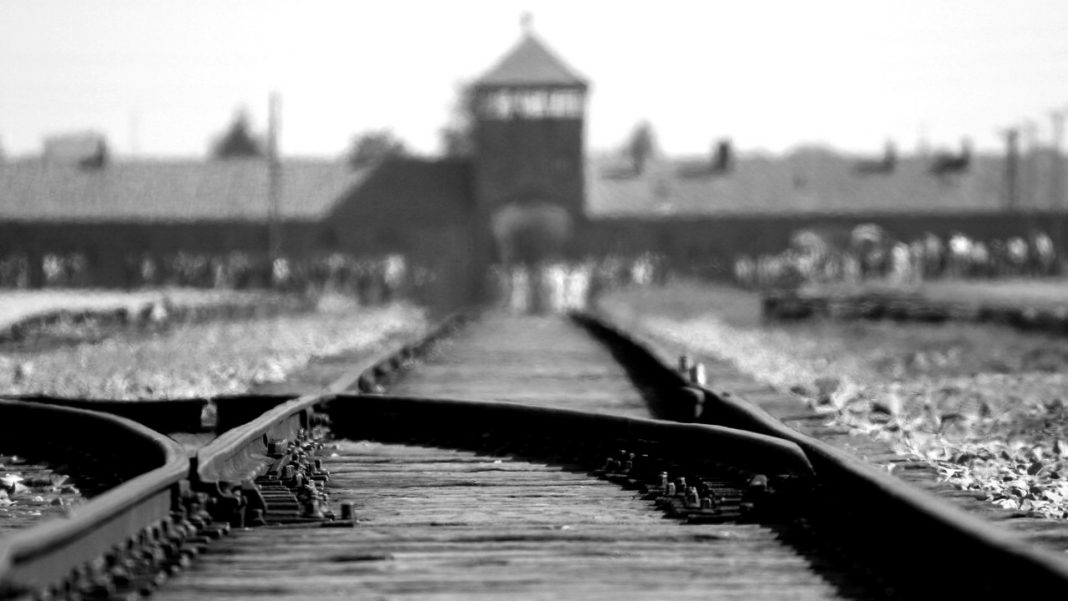
On August 2, Europeans commemorate the Roma Holocaust, bringing to mind the tragedies, misery, and prosecution suffered by this ethnic group during World War II.
Recognized by the European Union as an International Remembrance Day, August 2nd was chosen because back in 1944, it was the day when the Nazi regime killed 4,300 prisoners of Roma ethnicity in a single night, at one of their concentration camps in Auschwitz-Birkenau.
Today, 76 years later, the exact number of Roma murdered by Nazis remains unknown but it’s thought to be in the hundreds of thousands.
Roma and Sinti communities are the largest ethnic minorities currently living in Europe but have also suffered from continuous persecution and prejudice. The stereotypes surrounding them would be published in newspapers, books, and postcards on a regular basis, thus affecting the escalation of the bigotry and prejudice revolving around them in Europe and the whole world.
The situation aggravated even more during the worldwide economic crisis and especially after Nazis came to power in Germany.
The Nazi regime was based on a racist ideology. They propagated ideas of “purity” and “racial superiority” – principles that they made into laws, in 1935. Through these laws, they began the first wave of massive persecutions against different ethnicities, mainly Hebrew and Roma.
The persecution escalated significantly during World War II, when accompanied by their fascist allies, the Nazis raised around 25 concentration and extermination camps like the ones in Jasenovac (Croatia), Chelmno (Poland), and Auschwitz-Birkenau (Poland). Millions of innocent people have been killed in these camps.
There are no official figures when it comes to the Nazi genocide, but the majority of victims were mainly of Hebrew, Roma, Polish, Russian and Slavic descent. The Museum of the Holocaust in the United States says that an est. 250,000-500,000 victims of Roma descent were killed by Nazi Germany. By the end of the War, the size of the Roma population was down to just 20% – 30% of what it had been before.
In the Roma language this genocide is known as Pharrajimos, (the Great Devouring), or as Samurdaripen (the Great Killings), but through the years, very few have been said about the persecution suffered by the Roma during this time.
Self-awareness in regards to this massacre began, when the different research studies started to bring to light the many cases of executions, with one of the most horrifying being the one in Auschwitz-Birkenau on August 2nd, 1944.
In 2010, several organizations established the annual international event known as “Dikh he na bister” meaning “Look and Don’t Forget”, – through which the massacres suffered by the Roma and Sinti people are remembered. In 2015, the European Parliament declared 2 August the annual “European Roma Holocaust Memorial Day” to commemorate the 500,000 Roma murdered in Nazi-occupied Europe, but unfortunately, most of the region still did not officially recognize this day.




