

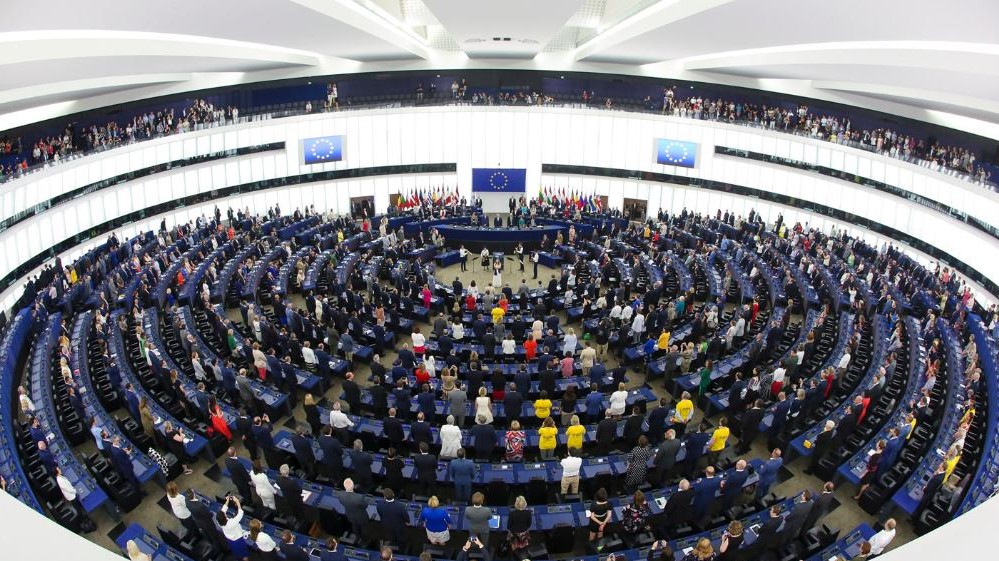
The European Parliament is currently in the process of formulating a special resolution regarding the evolving situation in Kosovo and the relations between Pristina and Belgrade.
Sources within the European Parliament have disclosed to Radio Free Europe that, following a discussion about the situation in Kosovo that took place two weeks ago, it is anticipated that this resolution will extend an invitation to both Kosovo and Serbia to re-engage in the dialogue mediated by Brussels. Additionally, it is expected to call for punitive measures against Serbia.
This was also confirmed by Greens MEP and rapporteur for Kosovo Viola von Cramon in an interview with Alice Taylor for the “Inside Albania” podcast on Euronews Albania. Von Cramon said that punitive measures against Serbia have already been drafted.
Regarding punitive measures against Serbia, there appears to be a majority consensus within the European Parliament. However, decisions concerning these measures fall under the purview of the Council of the European Union for traditional sanctions or the European Commission, which is empowered to impose punitive measures, as it has already done with respect to Kosovo.
This resolution is slated for an expedited procedure and is anticipated to be ratified during the plenary session of the European Parliament on October 19.
According to insider sources, the resolution is likely to seek a thorough investigation into the attack on the Kosovo police that occurred on September 24 in the village of Banjska in Zvecan.
Kosovo has accused Serbia of involvement in the attack by an armed group of Serbs against the Kosovo police, which resulted in the death of police officer Afrim Bunjaku. Serbia has vehemently denied any complicity in the incident.
Previously, the EU had indicated that it is awaiting the conclusion of ongoing investigations and will subsequently consider potential actions and measures.
The idea for such a resolution in the European Parliament was introduced by Tonino Picula, a Social Democratic Member of Parliament from Croatia, and has garnered the necessary support from political groups.
The next step in the process involves each political group presenting its own draft resolution. Following this, an appointed coordinator will work towards a consensus on the resolution’s amendments. Once consensus is reached among the groups regarding the common wording of the resolution, it will be put to a vote during the plenary session of the European Parliament.




