

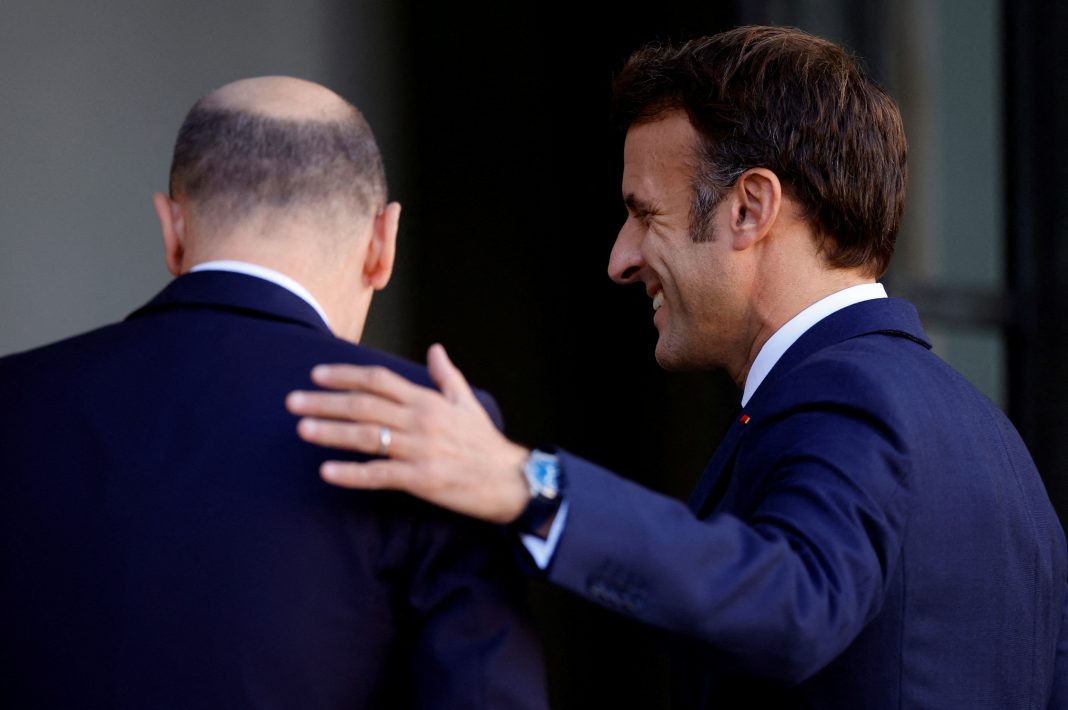
French President Emmanuel Macron said that if Kosovo does not make progress in defusing tensions with Serbia, France and Germany could review its visa liberalization policy, but when asked, German sources said they will stick to the original deadline of 1 January 2024.
Kosovo has been pushing for visa-free travel in the EU for many years and it was finally approved this year, to come into force as of the start of 2024. But following recent tensions in the north of Kosovo with ethnic Serbs and neighboring Serbia, this has been called into jeopardy.
EU sanctions against Kosovo have so far included the withdrawal of funding and suspension of meetings, but it has long been rumored that visa liberalization suspension could be on the cards.
Last week, Macron said, “France and Germany are committed and have also made moves to open up, particularly on visa policy and other economic issues, which will be reviewed if there is not a policy of responsibility on both sides.”
The news that the two countries, known for their joint support of Kosovo, could withdraw or push for suspension of the forthcoming regime, caused anger in the region. But Macron’s German counterpart, Chancellor Olaf Scholz did not make any public statements in a similar vein.
When asked whether Macron and Scholz had jointly agreed on the possible review of the visa liberalization system, EURACTIV reported that a source close to the German Foreign Ministry said “Germany is subject to the regulations adopted by the EU in April 2023. According to these, Kosovar nationals will, in future, be exempt from the visa requirement for short stays in the Schengen area (up to 90 days within 180 days). This will come into force on 1 January 2024. This means that all states of the Western Balkans will then be equally exempt from the visa requirement for short stays in the Schengen area.”
They further reported that according to other reports from Berlin, Germany will not deviate from the deadline of 1 January 2024, for the new regime to come into effect. This suggests that Macron’s strong statement, including Germany, was made without Berlin’s agreement.
Kosovo President Vjosa Osmani also responded to Macron’s statement, saying if this happens, the Kosovo-Serbia dialogue would be killed once and for all.
“I would say that this is the way to kill the dialogue once and for all. If someone wants to stop dialogue, then take such measures, which are punitive measures against the people of Kosovo. They are not against any leader, they are not against a policy, they are against the people of Kosovo. And such an unprecedented punishment, which has been a great injustice for the people of Kosovo, will result in the death of dialogue,” Osmani said.
She added she expects the EU to remove the punitive measures against Kosovo, calling the unfair and disproportionate.




