

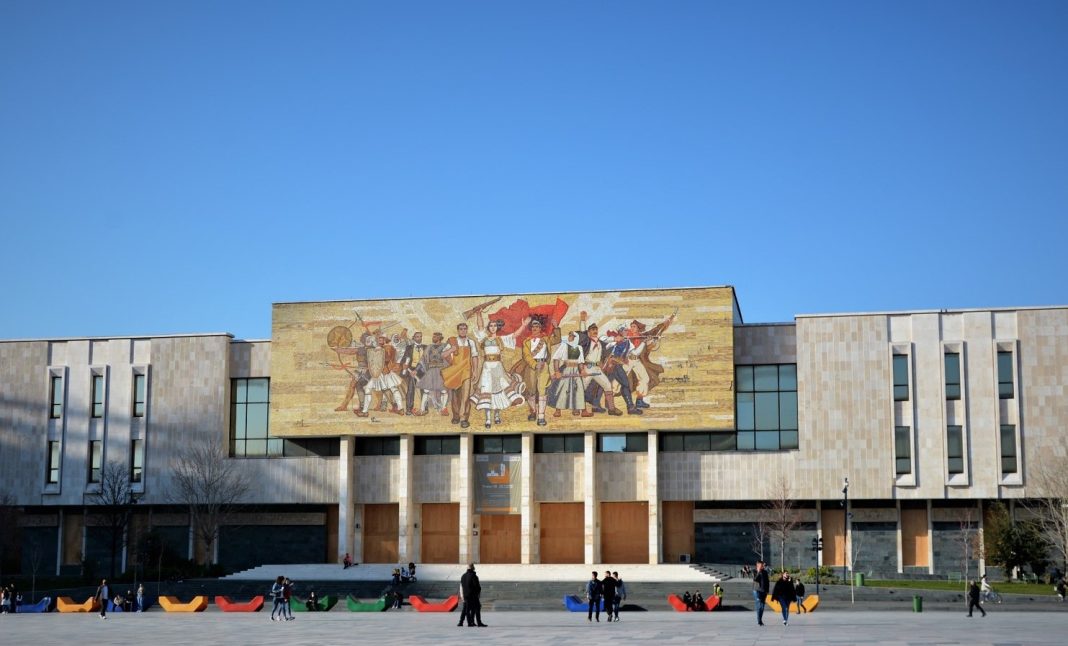
As the intensity of cultural tours is expected to increase in the coming months in Tirana, the doors of the National Historical Museum will be closed; not for a short period, but for a full four years.
In a brief announcement without giving any details, this institution informed interested parties that they will not be able to visit until March 15, 2028.
The brief explanation given by the institution, without providing any information on why it will not receive visitors for nearly 1,500 days led to dissatisfaction and frustration, especially among those in the tourism sector who had included it in their packages, some even previously promoted. Despite the lack of information, data on the project to be implemented can be found in the procurement procedure for this contract, which is accompanied by several documents.
The project for the Museum
The restoration of the National Historical Museum is considered a priority project in documents, but in practice, progress has been very slow until the abrupt closure announced this week. According to documents, the Museum is part of the list of national cultural heritage institutions that suffered damage according to the assessment following the earthquake on November 26, 2019, and require intervention.
“The new project for the restoration and reconstruction of the National Historical Museum is integrated into a single project, technical solutions sought for the restoration of damages and possible reinforcement of damaged structures with technical solutions for the restoration, reconstruction, and renovation of the building focused on updating museology and its functionality. The project takes into consideration the approved project ‘Reinforcement and rehabilitation intervention of 12 objects in the Municipality of Tirana, Kruja, Lezha, Kavaja, Mirdita,” the document states.
It also emphasizes that the National Historical Museum has objects of Albanian cultural heritage in its collections.
“An interesting part of which belongs to periods from the Paleolithic to late antiquity (4th century BC). These are exhibited in the Archaeology Pavilion, which has over 400 objects on its own. The Museum is conceived so that the presentation is made through eight pavilions: the ancient pavilion, the medieval pavilion, the National Renaissance Pavilion, the Pavilion of Independence, the icon pavilion, the National-Liberation Antifascist War Pavilion, the Pavilion of Communist Terror, Mother Teresa Pavilion,” the document states.
What the works and deadlines envisage
Referring to the procedural documents, the intervention at the Museum foresees several phases and the deadlines for each of them:
- Packaging and evacuation of objects – Expected duration of work: maximum 4 cumulative months in various phases of the implementation period)
- Consolidation of the existing structure (including demolition work) – Expected duration of work: maximum 12 months
- Restoration of the exterior and interior courtyard stone facade and windows/doors – Expected duration of work: maximum 9 months
- Roof repair – Expected duration of work: maximum 5 months
Meanwhile, interventions include investments in energy efficiency as well as compliance with Euro codes.




