

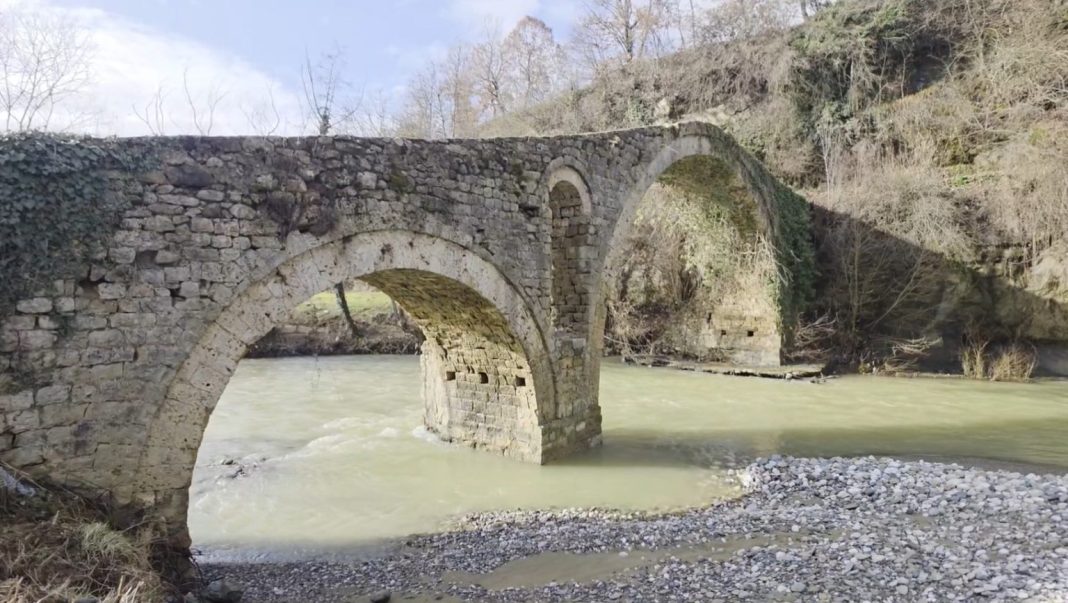
The Golikë Bridge, a Category I Cultural Monument built at the end of the 17th century, is currently facing a real risk of destruction.
One of the most important works of cultural heritage in the Mokra region, historically linked to a branch of the ancient Via Egnatia, the bridge is being continuously damaged by illegal excavations.
For years, the bridge has fallen prey to gold seekers and illegal artifact hunters, who repeatedly interfere with its structure and body, seriously undermining the monument’s stability.
Such damage has also been documented recently, but the perpetrators remain unidentified, as the excavations are carried out during nighttime hours. The consequences are clearly visible: cavities in the foundations, cracks in the bridge structure, and partial collapse of the binding material—damage that poses a serious risk.
In addition to criminal interference, atmospheric factors have also played a significant role. More than 300 years of exposure to rainfall, frost, and erosion have accelerated the bridge’s degradation, making intervention by responsible institutions an urgent necessity.
Under these circumstances, local residents and municipal leaders are calling for immediate action from the Ministry of Tourism and Culture through a serious restoration and rehabilitation project.
The problem is not isolated. Like the Golikë Bridge, the monumental tombs of Selcë, located just a few kilometers away—another archaeological site of exceptional importance—also suffer from almost non-existent levels of security and protection.
This situation has facilitated looters, who excavate without any obstacles, destroying irreplaceable cultural heritage assets.




