

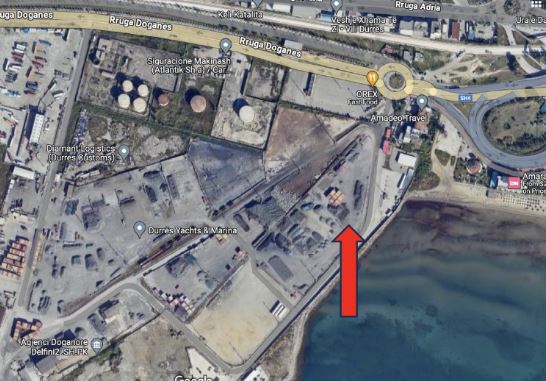
About 2,100 total metric tons of suspected hazardous waste packed in 102 containers are expected to return to their country of origin, Albania, on October 27, 2024, via the Italian port of Gioia Tauro after all have sailed.
The international watchdog group, Basel Action Network (BAN), following a tip-off from a whistleblower, warned Albania, several transit countries and the destination country of Thailand about the massive shipment.
Following the warning, the Thai government refused the import and BAN subsequently obtained assurances from the shipping lines involved – Maersk and Mediterranean Shipping Company (MSC) that they would ensure the safe return of the containers to their original port of discharge – – Port of Durres in Albania.
In a second letter to the government, BAN once again calls on Albania to transparently sample and test the suspected hazardous waste and share a separate sample with BAN. BAN is about to arrive in Durrës to participate in the survey and take a split sample after the ship’s arrival on 27 October.
“We call on Albania to break the seals of the containers in full view of the public and in the presence of independent groups like BAN, followed by taking separate samples that can be analyzed in parallel in different laboratories,” said the Executive Director of BAN, Jim Puckett.
“Only open, transparent sampling and testing of the contents will provide public confidence in the results and nature of these shipments sent to Thailand and the damage they may have caused both while sitting on the dock in Durrës and if they had reached their intended destination in Thailand.”
BAN calls on the Albanian government to undertake the following protocol:
- Set a time/date for sampling and publicize the event in advance so that the press, NGOs, international observers, government officials and any other interested parties can attend. BAN proposes Monday morning, the 28th.
- BAN prepares to be present to take a sample and observe the opening of the containers.
- Upon arrival, ensure that all containers are accounted for and that container seals have not been broken. Place them in a harbor area.
- At the sampling event, allow observers a clear view of the three containers whose seals have not yet been broken. Three containers allow for a more representative sample of the shipment.
- When the seals are broken and the doors of the three containers are opened, a sample must be visibly collected by a trained specialist from each of the three containers and placed in a clean glass container. All three samples should be thoroughly mixed with a clean glass rod.
- Then, the samples should be divided equally into three parts, where one mixed sample will go to the Albanian Ministry of Environment and Tourism, another to an independent third party located in another country and one in BAN.
- The government must then send its sample to a laboratory of its choice, the independent third party must send its sample to a laboratory of its choice and BAN will send it to a laboratory of its choice.
- The results of each will be made public in the paper of the laboratories involved.
- If any of the three samples indicate that the materials inside the containers are hazardous, then from that point on they must be managed as hazardous waste.
- If no safe, legitimate recycling can be found that properly manages the waste, then it should be disposed of in a landfill designed for such hazardous waste.
Materials must first be properly placed in a leak-proof container designed for hazardous waste disposal before proceeding to recycling or landfill operations.




