

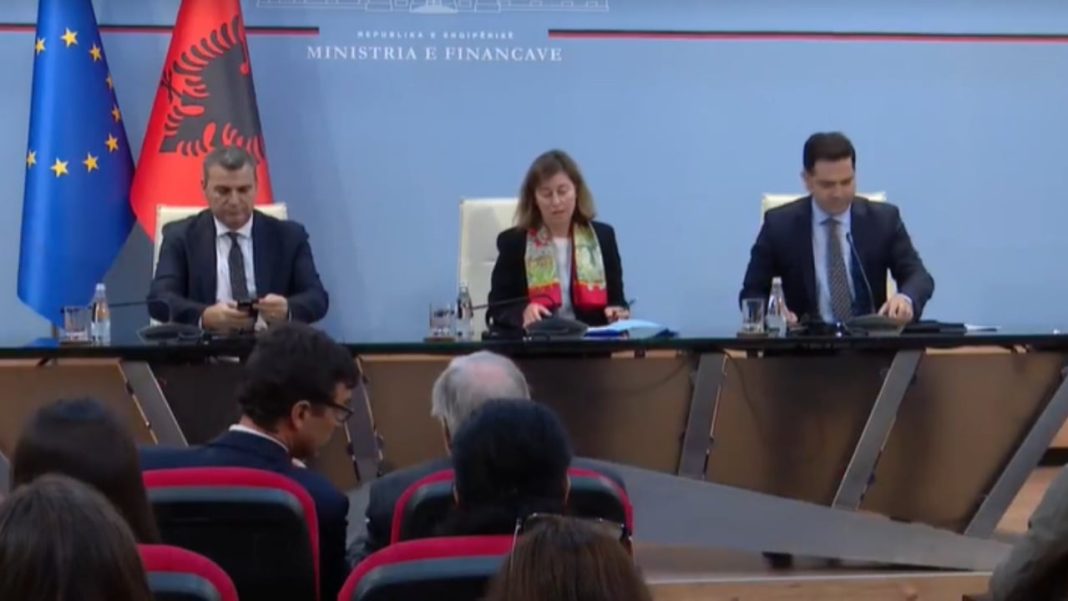
The International Monetary Fund assesses that Albania remains one of the fastest-growing economies in Europe, driven by consumption, investment, and tourism. During the IMF mission in Tirana, the mission chief, Anke Weber, emphasized that economic growth is expected to reach 3.6% in 2026.
The IMF highlights that fiscal policies have reduced public debt, while monetary policy has helped stabilize inflation below the target. However, the international institution calls for strengthening tax revenues and accelerating the property-tax reform.
“Albania continues to stand out as one of the fastest-growing economies in Europe. Fiscal policies have reduced public debt, while monetary policy has helped bring inflation below target,” Weber said.
The IMF warns of risks that require close monitoring, particularly the rise in bank lending and foreign-currency exposure, stressing the need for strong cooperation among institutions.
On the other hand, structural challenges remain present: low productivity, emigration that shrinks the labor force, and administrative barriers that affect the business climate.
“Productivity remains low, while the labor force has decreased due to emigration. Comprehensive reforms in human capital, the rule of law, and business regulations will be necessary to advance the integration agenda,” Weber stated, adding that the IMF remains committed to supporting Albania in its development and European integration process.