
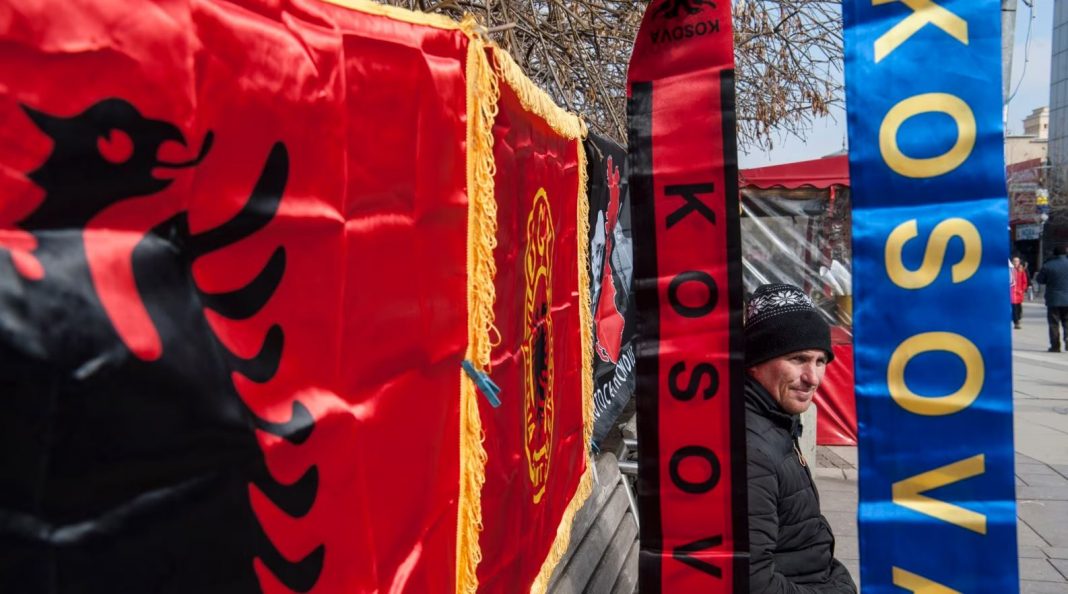
The value of products from Albania, imported into Kosovo, has increased by more than 55 million euros in the January-September period of this year compared to the same period last year.
Data from the Central Bank of Kosovo, provided by Radio Free Europe, also indicate an increase in exports from Kosovo to Albania – from 77 million euros in the January-September period of 2022 to 82 million euros during the same period this year.
But what is the reason for the growth in trade between the two states?
The President of the Economic Chamber of Kosovo, Lulzim Rafuna, connects it to the ban on Serbian products in the Kosovo market.
As a result, he says, Kosovo businesses have turned to products from Albania due to geographical proximity.
The Government of Kosovo has banned almost all imports from Serbia since June 15 when Serbian forces kidnaped three Kosovo Police officers.
While the officers have been released to defend themselves freely, the ban on Serbian products has continued.
Kosovo imports the majority of its products from neighboring and European Union countries.
In 2022, according to data from the Statistical Agency in the country, Kosovo imported products worth over 5 billion euros, while it exported products worth nearly 1 billion euros.
Kosovo-Albania Barriers
Over the years, Kosovo and Albania have reached dozens of agreements to simplify customs procedures and strengthen economic cooperation, but business representatives from both sides say many of them are not implemented in practice.
They complain about a series of barriers – from long waits at the border to product scanning.
Bedri Kosumi, owner of the “Pestova” company engaged in the production and processing of potatoes, says that for 20 years, he has been exporting products to Albania and importing raw materials from there.
Until this year, he says he has exported products worth one million euros to the neighboring country.
“For every export, Albanian authorities require a notarized copy of the product quality certificate. Scanning trucks to check the cargo inside is impractical and expensive – 22 euros unnecessary. Trucks still wait for hours at the border – which has a monetary cost and is a significant loss of time,” Kosumi tells Radio Free Europe.
Rafuna confirms that complaints about notarizing the quality certificate also come from other companies to the Economic Chamber of Kosovo.
According to him, this requirement from the National Food Authority of Albania is unfair because, as he says, Kosovo authorities do not request such a document from Albanian companies.
But, complaints come from them as well. The President of the Albanian Exporters Association, Alban Zusi, tells Radio Free Europe that, despite some small improvements, there are still barriers hindering exports between the two countries.
As an improvement, he considers the removal of the permit for food products from the Kosovo Food and Veterinary Agency – a permit necessary until a year ago.
But, he adds, every product with a veterinary certificate in Albania must obtain one in Kosovo, and vice versa.
“This certificate costs 30 euros, while there are companies that export fresh food products every day,” Zusi says.
“Another hindrance is time, which should be as much as the distance, about three hours. However, this can go up to 24 hours due to checks, queues, the fact that if it arrives after 18:00, it cannot complete the customs procedures, and the truck driver has to wait until the next morning,” he adds.
Zusi says that all customs documents and certificates for veterinary products amount to up to 200 euros.
Radio Free Europe sought comments from the Ministry of Trade of Kosovo on this topic, but this institution did not respond.
The GAP Institute for Advanced Research, based in Pristina, has conducted a series of studies on this issue. In 2020, it found that Kosovo businesses pay around two million euros annually just for scanning the goods before entering Albania.
According to Rafuna, very little has changed in the meantime, while he says there is ample room for closer cooperation between the two countries.
In a forum held this week in Gjakova, the Prime Minister of Kosovo, Albin Kurti, said that direct investments from Albania to Kosovo increased in 2022 to nearly 80 million euros, from over 15 million in 2019.