

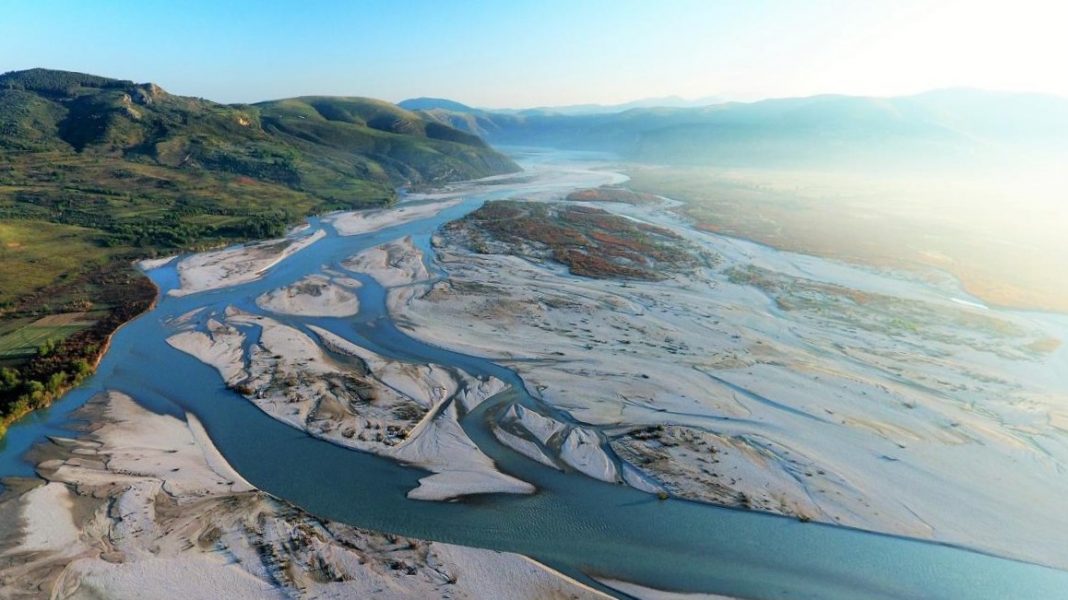
Following the declaration of the Vjosa River as a National Park and its branches, local and international environmental experts continue their efforts to plan the Vjosa River Valley, protecting its natural values in service of sustainable development.
A group of experts, including international ones, are working on the development of a Management Plan, a Tourism Master Plan, and a series of other documents to ensure the proper functioning of the Vjosa River Park.
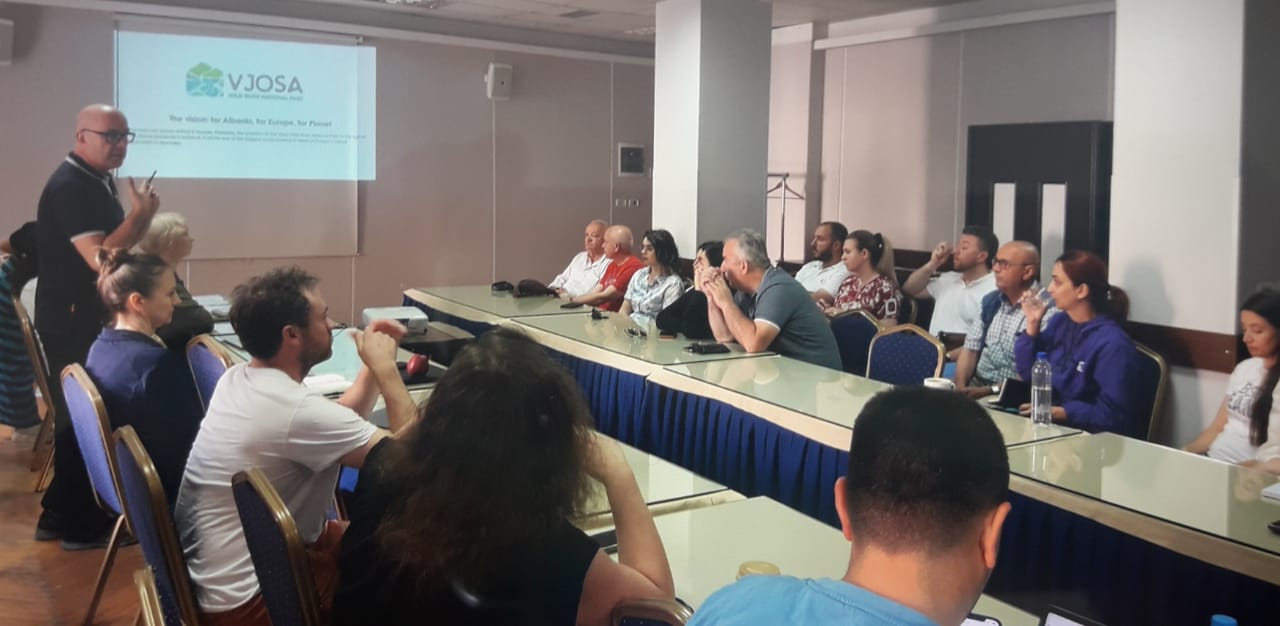
Consultations with the communities in the southern areas are of great importance for the protection of the river’s biodiversity, the last wild river in Europe, and the resources it carries for eco-tourism development.
“There is a high interest in developing the Vjosa River Valley, and there is also a high interest in preserving it. I believe that with many projects to come, there will be infrastructure development and tourism development, but it is very important to mention here the importance of nature tourism, an eco-tourism and sustainable tourism that would bring long-term income to the local residents,” said Besiana Guri, an environmental expert.
“I believe that the Vjosa River is a unique river for Albania, Europe, and the world because it is one of the last wild rivers we have in this part of the world. Here in Gjirokastër, it is very special due to the intersection of cultural heritage as a UNESCO value and the wealth of this fantastic river. So, there are excellent opportunities to protect the Vjosa River Park in the service of zone development,” said Andrej Sovine, an international environmental expert.
“It is essential to take the community’s opinion into account for the further steps, mainly in the development of the Management Plan, expanding the park, financing, monitoring, and managing it so that this park preserves its values as the wildest park in Europe, the most pristine park, and the most attractive park we will have in Albania,” stated Grigor Dushi, Director of the Protected Areas Agency, Gjirokastër.
The Vjosa River stretches for 270 km, with its branches traversing the areas of Përmet, Gjirokastër, Tepelenë, etc., constituting an important resource for the development of their local economies, especially tourism.




