

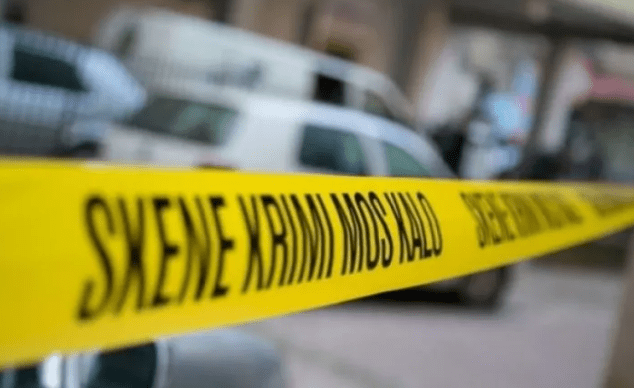
In Albania, the involvement of children and young people in criminal acts is becoming an increasingly concerning phenomenon. Almost every year, more than 800 juveniles commit criminal acts such as theft, drug distribution, driving vehicles without a license, threats, assaults, and even murder. Due to their age, 251 of them are serving sentences in probation service.
Police reports demonstrate daily cases of juveniles’ involvement in contact or conflict with the law, often pushing them toward a life of crime. Theft, drug trafficking and distribution, driving without a license, assaults, beatings, and even weapon use are primarily the criminal acts leading minors and young people to the doors of police stations and courts.
Statistics show the involvement of more than 800 of them in criminal acts each year. Psychologist Manjola Halimi said that, due to misorientation, the majority of these minors or young people come into conflict with the law.
“Often, they face the inequality that arises and, from a young age, is perceived in various services, which they perceive can come immediately with benefits. But the need to understand and integrate age groups and their needs, especially in Albania, is a problem that needs to be addressed,” she told Voice of America.
According to official data, in most cases, minors under 18 manage to avoid prison sentences through prosecution and court application of alternative measures, such as probation service, which allows perpetrators of criminal acts to reintegrate and rehabilitate more quickly into community life. But probation service officials say that, in many cases, the severe economic situation is a barrier to their reintegration.
“The probation service under national supervision has 251 minors. The city of Shkodra has around 20-21 minors in probation service, of which 10 are in emergency economic and social needs. It remains a black mark on our society, for all these children who need different support and a different approach from all the actors of institutions or non-governmental organizations operating in Albania,” Klevis Qose from the Probation Service told Voice of America.
According to the prosecution, the way minors involved in criminal acts are educated and integrated remains problematic. In Albania, the Institution for the Detention of Minors in Kavajë operates, where currently only 29 of the minors involved in criminal acts are housed.
According to Klaudia Hasanllari, director of the Crime Prevention Center for Minors and Youth, the situation has created the need to establish a new institution, such as the Institute for Rehabilitation and Integration of Minors in Conflict with the Law.
“This becomes very difficult when there are no institutions that will oversee the implementation of measures and, for this reason, the Ministry of Justice has initiated procedures for the establishment of this institute so that the justice institutions have the guarantee for the implementation of preliminary educational measures or procedures regarding the avoidance measures, etc.,” she told Voice of America.
In 2017, the Albanian Parliament approved the Criminal Justice Code for Minors, which aims to protect the rights of minors when they are witnesses and/or victims of criminal acts and promote the reintegration of minors in conflict with criminal law.
However, the worsened economic situation of the majority of minors or young people in conflict with the law, as well as the lack of cooperation between institutions and rehabilitative capacities, have made its implementation difficult.




