

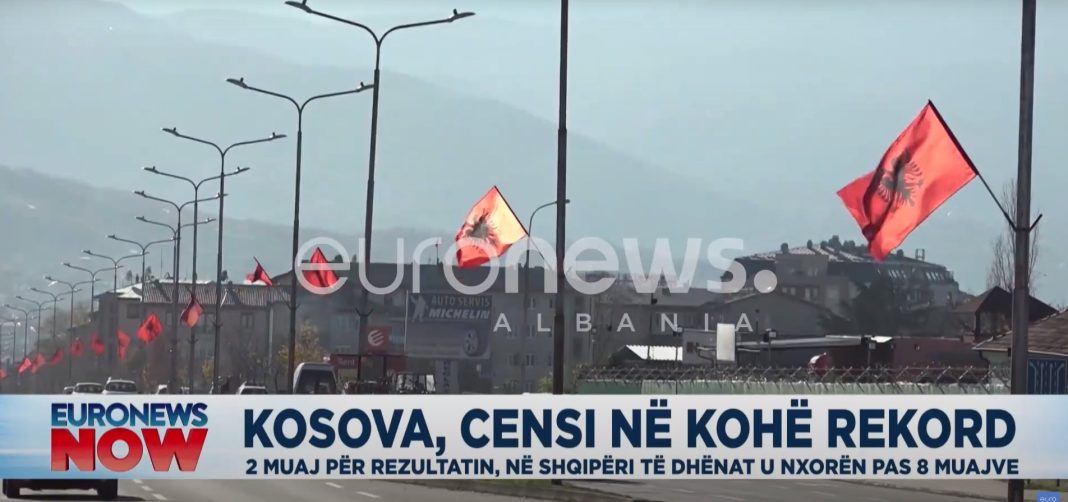
It took Kosovo 2 months to release the CENSUS result of 2024. Unlike Albania, where the data was extracted 8 months after the field survey, Kosovo is proving with this process that it has extracted reliable and non-manipulated data.
Kosovo has 1.58 million inhabitants. After Albania, our neighbors also published the CENSUS results there, but unlike us, their publication was made only 2 months after the field survey. For Prime Minister Kurti, announcing the result on time is a success that makes the process credible.
The presentation of CENSUS in Kosovo was made by the Statistics Agency in the presence of the prime minister, while in Albania, the head of government remained in the shadows and did not comment on the result. This indifference, and the delays in the announcement, have fueled suspicions of manipulations with statistics in Albania.
But how has the demographics changed over the last 10 years in both Albanian-speaking countries?
Since 2011, Albania has lost 410 thousand inhabitants, or 16% of the resident population, while Kosovo lost 153 thousand inhabitants, or 9% of the population.
The data show that in Albania, only one municipality out of 69 has a larger number of inhabitants, while Kosovo has an increase in 9 of its 38 municipalities.
The demographic changes of this decade have led to the aging of the population, but in Albania, due to the massive departure of young people and the drop in births, the average age has increased by 7 years.




