

Kosovo’s Government has given its approval to the 11th package of European Union sanctions targeting Russia and Belarus in response to the ongoing conflict in Ukraine. The proposal, put forth by the Ministry of Foreign Affairs and Diaspora, aims to support the EU’s efforts to address the unprovoked invasion of Ukraine by Russia.
The European Union had previously approved the 11th package of sanctions against Russia on June 23, which included an expansion of existing restrictions and the addition of several new entities to the sanctions list.
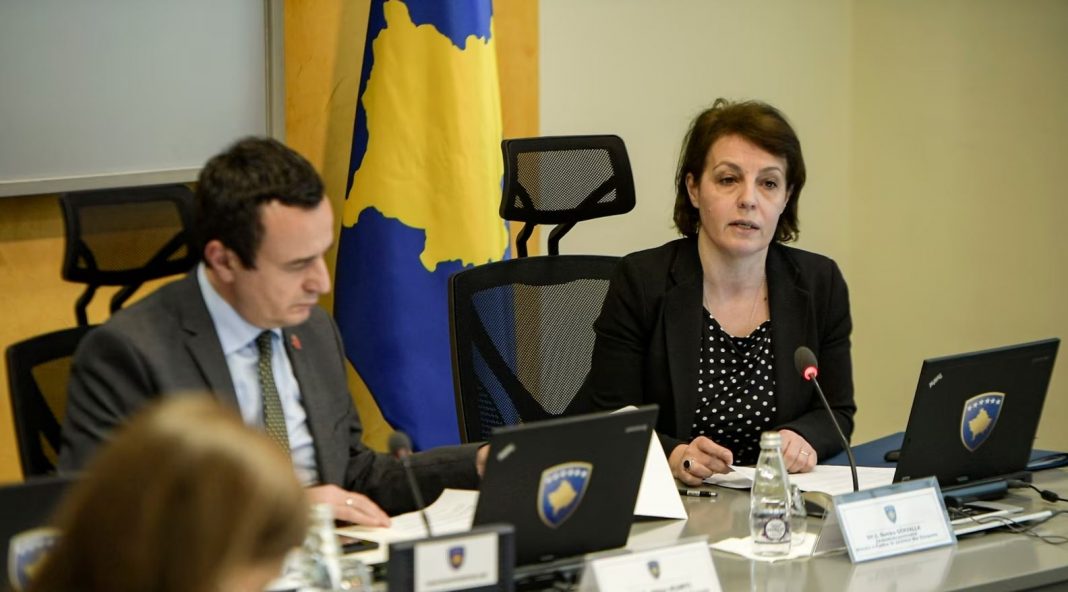
During a government meeting on July 26, Kosovo’s Prime Minister Albin Kurti emphasized the importance of implementing the international sanctions in line with the new measures set by the European Union. He also reaffirmed Kosovo’s commitment to justice and peace, not only in the region but on a global scale, by standing alongside its key partners, including the United States, the United Kingdom, and the European Union.
The approved sanctions package seeks to prevent other countries and entities from evading the previously imposed measures. It aims to close loopholes and restrict the flow of goods and technology that could be used in Russia’s military endeavors. Various countries are already putting systems in place to monitor, control, and block re-exports, ensuring a more effective implementation of the sanctions.
The European Union is closely observing trade patterns to counter any attempts by Russia to bypass the sanctions. Anomalies in trade figures for certain products and countries serve as strong evidence of Russia’s active efforts to circumvent the restrictions. This has prompted a call for intensified efforts in tackling circumvention and seeking even closer cooperation from neighboring countries to reinforce the impact of the sanctions.
Apart from economic measures, the package also targets media outlets in Russia. Broadcasting licenses for five state-controlled Russian media organizations have been suspended, adding to the total of ten media outlets affected by the sanctions.
Furthermore, the sanctions package includes measures at EU ports, restricting entry for vessels engaged in the transfer of crude oil or oil products by sea if there are suspicions of Russian origin.




