

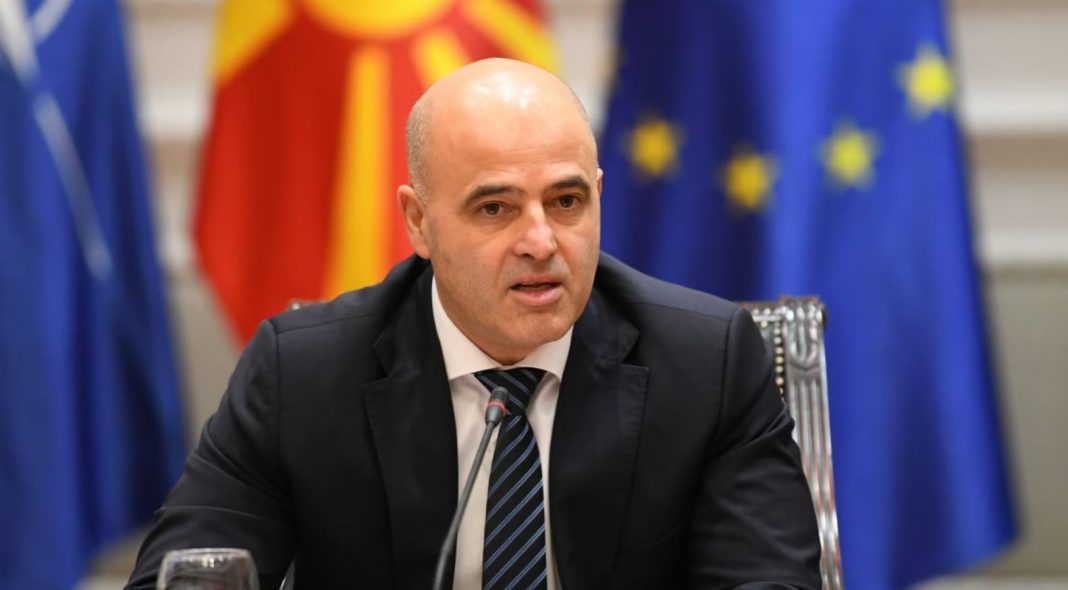
Dimitar Kovačevski stepped down from the leadership of the Government of North Macedonia exactly on the anniversary of taking office as prime minister from his predecessor, Zoran Zaev.
He came to head the Government from the position of Deputy Minister of Finance in January 2022, with an ambitious plan presented to the deputies for the adoption of constitutional amendments – necessary for European integration – to fight corruption and organized crime and for the economic recovery of the country as a result of the global crisis.
However, Kovačevski leaves at a time when the European Union has expressed major concerns about the judiciary and corruption, and when the United States, as the country’s largest strategic partner, has expanded the blacklist with businessmen and current politicians suspected of numerous abuses.
He leaves the Government without fulfilling the promise of constitutional changes and at a time when dissatisfaction with the severe economic situation is increasing, with almost daily protests for wage and pension increases.
For citizens, there has been a wage and pension increase of less than 10 percent, while officials’ salaries have increased by more than 80 percent.
During his two-year tenure, numerous problems have been recorded in education, ethnic incitement, scandals in healthcare, chaos in communication, and significant air pollution.
Regarding European integration issues, Kovačevski has consistently blamed the Macedonian opposition led by VMRO-DPMNE, which he claims is “anti-Western”.
The opposition has called such accusations Kovačevski’s “alibi” to hide, according to them, “crime, corruption, and inability to protect Macedonian national interests against Bulgaria”.
Kovačevski argued that he has done everything in his power to raise citizens’ standards but attributed the severe situation to “international turbulence”.
“I have had the responsibility and honor to lead the Government in an extraordinary time, in a time of great international turbulence, but above all economic turbulence caused by the war in Ukraine. I think we have taken care of everyone. I believe we have done everything necessary to maintain jobs, preserve company liquidity, and ensure income for the most vulnerable categories of citizens,” Kovačevski said after submitting his resignation to the Parliament last Thursday.
However, economic expert Arben Halili believes that the citizens’ standard of living is declining, especially due to the continuously high inflation rate.
“State representatives consistently promised wage increases, and of course, there were expectations, but compared to how much inflation takes away from workers, we see that we are in deep negatives, and parties should not expect to gain political points in the upcoming elections,” says Halili.
Meanwhile, legal experts see the greatest failure of this Government in the judiciary, respectively, in the amendments to the Penal Code, which exempted many former corrupt officials, as well as current officials, from prosecution and criminal prosecution.
According to criminal law professor Bashkim Selmani, evidence of the failure of Dimitar Kovačevski’s Government is the countless criticisms from the EU and the USA.
“The failure of this Government has been very high, and all international reports speak to the functioning of the state and the law. The malfunction of the judiciary led to the Government’s failure to combat organized crime and corruption. It not only failed to fight these phenomena but also failed in all other areas. In a state where crime and corruption are at a high level, we have difficulties in the lives of citizens who are leaving the country,” Selmani says.
Changes to the Penal Code were approved with the rationale of harmonizing the Code with European laws, but the changes included, among other things, reducing sentences for acts of abuse of official position, leading to the suspension of criminal proceedings for high-level organized crime and corruption cases.
“The changes impede the authorities’ ability to investigate and prosecute such acts. This is a worrying and serious issue,” said the European Commission’s reaction.
The US State Department, criticizing such changes, assessed that “corruption has the potential to undermine North Macedonia’s strategic ambitions”.
“Leaders of North Macedonia must demonstrate strong, tangible results against corruption by strengthening institutional independence and preventing political interference, especially in the judiciary, which is essential for achieving EU membership goals and building citizens’ trust in the government,” the statement from the US State Department said.
The two-year work of Dimitar Kovačevski’s Government has also been considered a failure by the Albanian opposition organized in the European Change League.
“Corruption, organized crime, smuggling, nepotism, and the blocking of the integration process were just some of the wrongdoings of this outgoing government,” the Albanian opposition assessment for Radio Free Europe says.
Kovačevski left the Government building on January 28, after the Parliament voted for the technical Government to be led by Talat Xhaferi, which will have a mandate of 100 days to organize and conduct elections on May 8.




