

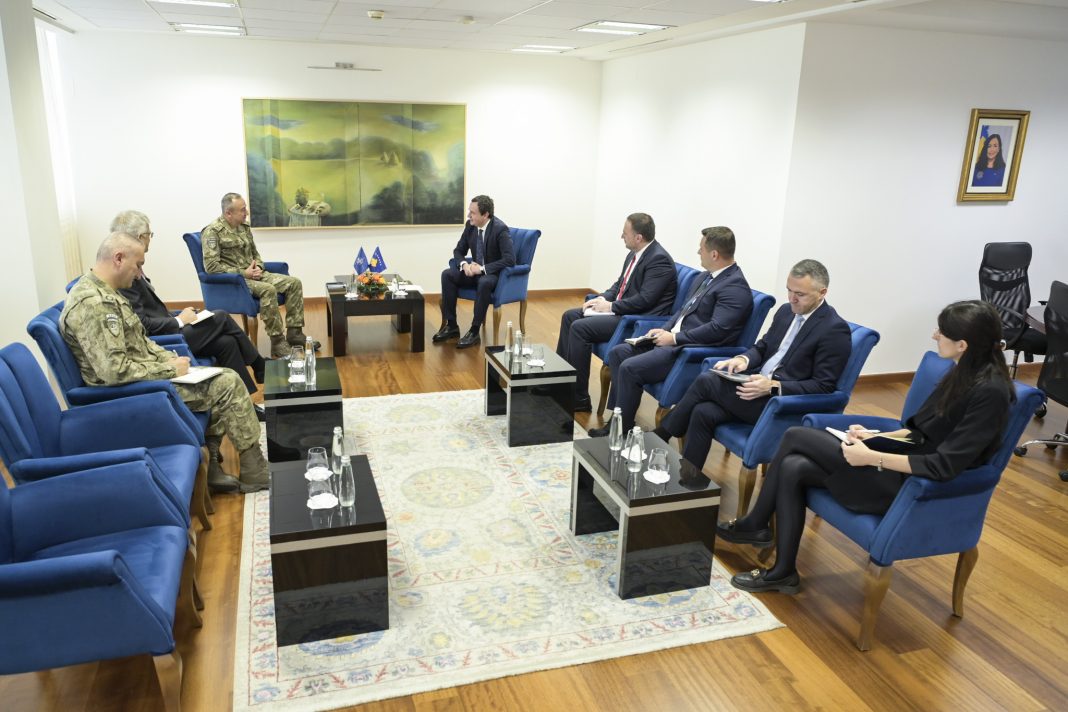
Kosovo’s Prime Minister Albin Kurti has called for the additional KFOR forces deployed to Kosovo to “prioritize border security between Kosovo and Serbia”.
He made this request during a meeting with NATO’s peacekeeping mission commander in Kosovo, Özkan Ulutaş.
The discussions between Kurti and Ulutaş revolved around the security situation in Kosovo, particularly in the aftermath of the September 24 attack on the police in Banjska, Zvecan.
During this attack, a Kosovo Police officer named Afrim Bunjaku lost his life in an armed clash, while authorities reported the deaths of three Serb assailants during the confrontation.
Kurti emphasized Kosovo’s keen interest in enhancing its cooperation with KFOR.
According to the official statement released by Kurti’s office, “The Prime Minister welcomed the increase in the number of KFOR troops, in response to Serbia’s terrorist attack in Kosovo. He stressed that this augmented presence should focus on safeguarding the border between Kosovo and Serbia, the point from which Serbia’s armaments originate, posing a threat to Kosovo. Ensuring border security also entails preventing illegal crossings, underscoring the essential need for greater collaboration with the Kosovo Police”.
In the aftermath of the attack, authorities seized a substantial quantity of weaponry in Kosovo’s northern region. While Kosovo held Serbia responsible for the attack, Belgrade denied any involvement. Milan Radojičić, the former deputy leader of the Serb List, the primary political party representing Serbs in Kosovo with official Belgrade’s support, claimed responsibility for the attack.
In response to the attack, NATO increased its presence in Kosovo by dispatching additional troops. Both the United States and the European Union strongly condemned the assault.
Kosovo has urged the European Union to impose punitive measures against Serbia, while EU officials have stated their intent to await the conclusion of ongoing investigations before deciding on potential actions and measures.




