

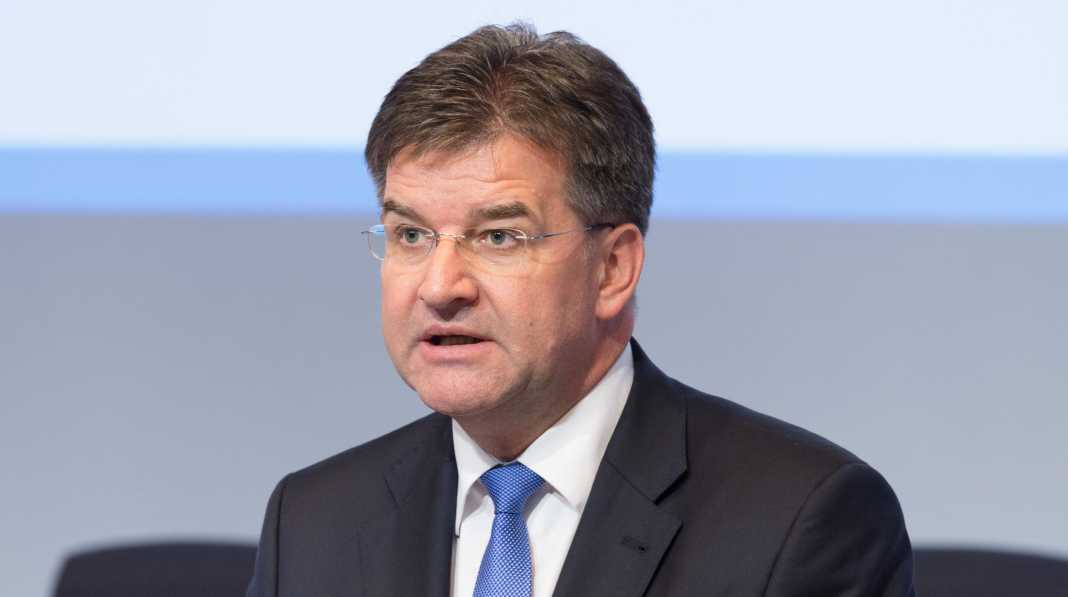
The European Union’s Special Representative for the Kosovo-Serbia dialogue, Miroslav Lajčák, is set to hold meetings with opposition leaders during his two-day visit to Kosovo. The discussions will primarily revolve around the draft statute for the Association of Serb-majority municipalities and other related issues.
During his visit, Lajčák met with Besnik Bislimi, Kosovo’s First Deputy Prime Minister, and both officials expressed agreement on the upcoming steps and the prompt and full implementation of the prerequisites outlined in the agreement for normalizing relations between Kosovo and Serbia.
I just met with First Deputy Prime Minister @BislimiBesnik to follow up on the recent meeting with European leaders in Brussels and the need for full implementation of the Agreement on the Path to Normalisation without delay or preconditions. We also agreed on next steps. pic.twitter.com/Jc151JUvRS
— Miroslav Lajčák (@MiroslavLajcak) November 6, 2023
Bislimi reaffirmed Kosovo’s commitment to achieving full normalization of relations with Serbia and mutual recognition.
It remains uncertain whether Lajčák will also meet with Kosovo’s Prime Minister Albin Kurti during the second day of his visit.
Lajčák’s visit to Pristina followed meetings held in Brussels on October 26, where separate discussions took place between Prime Minister Kurti and Serbian President Aleksandar Vučić, with the participation of key leaders from Germany, France, Italy, and other EU officials.
Prior to these high-level talks, a group of Western envoys, led by Lajčák, visited Pristina and Belgrade on October 21, presenting both Kosovo and Serbia with a draft statute for the Association. However, the specific contents of this statute have not been publicly disclosed as of yet.
Prime Minister Kurti expressed his readiness to accept and sign the draft statute for the establishment of the Association. In contrast, Serbian President Vučić has been steadfast in his stance that he will not accept any terms that imply a de facto recognition of Kosovo.
Both Kosovo and Serbia are aware that implementing these agreements is crucial for their path to EU integration.
The Association agreement was initially reached in 2013, with further progress made in 2015 on its founding principles.
In 2015, the Constitutional Court of Kosovo found that the agreement was not fully aligned with the country’s Constitution.
Consequently, Pristina has refused to implement the agreement, citing this constitutional conflict. On the other hand, Belgrade insists on the Association being formed in accordance with the original Brussels agreement, without making adjustments to harmonize it with Kosovo’s Constitution, as suggested by the Constitutional Court.
Kosovo and Serbia have been engaged in the EU-mediated dialogue for normalizing their relations since 2011, leading to the signing of numerous agreements.
However, not all of these agreements have been fully implemented to date.




