

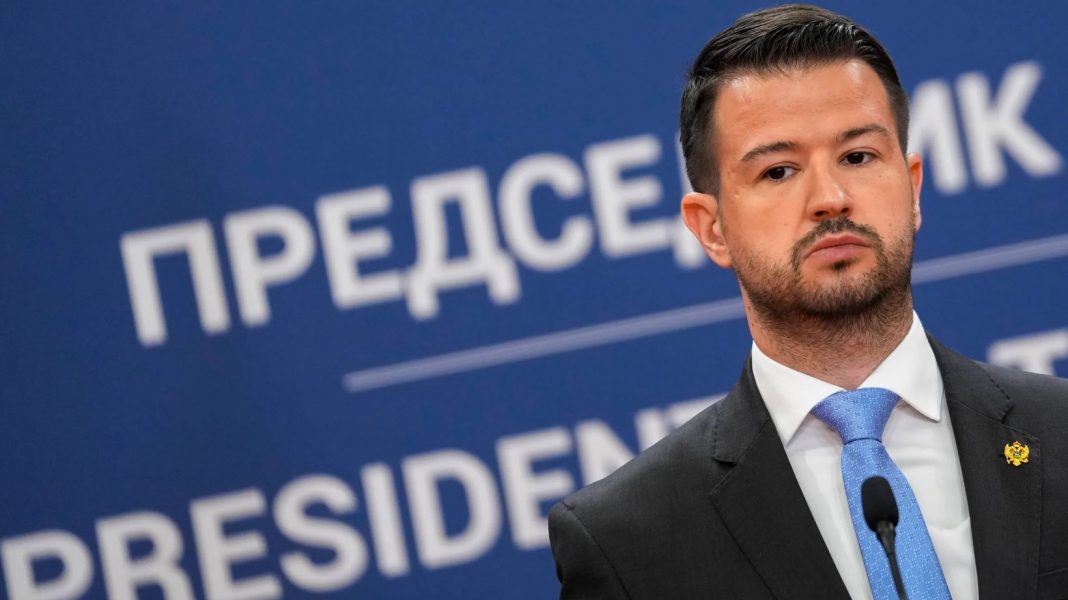
Montenegro’s President Jakov Milatović hailed the year 2020 as a historic turning point for the country, marking a momentous “democratic change” in its government.
The process of democratic transformation in Montenegro culminated in Milatović’s triumph in the presidential elections. Speaking at the European Parliament’s Committee on Foreign Affairs (AFET), he emphasized that the previous regime lacked the political will to pursue meaningful changes in the country’s bid for European Union membership.
Milatović pointed out that Montenegro now boasts a new generation of politicians who genuinely embody European values, as opposed to making superficial compromises. The shift from an illusory state to tangible progress is palpable, as Montenegro is now witnessing real changes.
With the change in government, Montenegro has a committed prosecutor tasked with tackling corruption and organized crime. This shift is aimed at bringing to justice those individuals who were previously entrenched in criminal and corrupt practices.
Milatović expressed his confidence in the Montenegrin Parliament’s upcoming session, anticipating a display of pro-European democratic forces. Moreover, he revealed that the formation of the new government is on the horizon, promising continuity and progress.
Regarding Montenegro’s relations with Serbia, a vital economic partner, Milatović acknowledged the need for normal political ties with their neighbor. During his visit to Belgrade, he discussed the appointment of an ambassador and the establishment of joint governmental meetings and shared border crossings.
Addressing regional cooperation, the President stated that Montenegro does not face any significant open issues with its neighboring countries. He acknowledged that this situation is a consequence of the past regime’s legacy, which they are working to overcome.
Regarding the Open Balkan initiative, Milatović reiterated the priority of the Berlin Process, which he had stressed during his inauguration as President. The Open Balkan initiative breathes new life into the Berlin Process, which had experienced a slowdown following the departure of German Chancellor Angela Merkel, but according to Milatović that was “the only good thing this initiative did”.
Montenegro has been at the forefront of the EU accession process. As an official candidate since 2010, the country initiated accession negotiations with the EU in 2012. Montenegro has successfully opened all chapters in the accession process, though only three chapters have been provisionally closed.
Despite being seen as an advanced candidate since 2012, Montenegro has yet to participate in any intergovernmental conferences within the framework of accession negotiations. This is due to the need for further progress in the reform process, a critical step toward advancing in the EU accession process.
President Milatović remains committed to achieving “aggressive” results in the reform process, setting a realistic goal for Montenegro’s EU membership by 2027 or 2028. He urged the European Commission to delay the publication of the progress report to provide Montenegro with the necessary time to showcase positive outcomes.




