

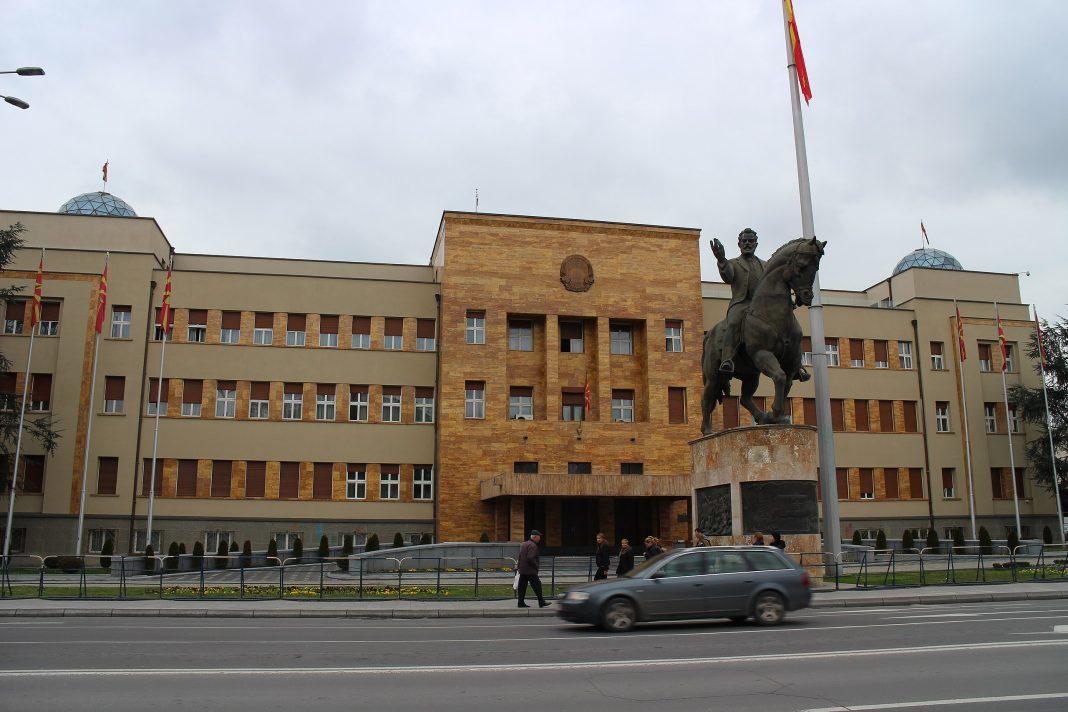
Political parties in power in North Macedonia state that through their deputies in the Assembly, as well as other forms of communication, they are making efforts to convince opposition deputies to support constitutional changes.
Changes are necessary for the inclusion of the Bulgarian minority in the preamble of the North Macedonian Constitution as a constituent people, as stipulated by the agreement with Bulgaria, based on what is known as the “French proposal” for resolving the disagreements between the two states regarding North Macedonian identity, language, and historical differences.
After the continuous refusal of the opposition party VMRO-DPMNE to support these changes, the ruling parties have initiated contacts with deputies to secure their votes.
“We are acting individually, but also as a group, in the frameworks of the debate in the Assembly, as well as through social networks, meetings, and so on, to convince deputies to support the constitutional changes. These are for the benefit of this country and the future of our citizens,” says Martin Kostovski, a deputy from the Social Democratic Union of Macedonia (SDSM).
Sanja Lukarevska, vice president of SDSM believes that there are “progressive forces” within the opposition who are interested in the country’s future and can be achieved through accession to the European Union.
Constitutional changes must be approved by November, otherwise the second intergovernmental conference between the EU and North Macedonia will not be able to take place.
“I believe that there are progressive forces that want us to move forward, which is why I am optimistic, and I have said several times that the constitutional changes should and can be approved. There is no other alternative for our country. I believe that there are deputies who are clear about this,” says Lukarevska.
However, VMRO-DPMNE deputies state that they are “united” and that the government’s efforts will not succeed in securing their votes.
“No one from the VMRO parliamentary group and the coalition is naive. It is truly a trap that the state sets either carelessly or maliciously. The French proposal is a trap, and that is clear. There are no naive people who will fall into that trap. Under these circumstances, as things stand, I think it is very ambitious for someone who has never been in elections to think they will change the minds of those who have been elected,” says Mile Lefkov, a VMRO deputy.
Another deputy from this opposition party, Antonio Milošoski says that it is impossible to repeat the scenario of 2019 when, according to him, the Prespa Agreement on changing the country’s name was voted on in the North Macedonian Parliament with pressure and blackmail on VMRO-DPMNE deputies.
The votes of eight deputies from this party were crucial in approving the agreement with Greece.
“SDSM and the Democratic Union for Integration [DUI] have experience in coercing deputies, giving bribes, making arrests, threats, and blackmail. This has been seen in the past six years. But now the circumstances have changed. Unlike NATO membership, EU membership is a moving target, and the whole region is becoming increasingly frustrated every year. With this government, I think even some of their deputies would not want to discuss risky moves, let alone the opposition deputies who have a clear stance,” says Milošoski.
In addition to VMRO deputies, there are also deputies from Albanian opposition parties who do not support the constitutional changes.
While the North Macedonian opposition does not support it, arguing that the agreement with Sofia “harms national interests” and there is no guarantee that the Bulgarian side will not present other demands, Albanian opposition deputies condition their support on changing the formulation of the Albanian language in the Constitution as well.
Currently, it is only recognized as a language spoken by over 20 percent of the total population in North Macedonia.
“I will not vote if the 20 percent is not part of the debate and part of the constitutional changes. If it is not voted on, I will not vote. The preamble will not be voted on either,” emphasizes Fadil Zendeli, a deputy from the Besa Movement.
From the Democratic Union for Integration, which is part of the government, they say that Albanian opposition parties should not “fall into the scenarios of those who work against the country’s European perspective”.
“Albanian opposition parties should be part of this process. We should not fall into the scenarios of those who do not want the future and European perspective of this country,” says Arbër Ademi, a deputy of DUI.
Constitutional changes require a two-thirds majority, or 80 out of 120 votes from the deputies in the North Macedonian Parliament.
The current parliamentary majority has 64 deputies, and the support of opposition deputies is necessary for the approval of changes.
In case of failure of this process, North Macedonia is expected to hold early parliamentary elections, which are continuously demanded by the opposition.




