

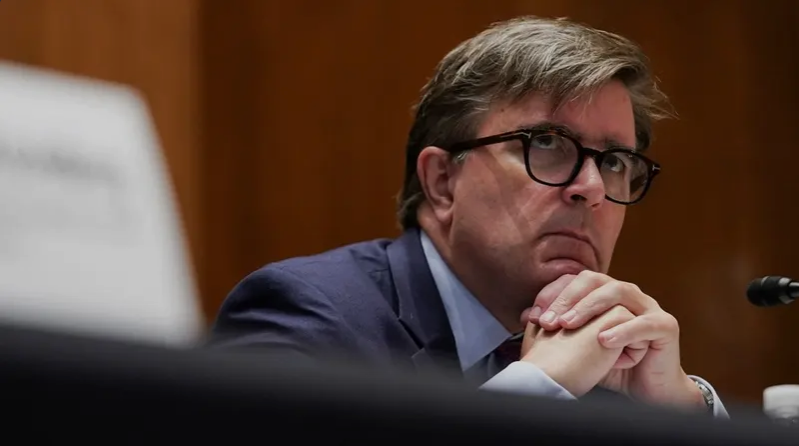
Assistant Secretary of State for European and Eurasian Affairs, James O’Brien, warned Kosovo and Serbia on Monday that causing disturbances in north Kosovo implies a confrontation with NATO.
“It is important that both parties understand that if there is any unrest in the north, it means a confrontation with NATO,” O’Brien told reporters.
He stated that north Kosovo must be calm and secure so that Kosovo and Serbia can make political progress on their path towards European Union integration.
The situation in north Kosovo, predominantly inhabited by Serbs, has been tense since the beginning of this year when local Serbs opposed Albanian leaders in four majority-Serb municipalities who emerged from the elections boycotted by Serbs in April.
On September 24, tensions escalated after the Kosovo Police was attacked by an armed group of Serbs in the village of Banjska in Zvecan, where police officer Afrim Bunjaku was killed. Three Serbian attackers were also killed during the ensuing clashes.
Kosovo blamed Serbia for the attack, but Belgrade denied involvement.
O’Brien’s comments come at a time when NATO is considering increasing its permanent presence in Kosovo through its peacekeeping mission, KFOR.
O’Brien added that U.S. Secretary of State Antony Blinken would discuss the escalating tensions in the Western Balkans during the two-day NATO foreign ministers’ meeting on November 28 and 29 at the alliance’s headquarters in Brussels.
Blinken will also represent the United States at a meeting of the Organization for Security and Cooperation in Europe (OSCE) in Skopje, North Macedonia.
Regarding the possibility of a more permanent increase in NATO’s presence in Kosovo, Secretary-General Jens Stoltenberg also spoke during a visit to Pristina on November 20.
Currently, there are 4,687 troops in Kosovo as part of KFOR’s peacekeeping mission.
Last week, NATO Secretary-General Jens Stoltenberg promised that the Western military alliance would do everything to maintain peace in the Western Balkans.
Stoltenberg sent a special message to Serbia and Kosovo to advance in the normalization of relations, mediated by the European Union.
“We invite Belgrade and Pristina to engage in dialogue, supported by the EU, in good faith, and we also believe that the new proposal for the Association of Serb-majority municipalities could be an important step for dialogue and for this process to be more constructive,” he said.
During his visit to Pristina on November 20, part of a Balkan tour, Stoltenberg said that the increase in military presence in Kosovo by 1,000 troops – the largest deployment in recent years for the alliance – shows how seriously the alliance takes the violence that erupted in Kosovo in recent months.
“We are truly investing in the security of this region because the security of people in this region, stability in this region, is important for our security,” he said.