

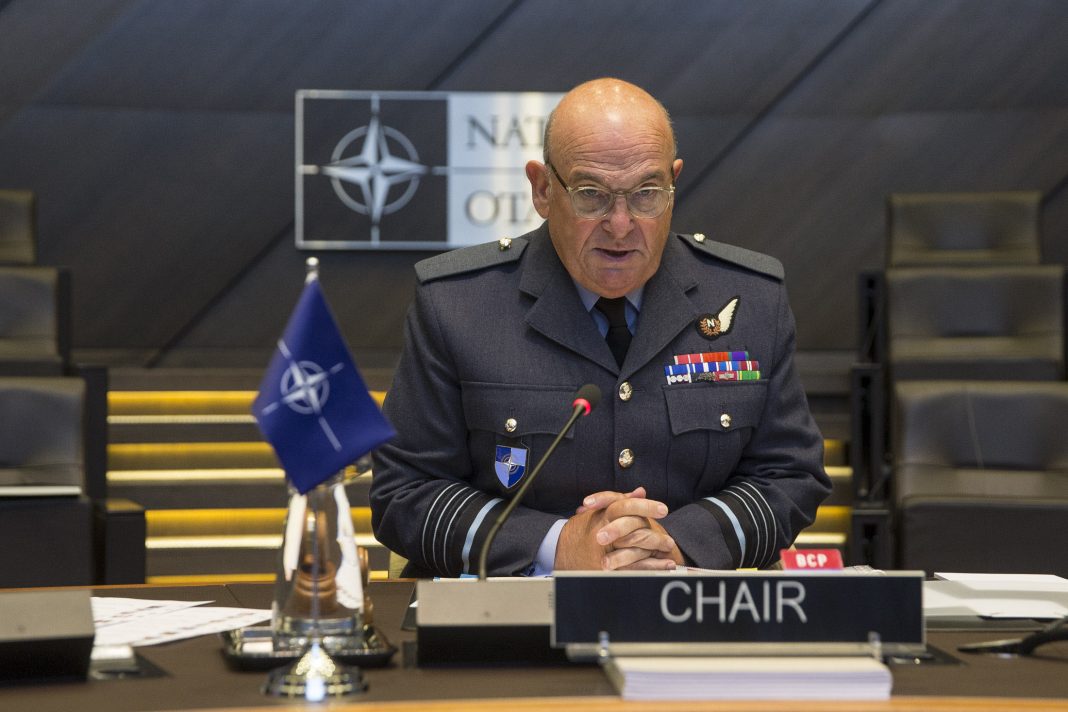
The British Prime Minister’s Special Envoy for the Western Balkans, Stuart Peach, expressed strong condemnation of the armed Serbian group’s attack in north Kosovo on September 24, considering it a highly serious incident.
In an interview with Voice of America, Peach called for a comprehensive investigation to ascertain responsibility for this act. He also discussed the impact of Russia’s conflict in Ukraine on the Balkans, acknowledging that it has triggered historical memories and heightened tensions in the region.
Peach emphasized the United Kingdom’s steadfast commitment to the dialogue process between Kosovo and Serbia, aimed at achieving a swift normalization of relations. He stressed that the UK’s objective is not to establish another Republika Srpska within Kosovo but to create an Association of Serb-majority Municipalities that takes into account the interests of all parties and aligns with the Kosovo Constitution.
Voice of America: Lord Peach, what is your assessment of what happened in Kosovo on September 24?
Stuart Peach: It was a very serious incident, one that we not only condemn but also call for a thorough and genuine police investigation. We are still in the process of uncovering the facts.
Voice of America: Authorities in Kosovo suggest that the attack’s aim was the annexation of territories by Belgrade, citing additional evidence like the recent discovery of a large quantity of weapons in north Kosovo. Could such an attack happen without Belgrade’s knowledge and support?
Stuart Peach: While the geography clearly indicates the proximity of these two countries, the need for border security and regular policing on both sides of the border is evident from my experience. Those responsible for the attacks in May on NATO peacekeepers and the September 24 incident must be held accountable. Our extensive experience in various parts of the world emphasizes the importance of policing. We encourage all parties to reduce rhetoric and focus on thorough investigations to determine the facts.
Voice of America: Nevertheless, in your view, would an attack of this scale be possible without Belgrade’s support?
Stuart Peach: Until we have a clearer understanding of the extent of Belgrade’s involvement, I hesitate to speculate. It’s crucial that we wait for more information. However, from an international perspective, it’s essential to promote the need for dialogue between Kosovo and Serbia.
Voice of America: Many observers have suggested that dialogue may no longer be effective. Can the dialogue continue as if nothing has happened after this incident?
Stuart Peach: The phrase “to continue as if nothing has happened” can be rhetorically charged. What I mean is that between states, there should always be room for dialogue. While there are situations of conflict, the current tension between Kosovo and Serbia is not one of them. There’s no reason for Kosovo and Serbia not to engage in dialogue, which we wholeheartedly support.
Voice of America: Considering recent events in the Middle East, do you think the attack by the armed Serbian group in north Kosovo is another example of malicious actors inciting conflict, or does it relate to the broader context of the Ukraine conflict?
Stuart Peach: This is a complex question. Initially, there doesn’t seem to be a direct link between events in the Middle East, which have been a tragedy for all parties involved, and the situation in Kosovo and between Kosovo and Serbia. However, since President Putin initiated the unlawful war against Ukraine in February 2022, it’s undeniable that memories have been stirred in the Balkans, resulting in increased tensions. This is due to the nature of the Ukraine conflict and how it has unfolded. It’s crucial for us, as the international community and as friends, to maintain dialogue in the region.
Voice of America: You are currently in Tirana for the Berlin Process meeting. President Vučić mentioned that you and other Balkans envoys would visit Belgrade and Pristina in the coming week. What is the purpose of the visit, and what do you intend to discuss with the leaders of both countries?
Stuart Peach: I’m not planning to be part of the visit that was announced. I’m conducting my visits as planned, in my role as the British Prime Minister’s Special Envoy for the region. However, what’s essential to note is that the UK continues to support the EU-facilitated dialogue with all available resources, primarily in defense and security, throughout the region. Our aim is to ensure the dialogue proceeds and strive for normalization as swiftly as possible. We don’t want the Russia-Ukraine conflict to trigger further conflicts. Our approach remains one of quiet support, authority, and engagement with regional leaders to promote dialogue.
Voice of America: Your government, along with other Western governments, encouraged Kosovo authorities to work on creating an Association of Municipalities with Serbian majorities before the recent attack. Is this still your stance, and what is your vision for the way forward?
Stuart Peach: We support the dialogue, but it’s not our role to draft the dialogue. We shouldn’t determine its form. This is an unresolved issue that has persisted for some time, and our principled stance is that the Association is not intended to create a second Republika Srpska. The Association must align with the Kosovo Constitution and consider the interests of all parties. Our commitment is to continue supporting the dialogue and the path leading to normalization, which remains our primary objective.
Voice of America: What is your vision for the future? Should any aspects be altered, or should the process be accelerated?
Stuart Peach: The core of our vision is to support those responsible for drafting the Association’s statute and the work they are currently undertaking. Our support for this effort continues through the Berlin Process and our comprehensive defense and security relationships throughout the Balkans.
My message to the parties is that, given the conflicts occurring worldwide, it’s time for dialogue, time to focus on the future rather than dwelling on the past. The Balkans deserve a brighter future.
You can watch the interview here.




