

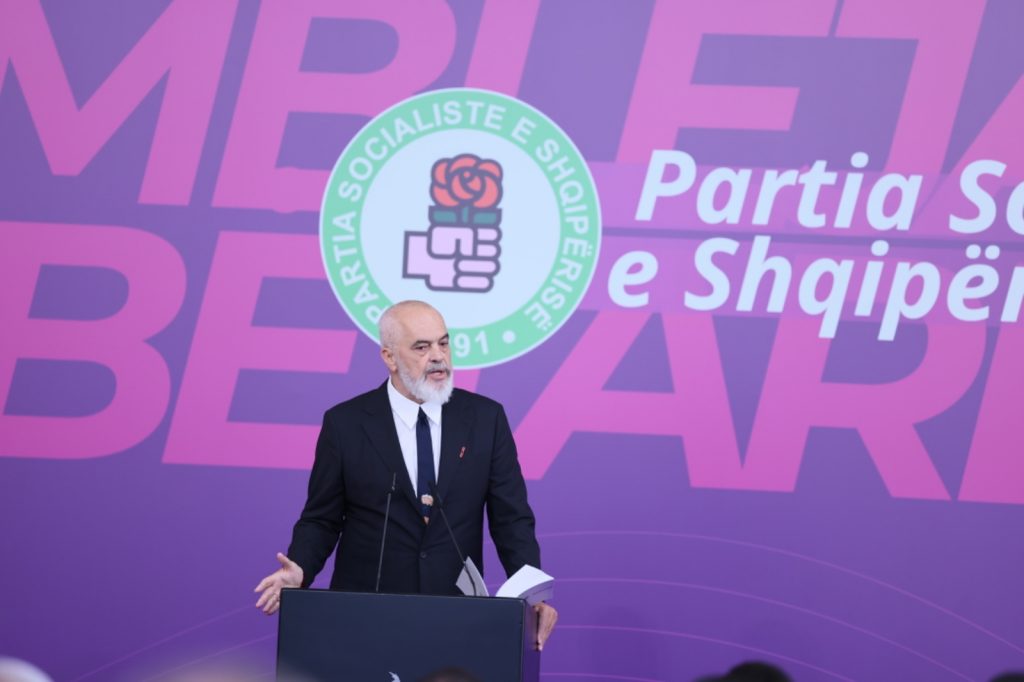
In his fourth governing term, Prime Minister Edi Rama is seeking to revisit one of the most significant local governance reforms: the territorial reform.
Experts in the field urge that this reform should not be turned into a process with electoral aims, but should instead focus on addressing issues related to costs, service delivery for citizens, and economic development in both urban and rural areas.
A decade later, the Socialist Party wants to reopen the debate on changing the territorial division, which was last carried out in 2014.
At that time, with only the votes of the Socialist majority—since the opposition boycotted the process—36 districts were abolished and replaced with 12 counties, while the number of municipalities was reduced from 65 to 61.
However, according to local governance experts, the reform failed to achieve its main objectives. They argue that costs increased, local administrations expanded excessively, and investments did not meet expectations across the country.
In 2021, politics attempted to review the reform, but it ended up in a numbers debate. The democratic parties of the time called for increasing the number of municipalities from 61 to as many as 97, while the Socialists opposed the initiative.
Awaiting a new territorial reform, Agron Haxhimali, Director of the Institute for Albanian Municipalities and an expert engaged in this field since the early 1990s, stressed that the debate should not focus on the number of municipalities or their borders according to political interests.
According to him, four pillars should be at the center of the reassessment: cost, quality of services, economic development, and preservation of cultural identity—not simply the division or multiplication of local government units.