

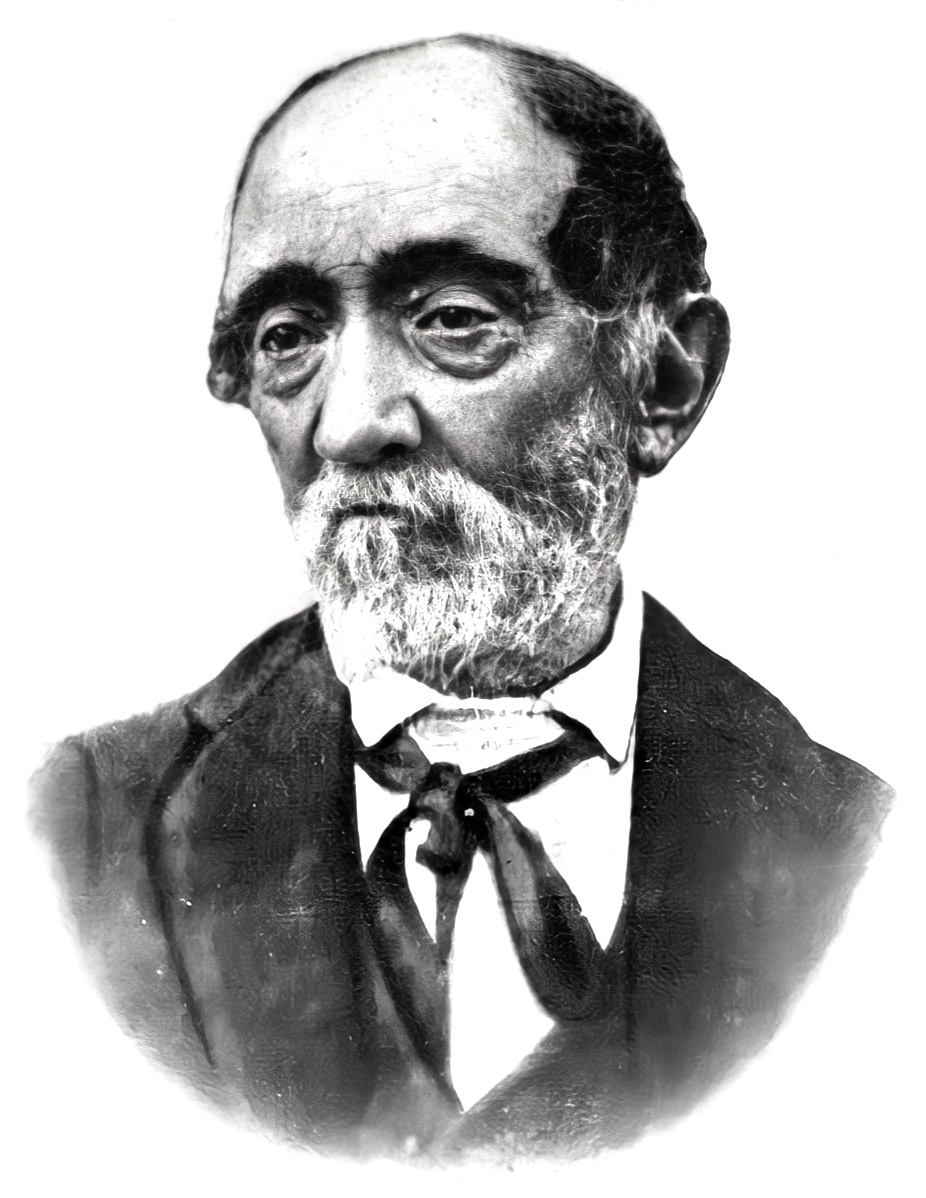
On February 28, 1903, the ideologist of the National Renaissance, Jeronim de Rada, passed away.
Jeronim de Rada was born on November 19, 1814, in a small village in Calabria called Macchia Albanese. After completing his studies at San Benedetto Ullano College, he studied law at the University of Naples.
In 1836, at the age of 22, he published “Milosao”, his first book. Milosao is a historical tale with verses in the Albanian language.
Jeronim de Rada reached the peak of his creativity in 1866 when he published “The Songs of Milosao” in Florence. This book contains the most beautiful Albanian ballads, which the author had gathered in the Albanian colonies of Calabria and Naples.
These songs were brought by the emigrants (Arbëresh) and were orally passed down from generation to generation for four centuries.
In 1840, he published the poem “Serafina Topia”, which more than a love anthem is a hymn for the unity of the Albanians.
During the years 1847-1848, he published “The Confessions of Arbër”, which consists of four romantic novellas.
In 1861, he published “The Principles of Aesthetics”, in 1864 “The Antiquity of the Albanian Nation”, and in 1866 “Rhapsody of an Arbëresh Poem”.
Jeronim de Rada wrote his last work in 1900 at the age of 86.
He married Arbëresh Madalena Melkji in 1850, with whom he had four sons.
Family misfortunes, the death of his wife and sons, did not defeat him, but turned his pain into strength, continuing his creative activity.
During this time, he wrote the poem “Unlucky Skanderbeg”.




