

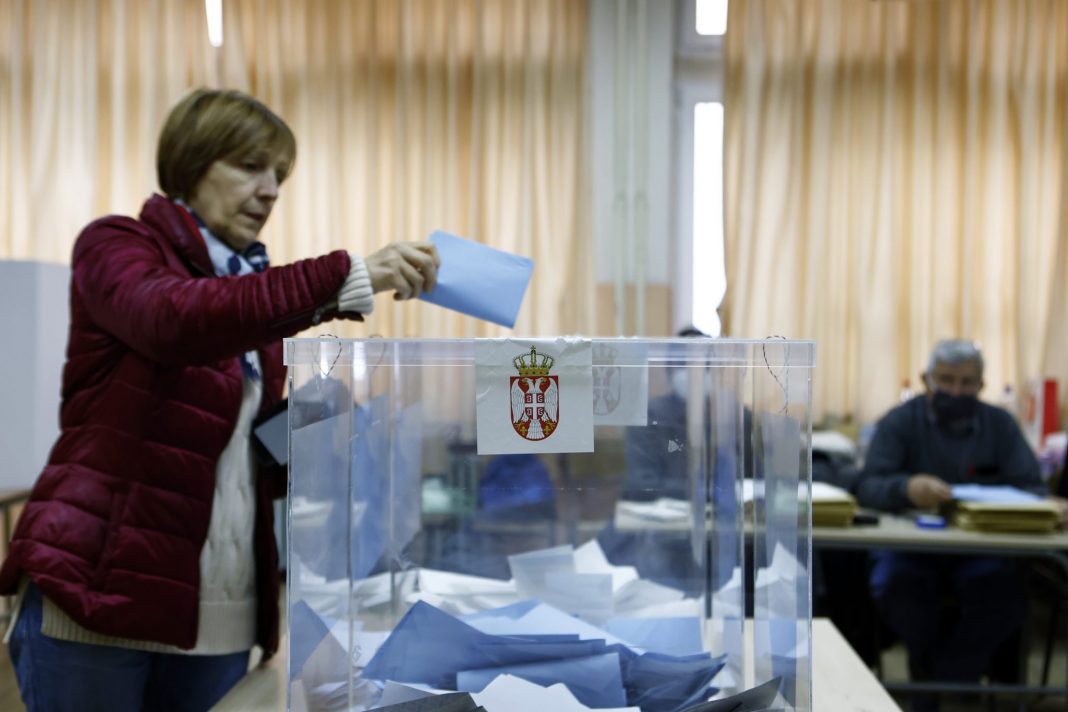
On Monday, the Serbian Government submitted a proposal to President Aleksandar Vučić for dissolving the parliament and announcing new elections, formally marking the path toward setting the election date, expected to be December 17 of this year.
The proposal states that “holding new parliamentary elections under the current circumstances would enhance democratic processes, reduce tensions among competing factions in society, reject hate speech, and reaffirm the right to freely express opinions and perspectives on various political, economic, and other issues, including further promotion of European values,” according to a statement from the Serbian Government, led by President Aleksandar Vučić’s Serbian Progressive Party.
The proposal also highlights that “recently, there have been public calls for the announcement of new, extraordinary parliamentary elections, and on September 11, 2023, a portion of opposition political parties submitted such a request to the President of Serbia”.
These upcoming elections will be the third consecutive round of voting in Serbia within three and a half years.
The Serbian Government has come under increasing pressure from the opposition after two significant attacks earlier this year left 17 people dead, inciting public anger and prompting large-scale protests against the Government.
This decision to hold new elections coincides with ongoing Western diplomatic efforts to normalize relations between Kosovo and Serbia. These efforts follow tensions that erupted following an attack by a group of armed Serbs against the Kosovo Police on September 24.
In the past week, leaders of key European nations, including France, Germany, and Italy, have called on Kosovo to grant greater autonomy to its Serbian minority, and they have urged Serbia to acknowledge the “de facto” independence of Kosovo.
European leaders have made it clear that normalization of relations is a prerequisite for both parties on their path toward European integration.
Serbia has expressed its desire for EU membership but maintains strong ties with Russia. As a result, it has resisted joining Western sanctions against Moscow due to its actions in Ukraine.