

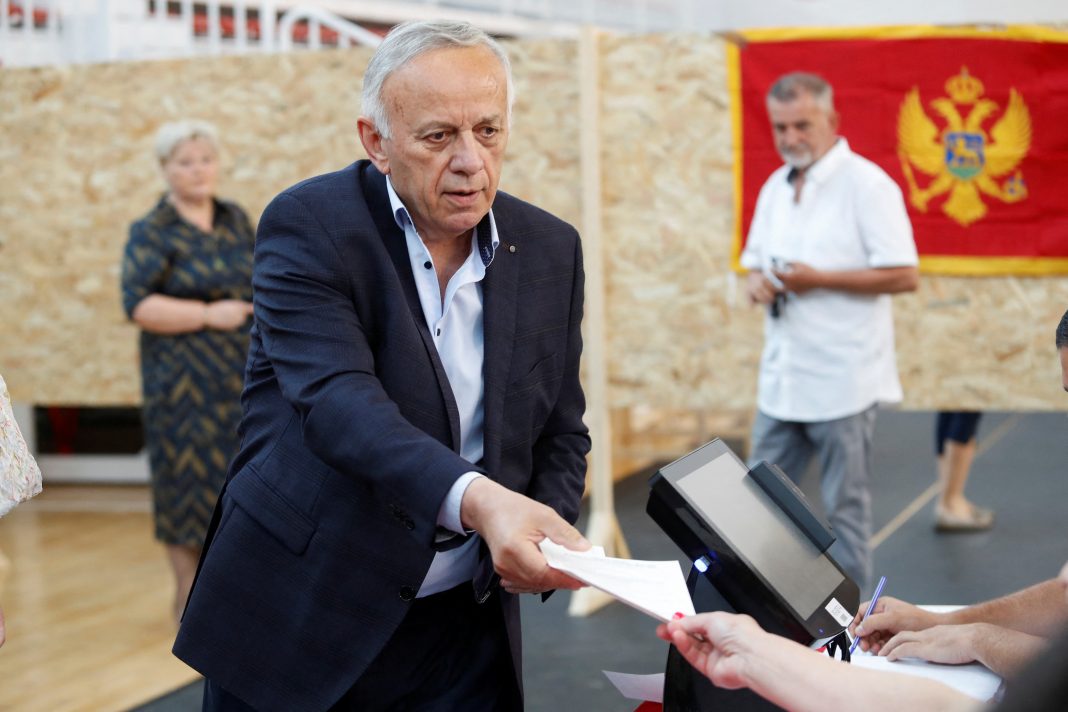
Snap parliamentary elections are taking place in Montenegro, with polling stations opened at 7:00 a.m. on June 11th, scheduled to close at 8:00 p.m.
According to official data from the institutions of Montenegro, 542,468 citizens have the right to vote in these elections.
Fifteen electoral lists from coalitions and parties, confirmed by the State Election Commission in Montenegro, are participating in the race.
The parties and coalitions participating in these elections have promised a better life, higher wages and pensions, favorable housing purchases, and increased social benefits.
Such promises have dominated the entire electoral campaign.
These snap parliamentary elections could put an end to a nearly three-year-long political crisis in Montenegro, where two governments were overthrown through motions of no confidence.
The election results could produce a functional government, which Montenegro has hardly had since April 2020 when the Democratic Party of Socialists, led by Milo Đukanović at the time, lost the elections.
Various international media outlets and political analysts have recently stated that these elections will also be decisive for the future of Montenegro, as voters will have the opportunity to decide on supporting parties and coalitions, some in favor of the West, others in favor of Serbia, as well as those supportive of Russia.
The outcome of these elections will indicate whether Montenegro, as a small country in the Western Balkans and a NATO member, will offer more with the European Union and advance in the integration processes.
These are the first parliamentary elections in the last 30 years in which the former president of Montenegro, Milo Đukanović, who lost in the presidential elections held in April this year, is not participating.
Previously, on March 16th, three days before the first round of the presidential elections, Đukanović dissolved the Parliament and called for early parliamentary elections, citing ongoing turmoil within the government and a lack of progress towards EU membership.
The June 11th elections are the 12th parliamentary elections since the introduction of the multi-party system and the sixth since Montenegro gained independence in 2006.
Montenegro has been a NATO member since 2017 and a candidate for EU membership since the end of 2012.
Montenegro opened 33 negotiation chapters, the latest in June 2020, and closed three.
Many expect that the June 11th elections will put an end to a period of political deadlock in which the two governments that came to power after the protests in 2020, supported by the Serbian Orthodox Church, were overthrown following votes of no confidence.
In 2017, Montenegro joined NATO, a year after a failed coup attempt for which the then-government blamed Russian agents and Serbian nationalists.
Moscow dismissed such claims as absurd, and the Serbian government denied involvement.
After Russia’s invasion of Ukraine last year, Montenegro, unlike Serbia, joined EU’s sanctions against Moscow, provided aid to Ukraine, and expelled a number of Russian diplomats.
The Kremlin has placed Montenegro on the list of non-friendly states.




