

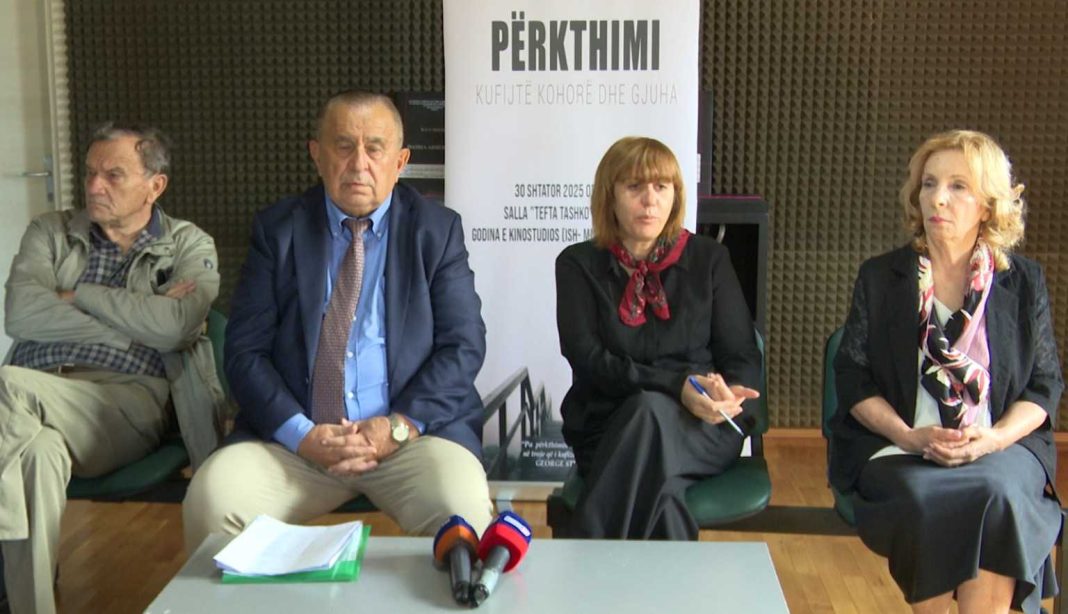
Translators, linguists, and writers came together in an event titled “Translation, Time Boundaries, and Language”, organized at the National Center for Books and Reading in cooperation with the Albanian Translators’ Association.
The gathering reflected on the role of language and the challenges facing translation in Albania.
Linguist Xhevat Lloshi raised concerns about repeated mistakes in the use of the Albanian language, stressing that such errors amount to a catastrophe for the language and for younger generations.
“In Albanian, one should not say ‘i burgosur’ (‘the imprisoned’), but ‘e kap rob’ (‘captured as a prisoner’). This incorrect usage spreads on the internet, which is why it is necessary to draw attention to inaccurate translations and the deep ignorance of proper Albanian,” said Lloshi.
Translator and researcher Ilia Lëngu emphasized the importance of mastering not only the expressive potential of the foreign language being translated, but also of the Albanian language itself.
“Without a deep knowledge of the expressive power of both the mother tongue and the foreign language, professional work cannot be done. This requires broad interdisciplinary knowledge,”Lëngu said.
Meanwhile, writer and translator Primo Shllako offered a different perspective on translation, pointing out the absence of a translation school in Albania — which he surprisingly considered a positive thing.
“Translators know Albanian at a higher level, while linguists have narrowed it. Translators have broken barriers and are doing good work. They are a major factor in the development of the Albanian language,” Shllako said.
The discussion highlighted the need for higher standards in translation, a review of language education, and closer cooperation between translators, linguists, and cultural institutions to preserve and develop the Albanian language.




