

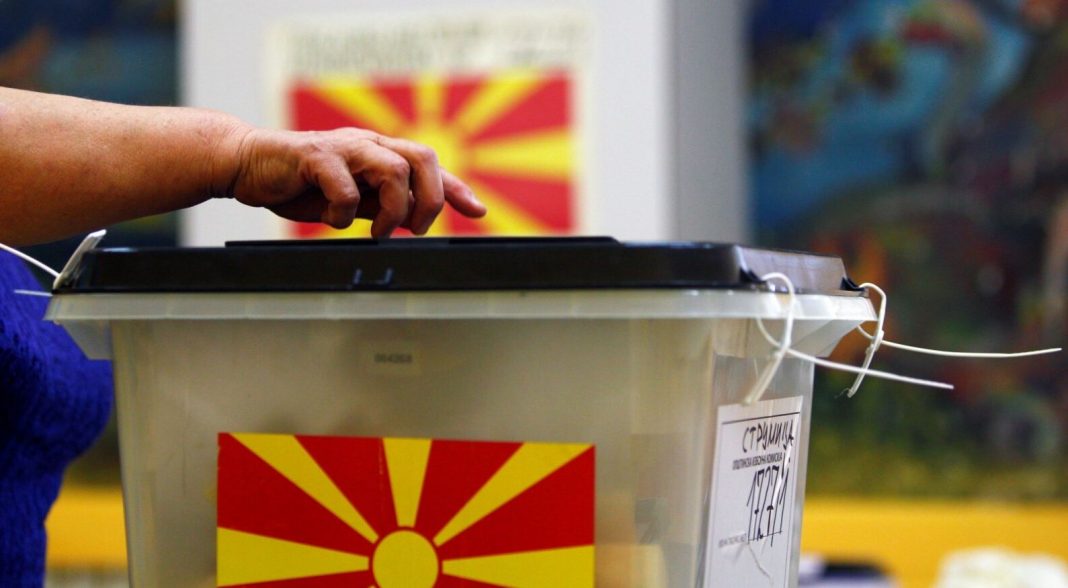
The State Election Commission (SEC) in North Macedonia still doesn’t precisely know how to integrate biometric devices for fingerprint identification, for which 11 million euros have been allocated from the state budget.
According to the SEC, they are in discussions with the German company that supplied these devices to the institution, regarding the implementation model of the new biometric system – the identification of voters through fingerprinting during parliamentary elections and those for the election of the state president scheduled for May this year.
This system will be more complex as it involves dual elections, both parliamentary and presidential.
One dilemma is whether these devices will identify voters once for both processes or how identification will occur if a voter wants to vote only for the presidential election and not for the parliamentary elections, or vice versa.
The leader of the Macedonian opposition party VMRO-DPMNE, Hristijan Mickoski, expressed reservations about the use of this system during dual elections at the end of last year. He emphasized that to avoid questioning the credibility of the elections, the SEC needs to come up with concrete solutions.
The ruling Macedonian party, the Social Democratic Union (SDSM), stressed that “the State Election Commission is responsible for how the technical process of the elections will be conducted. Once the SEC comes up with concrete solutions, then the party will present its stance on this issue”.
Accurate registration of citizens voting in the presidential elections is crucial for the elections to be valid; 40 percent of the electoral body must participate.
The President of the SEC, Aleksandar Dashtevski, told Radio Free Europe that the institution is finalizing a solution with representatives of the German company “Dermalog”, from which the devices were obtained.
However, the former president of the SEC, Aleksandar Novakoski, believes that a dual system for separate identification of voters for the presidential and parliamentary elections should be incorporated to avoid any suspicion about the conduct of the dual elections in the spring.
“It’s straightforward if the voter wants to vote in both elections; then there wouldn’t be a problem. However, if a voter decides to vote for only one set of elections, clear instructions need to be provided. It would be good for the system to be improved technically; there is time for that, to avoid misunderstandings,” Novakoski stated.
He emphasized that even the smallest uncertainties can be used by political opponents to contest the election results.
On the other hand, Oliver Derkoski, also a former president of the SEC, believes that there is no room for manipulation through fingerprint registration devices because they are used only for identification, similar to identity cards.
“If someone does not want to vote in one set of elections, they will not receive a ballot and will not sign the voter list,” Derkoski said.
Devices with the new biometric system for voter identification through fingerprinting, were first used in the last local elections in October 2021.




