

The investigation into the underground tunnel discovered in August, linking the basement of a residential building to the Supreme Court in the heart of Podgorica, Montenegro, has so far yielded limited results. The main revelation is the disappearance of 19 firearms from the court’s depot.
The identities of the six individuals suspected of involvement in digging the tunnel are still under scrutiny, with reports indicating that the van they used has been located.
As of now, there are no official suspects identified in the case.
The existence of the tunnel was first brought to light on September 11, prompting the Basic Prosecutor’s Office to initiate hearings of individuals who might have information regarding the tunnel’s use for breaching the depot.
To date, no one has taken responsibility for this significant security breach.
The tunnel is situated near the Government headquarters, Parliament, Constitutional Court, and Central Bank of Montenegro.
Key tunnel details
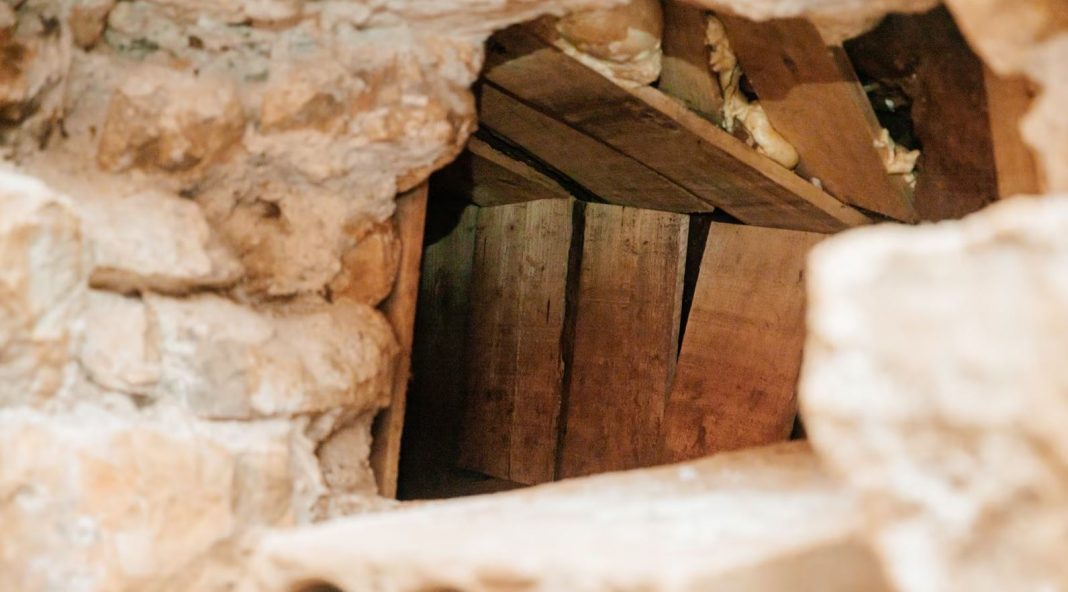
The underground tunnel measures approximately 30 meters in length, one meter in width, and one meter in height. It connects the basement of a residential building on “Njegoševa” street in central Podgorica to the Supreme Court’s depot, with a road separating the two locations.
To prevent soil and stone collapse, the tunnel’s walls are lined with wooden planks. Experts noted that the soil was relatively soft, making excavation more manageable.
The tunnel’s end leads directly into the Supreme Court’s basement depot, where the wall has been broken, providing access to shelves containing files. The tunnel exit is also near the room where accused individuals are processed before entering the courtroom.
What do apartment owners say?
The apartment was rented out at the end of July, and the tunnel was discovered on September 11. It is suspected that the tunnel was dug over a month and a half, likely during August, when many Supreme Court employees were on vacation.
Police in Podgorica questioned the apartment owners, who stated that they did not recognize the individuals who had rented their apartment. It was later confirmed that the renters had used forged documents.
Currently, the police do not suspect the apartment owner’s involvement in the case.
How was the tunnel discovered?
On Monday, September 11, court officials observed signs of unauthorized presence within the depot during a routine check.
The police were alerted, and an investigation was launched. After the police left, officers began an inventory of items and discovered an opening behind a binder shelf.
What’s inside the Supreme Court’s depot?
The depot houses an extensive collection of items, including evidence from numerous criminal cases, legal materials, nine tons of drugs, 400 firearms, ammunition, explosives, and more.
Shortly after the tunnel’s discovery, Boris Savić, the head of the Supreme Court, stated that “almost nothing is missing”.
Prime Minister Dritan Abazović claimed that certain items, including firearms, had disappeared, although the court has not yet confirmed this.
After investigations, the Basic Prosecutor’s Office reported that it is still uncertain what has been lost.
Shifting of responsibility
Abazović asserted that the tunnel could not have been opened without inside assistance within the Supreme Court, a claim that the court has denied.
The Supreme Court explained that its employees lack training in building security and that it is not part of their job description.
Some parties have accused the Ministry of Internal Affairs and the Police Directorate of being primarily responsible for the security lapse that led to the tunnel’s creation.
The Police stated that they do not have access to the depot and do not secure the Supreme Court’s premises.
The responsibility for securing the facilities falls under the Personal Security Department within the Police Administration.
Did the Prime Minister’s visit compromise the investigation?
During the investigation conducted by forensic experts, Prime Minister Abazović, along with the Ministers of Justice and Interior, visited the tunnel excavation site and later the Supreme Court’s depot.
At one point, at least ten individuals were present in the depot, and video footage showed them handling objects.
The Basic Prosecutor’s Office has announced an investigation into the visit since it was not approved by that institution.
The question remains whether their visit may have contaminated the investigation site and potentially jeopardized crucial evidence.
In accordance with regulations, staying in that area during investigations is prohibited, and there is a clear procedure for handling cell phones.
Abazović addressed the depot visit, stating that he had obtained approval for the visit from the court’s president, Boris Savić.




