

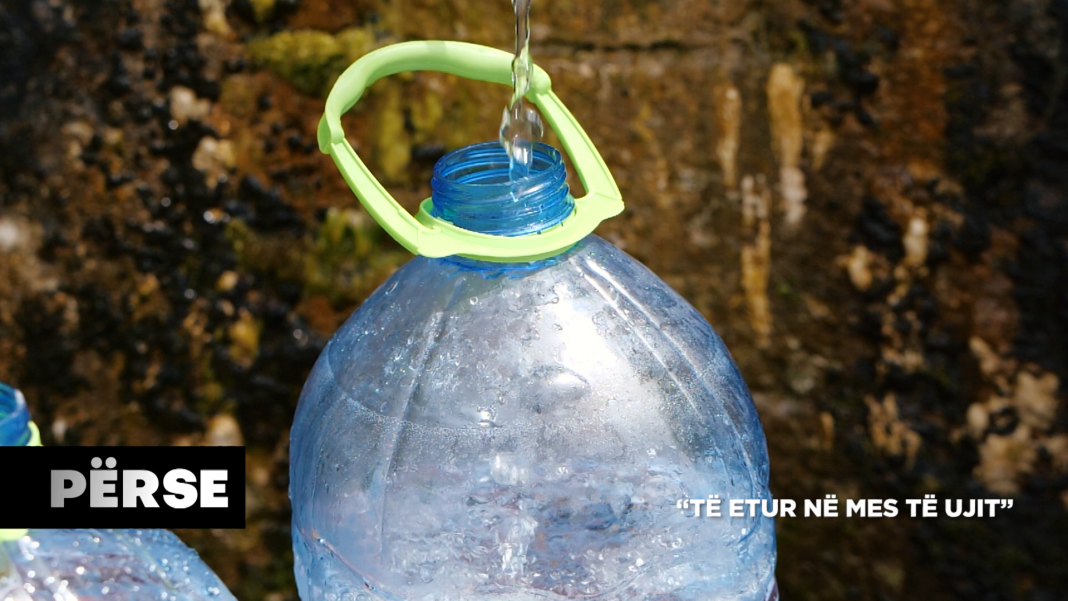
In many areas across Albania, citizens protest for the lack of water or for the need to protect it. In every single Albanian city, the building terraces are filled with metallic deposits used as water reserves. In many villages, fields aren’t irrigated because water isn’t running through the pumps.
These scenes aren’t taking place somewhere that is suffering from water sources or where the battle for war is the battle for life, but in Albania, one of the richest countries in Europe in terms of water springs.
This is the panorama that the next series of Euronews Albania’s show ‘Perse/WHY’ hosted by Mentor Kikia.
Journalist Mentor Kikia brings a different view of Albania’s water reserve, compared to other European countries.
With 248 natural lakes, 650 artificial water-collecting lakes, 152 rivers, out of which 12 prominent ones that traverse Albania every 40 kilometers, our country is amongst the 5 countries with the largest water reserves per capita in all of Europe. According to researchers, out of this water reserve, every Albanian citizen would have around 14 thousand cubic meters of water a year.
Head of the Water Regulatory Authority, Ndrcim Shani, said that Albania currently produces around 400 cubic meters per person, but as a result of amortized network of water distribution, no more than 100 cubic meters arrive in each building. Many towns according to Shani, get a maximal water supply, whereas many others get a minimal amount.
“We live in a privileged nation, we have amazing underwater sources, in terms of quantity and quality, but she should find better ways to manage it,” argued Shani.
Water engineer, Fitim Ballo, emphasized the need to do a better job in the management of water, so that we can ultimately be able to transform it into an economic resource and a better living standard for citizens.
Meanwhile, the director of water policies at the Ministry of Agriculture, Arben Muka talked about the availability of water for fields and plantations.
“Watering infrastructure built before the 90s is damaged and in several cases it was completely destroyed, by rendering hundreds of square kilometers of land unable to be watered,” he argued.
Hundreds of water collectors, dams and huge canals were built during communism, often times by formerly persecuted or imprisoned citizens that were forced to work without pay.
In three decades’ post-communism, no new buildings have been built and today, by officials of the local government, ministers or MPs.
YOU MIGHT ALSO LIKE





