

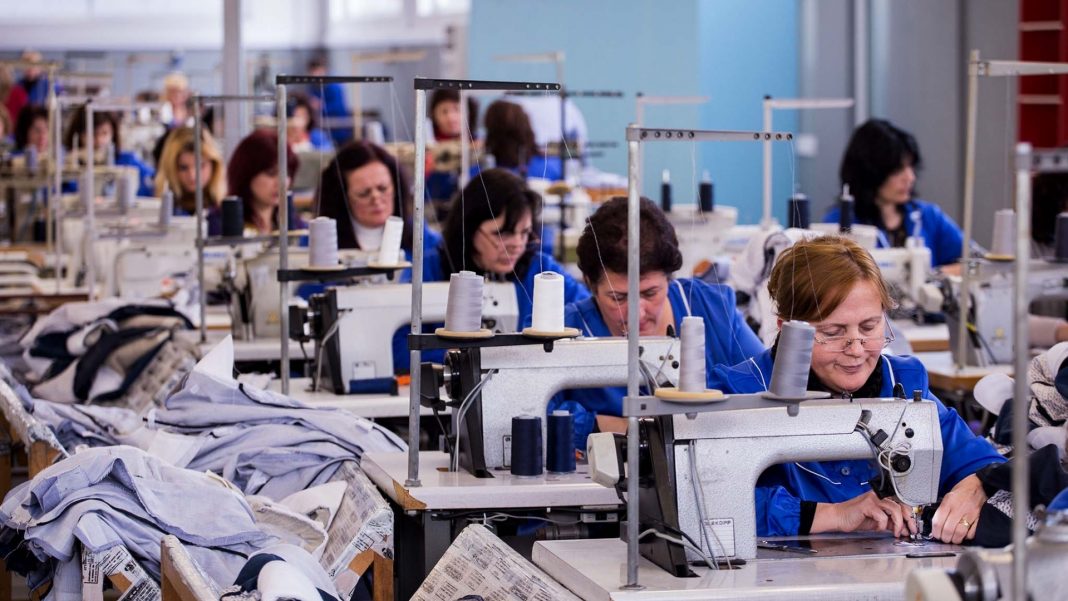
According to a recent study, almost 70% of Albanians can’t make ends meet, as they’re running out of money before the end of the month.
Almost 70% of Albanian employees encounter difficulties in meeting their monthly needs, the highest percentage in Europe, according to a study conducted by the European Commission.
The findings were published in a recent report on working conditions and future implications. The study is conducted once every five years through surveys of 70,000 workers in 36 European countries.
This includes EU member states, plus the United Kingdom, Norway, Switzerland, Albania, Bosnia and Herzegovina, Kosovo, Montenegro, North Macedonia and Serbia.
Other Balkan countries are ranked after Albania, but they still have a significantly different result from Albania.
The second country where employees report that they do not manage to meet their monthly needs is Kosovo, with 57% of employees, followed by Montenegro, Serbia and North Macedonia at approximately the same levels and Bosnia and Herzegovina with 54%.
The survey asked respondents to rate their family’s ability to make ends meet, taking into account total monthly income from various sources on a six-point scale from “very easy” to “very difficult”. Differences varied widely across countries in terms of the percentage of workers struggling to make ends meet, ranging from 5% in Denmark to 69% in Albania.
Bulgaria was the EU member state with the highest proportion of workers in economic difficulty, with 42% finding it difficult to make ends meet.
Albanian employees may have the longest working hours in Europe, but it turns out that they have a lower speed in performing their tasks and are not under the pressure of deadlines.
Working at high speeds is frequent or usual for less than 30% of Albanian employees, while pressure for deadlines for about 25%, both the lowest in Europe. By comparison, in Greece, which is the country with the highest work intensity, 65% of employees state that they are required to work with high intensity, and 55% that they work under deadline pressure.
In terms of sectors, high-speed work was most common in healthcare, trade and hospitality, and financial services, whereas tight-deadline work was most common in financial services, construction, and transportation.
Another challenge is the emotional one that came to the fore during the pandemic.
Emotional demands are more common in jobs that involve dealing with people, especially those that involve providing care and support. These jobs are in most cases rewarding, as they can be a part of an employee’s professional identity and fulfill a desire for social utility, and helping people out when they’re in difficulty or pain.




