

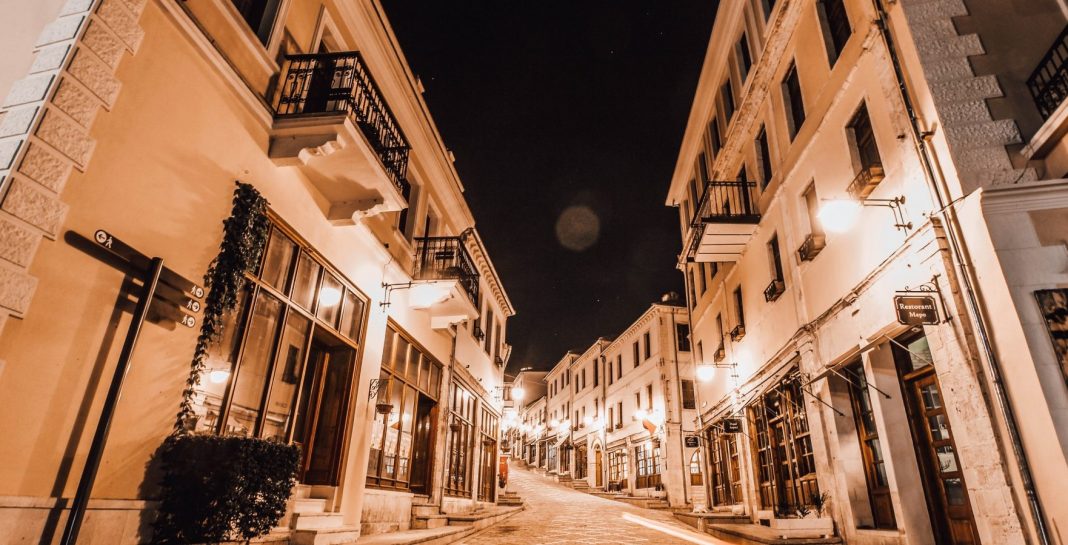
Known for its cobblestoned roads, stone houses, or its Grand Castle that offers a view of the entire city, Gjirokastra has a lot to offer visitors, – from historical monuments to artisanal crafts, – so stick around with Euronews Albania’s latest summer series ‘Travellers’, exploring Albania from its northernmost peak to its southernmost tip.
The city of Gjirokaster is part of UNESCO’s list of World Heritage Sites, as one of the few cities built in Ottoman style that has survived in the Balkans, whereas the origin of the name itself has historians and etymologists yet to settle on a final official version.
Legend has it that during the Ottoman conquest of the city, Princess Argjiro threw herself from the walls of the castle, accompanied by her son, so that she wouldn’t fall in the hands of the enemy. This is where they say that name of the ‘Castle of Argjiro’ originated from. However, this is just one version, as the city is mentioned much earlier since the Byzantine Empire.

According to the etymological explanation, the city got its name from the Greek words argyró meaning silver and kastro meaning castle, which is also linked to the monochromatic nuances of the city walls, the streets and stone roofs, that resemble the color tonalities of silver.
Seeing that the city of Gjirokaster is built in stone, as is also reflected in the writings of the local internationally renowned writer, Ismail Kadare in his work ‘Chronicle in Stone’, stonemasonry and carving is an ancient profession passed on from generation to generation.
“Whoever wants money, can salvage it from stone,” was how a local stonemason referred to his profession during our visit to Gjirokastra.
Artisanal crafts are widely spread in the Gjirokaster, in fact many women and young girls create jewelry, panoramas and various souvenirs and objects out of recycled materials, like stone, wood, wool etc. Pyrography or drawing on wood by a burning technique is also quite common in this city.

The city of Gjirokaster hides countless gems, one of which being the 300-year-old water well inside a store that sells artisanal supplies in the Old Bazaar.
Wars and battles have left behind their scars in the city, including those that were never put to use and have turned to living ghosts carrying with them the many stories and torments of the communist regime in Albania, – one of which being the anti-atomic tunnel built by the leaders of the regime, in case war would actually come to their doorstep. This high-security tunnel was built below the foot of the Mountain of the Castle, in order to withstand possible nuclear attacks.
YOU MIGHT ALSO LIKE





