

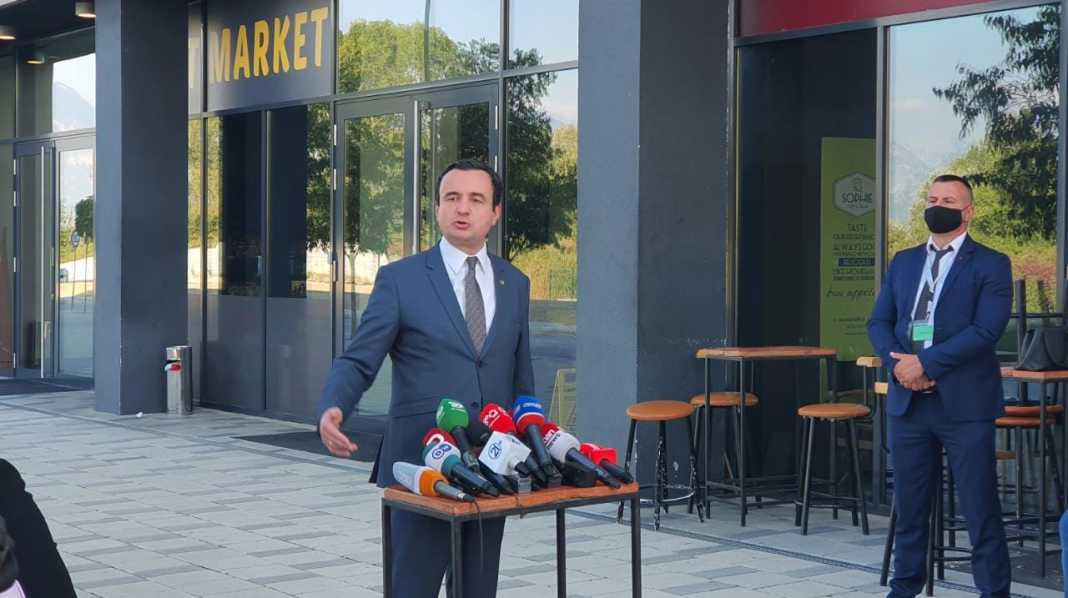
The Prime Minister of Kosovo Albin Kurti, in a press conference following his bilateral meeting with German Chancellor Angela Merkel, listed the four key elements in order to attain peace, stability, and security in the Western Balkans.
- Rule of law, to fight corruption and oligarchs
- Democratization, to enable free and independent media and weaken autocrats
- Facing the past, in order to imprison war criminals and prevent them from being in power
- Reciprocity, asymmetry, and balancing the rights of national minorities, in face of nationalistic hegemonies in the Balkans
In reference to the Kosovo-Serbia dialogue, Kurti said that both countries have entered the dialogue to determine what the status of their relations will look like.
He emphasized that Kosovo’s status is ‘indisputable’.
‘From 2008 to 2012, Kosovo did not have full independence as it was being looked over by Western powers, who were the ones to grant the independence altogether’, Kurti said.
Albin Kurti said that the country intends to have good neighborly relations, but without undermining its sovereignty and borders.
‘We are in favor of good neighborly relations, but obviously, we cannot grant Serbia any territory for the losses it incurred due to the regime of Milosevic from nearly two decades ago,’ he said.
‘Kosovo will not join the Open Balkan initiative’
‘Kosovo will not join the Open Balkan initiative’, said Albin Kurti, taking aim at a previous statement made by PM Edi Rama calling on Kosovo to ‘renounce from conspiracy theories’ and adding that regional initiative does not contradict the Balkan Process.
According to Kurti, the Berlin Process is “necessary and sufficient” for the region’s integration path, hence there is no need for new variants.
‘I am not aware of which conspiracy theory. Have you asked him which theory he’s referring to? I am giving you mu stance, which is that the Berlin Process is necessary, as well as sufficient, for the European path’, concluded Kurti.
YOU MIGHT ALSO LIKE





