

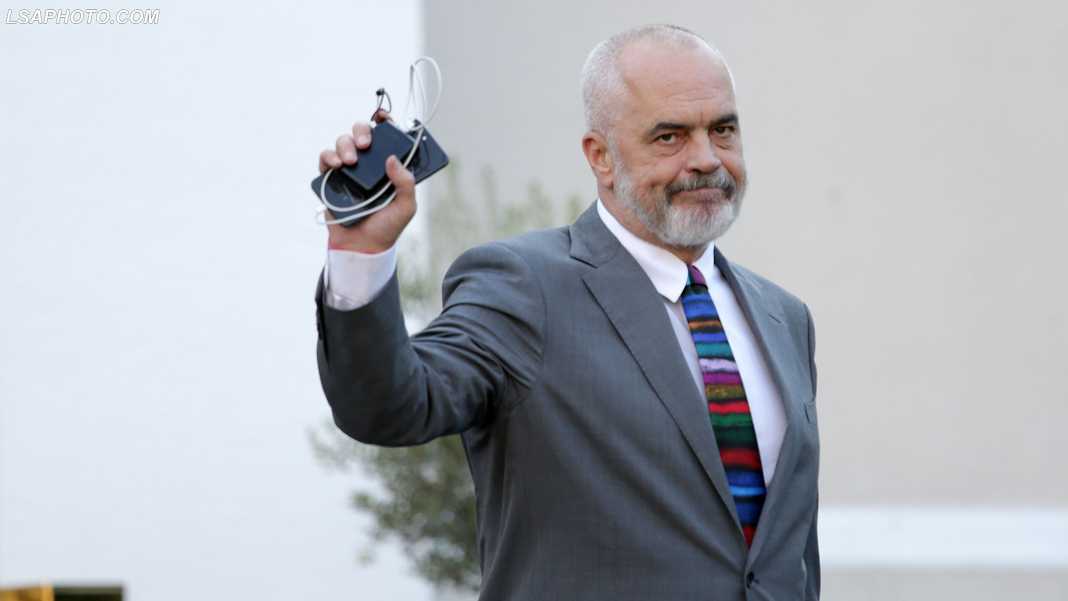
Edi Rama came to power after his coalition SP-SMI won the elections on June 23rd 2013. Rama’s first government was extensive, especially due to the fact that it was born out of a coalition. With its 19 ministries divided between the two winning parties, Rama I can be deemed one of the largest governments to come together after the ‘90s.
Rama I government – 19 ministries
Minister of Finance, Shkëlqim Cani
Minister of Internal Affairs, Saimir Tahiri
Minister of Defense, Mimi Kodheli
Minister of Foreign Affairs, Ditmir Bushti
Minister of European Integration, Klajda Gjosha
Minister of Justice, Nasip Naço
Minister of Economic Development, Trade and Entrepreneurship, Arben Ahmetaj
Minister of Energy and Industry, Damain Gjiknuri
Minister of Transport and Infrastructure, Edmond Haxhinasto
Minister of Urban Development and Tourism, Eglantina Gjermeni
Minister of Agriculture, Rural Development and Water Administration, Edmond Panariti
Minister of Health, Ilir Beqja
Minister of Education and Sports, Lindita Nikolla
Minister of Social Wellbeing and Youth, Erion Veliaj
Minister of Culture, Mirela Kumbaro
Minster of the Environment, Lefter Koka
Minister of Relations with Parliament, Ilirian Celibashi
Minister for Innovation and Public Administration, Milena Harito
Minister of Local Affaris, Bled Çuçi
Rama II government – 13 ministries
After the elections in 2017, SP won the majority of seats in Parliament and as a result, it also won the right to form a government without the need for a coalition. The Rama II administration cut back on 6 ministers, compared to the previous one.
The new cabinet had a total of 13 ministries, two of which were State minister, without a portfolio.
In Rama’s new government, the Ministry of Finance and the Economy merged together as one, as did the Ministry of Energetics and Ministry of Transport and Infrastructure.
In Rama’s second term in power, a new ministry was formed, the Ministry of the Diaspora, which would be dissolved in his 3rd term, – a decision which would become a cause of many polemics.
There was an equal number of men and women ministers in Rama’s II cabinet:
Minister of the Diaspora, Pandeli Majko
Minister of the State for the Protection of Enterprise, Sonila Qato
Minister of Interior Affairs, Fatmir Xhafaj
Minister of Defense, Olta Xhaçka
Minister of Justice, Etilda Gjoni
Minister of Culture, Mirela Kumbaro
Minister of Finance, Economy and Work, Arben Ahmetaj
Minister of Education, Sports and Youth, LIndita Nikolla
Minister of Health, Ogerta Manastirliu
Minister of Energy and Infrastructure, Damian Gjiknuri
Minister of Agriculture and Rural Development, Niko Peleshi
Minister of Tourism and the Environment, Blendi Klosi.
Rama III government – 15 ministries
On April 25th 2021, the Socialist Party regained power for the third consecutive term, during the parliamentary elections that gave it the right to govern for three mandates in a row, like never before in pluralist Albania.
The Rama 3 cabinet has 15 ministries, 4 of which are state ministries without a portfolio. In Rama’s present government, something that stood out was the dissolution of the Ministry of the Diaspora, while adding the Ministry of State for Standards and Service and the Ministry of State for Youth and Children.
Ulsi Manja, Minister of Justice
Delina Ibrahimi – Minister of Finance and the Economy
Ogerta Manastirliu – Minister of Health
Bledi Çuçi – Minister of Internal Affairs
Belinda Balluku – Minister of Energy and Infrastructure
Olta Xhaçka – Minister of Europe and Foreign Affairs
Mirela Kumbaro – Minister of Tourism and the Environment
Evis Kushi – Minister of Education and Sport
Niko Peleshi – Minister of Defense
Frida Krifca – Minister of Agriculture and Rural Development
Elva Margariti – Minister of Culture
Milva Ikonomi – Minister of the State for Standards and Service
Elisa Spiropali – Minister of the State for Parliament Relations
Bora Muzhaqi – Minister of State for Youth and Children
Edona Bilali – Minister of State for Protection of Enterprises
YOU MIGHT ALSO LIKE




