

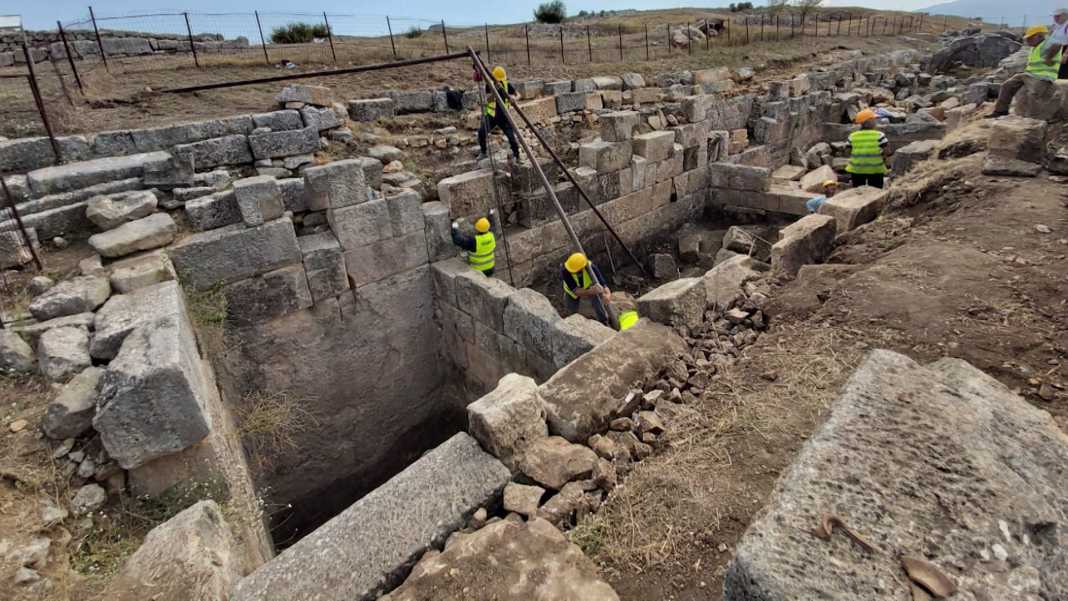
For days now, the expedition of the Archeological Institute has been working at the National Archeological Park of Bylis, where for the third year in a row, excavations are being carried out, with the mission of discovering a water cistern, belonging to the ancient city and served to store the water reserves of a stadium.
Work on this historic object that remains the largest of its kind in the Balkans, will continue through to October 20.
Apart from simultaneous excavations, experts are also working on its restoration.
The structures working on this joint expedition include the Institute of Archeology in collaboration with the Bylis Academy of Science, the Archeological Park Bylis and its geophysical group.
‘The Crown of the Illyrian civilization’
Archeologist Neritan Ceka told Euronews Albania that a lack of adequate methodology and funding, as well as cultural heritage reforms, have delayed excavation work since its first finding in the 80s.
“Unlike other monuments, it is entirely above the ground. Imagine a large cistern built with stone blocks, 8 meters high and 50 meters long which was holding millions of liters of water”, said Ceka.
He also called for international investments for the excavation and restoration project.
“Bylis is a ray of hope for this place, to transform it from a place that was stinking from oil to a place where tourism can flower. This is the richest region, the crown of the Illyrian civilization, which had a theater, stadiums, and intricate engineering accomplishments”, the archeologist explained.
“This is the only object we have where during the winter the water from the stadium was gathered in a cistern that was the largest in the Balkans”, concluded Ceka.
YOU MIGHT ALSO LIKE