

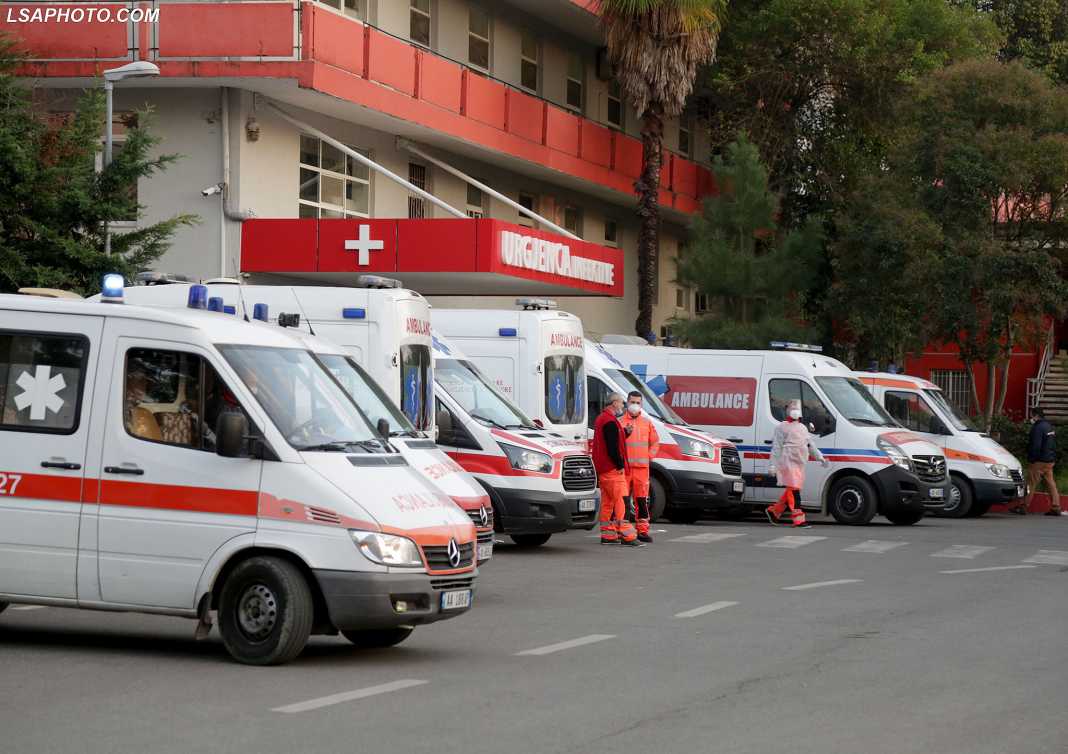
The Albanian Supreme State Audit (ALSAI), published their final report this Thursday, detailing the management of the current epidemiologic situation in Albania during the COVID-19 pandemic.
ALSAI criticized the responsible institutions of often managing the pandemic in a gravely problematic fashion, starting from a lack of hospital capacities, insufficient monetary funding, scarcity of stock and supplies for personal protective gear supplies (MMP), deficiencies in training for medical personnel, lack of safety at the workplace, etc.
“The COVID-19 crisis management in our country, brought to light numerous issues of our healthcare system, like the insufficient number of regional hospitals designated to treat COVID-19 patients, the inefficient working state of health centers in our local healthcare units, very limited professional capacities of specialists in infective diseases, insufficient monetary funding, scarcity of stock and supplies for personal protective gear (MMP), deficiencies in training for medical personnel, lack of safety in the workplace, etc.
“Faced with an unknown virus accompanied by the loss of civilian lives, our healthcare system’s management of the situation hasn’t been very effective. The policies followed by the Ministry of Health and Social Protection and other public and private healthcare institutions didn’t offer health services as a ‘public good’ – that is meant to be the very goal of their existence and their policies in order to achieve a better quality of life for citizens,” – stated ALSAI in their report.
It added that the 2016-2020 National Health Strategy lacked concrete action and operational plans, while delays in the announcement system on the state of the public’s health put the citizens’ lives, as well as that of medical staff, in danger.
The Supreme State Audit also maintained a critical stance on the financial recovery aspect, saying that the process was not “inclusive” or “transparent”, and did not consider parties that were also interested in the process.
The report also notes that a concrete plan for economic recovery does not exist to this day.
“To date, there is not a complete, nor even a draft, of a month-long or annual plan for the economic recovery”.
ALSAI also pointed to delays in the reimbursement system of COVID patients from the initial outbreak, adding that a lack of information from family doctors brought an “inhumane treatment of patients”.
YOU MIGHT ALSO LIKE
- EBRD lends a €70 million loan to OSHEE to cover for pandemic-induced gaps
- Birth rates dropped even more after the COVID-19 pandemic hit
- Pandemic trends stabilize with no victims and two cases reported in last 24 hours




